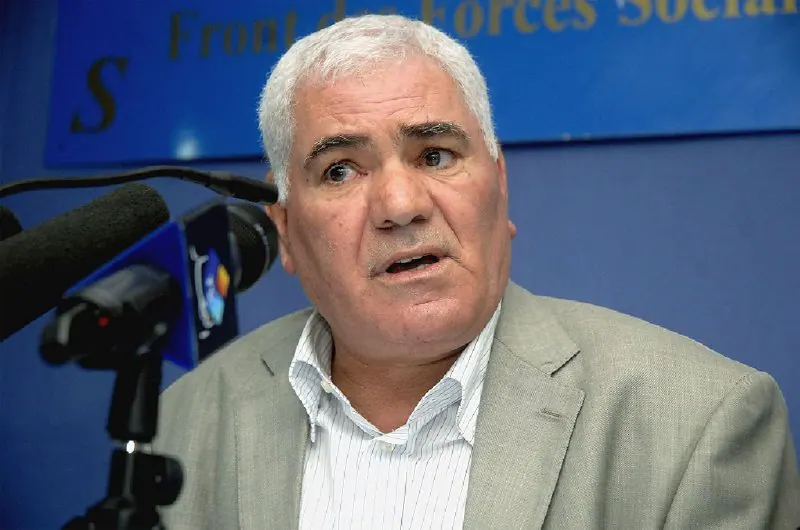
The Front des Forces Socialistes (FFS) party commemorated the 5 October 1988 events in Ouacifs, Algeria, reiterating its rejection of the upcoming presidential election scheduled for 12 December. During a meeting, FFS coordinator Ali Laskri recalled the significance of the 1988 events, which led to the downfall of the single-party system in Algeria. Laskri accused current authorities of attempting to reinstate this system.
Laskri cited the candidates registered for the upcoming election as examples of the "old regime's symbols." He denounced the authorities' attempts to impose an election rejected by the people, advocating for popular sovereignty and institutional legitimacy. The FFS party holds decision-makers responsible for any compromising situations that may endanger the country.
Laskri expressed concerns that if the election proceeds, it will pave the way for corrupt politicians to return to power. He specifically criticized candidate Benflis, recalling his role in the 2001 events, where 126 young people lost their lives. Laskri also denounced the current authorities' repression, instrumentalization of justice, and media censorship.
According to Laskri, the authorities aim to suppress the popular movement and impose a clan-based alternation of power. However, he emphasized that Algerians seek to exercise their sovereignty and will not accept the upcoming election. The FFS party has been working on a national pact for a democratic alternative, which includes a transition period, social state, independent justice, and the rule of law.
Laskri called for an inclusive dialogue with all stakeholders, including parties, civil society, and the popular movement. He announced that the national pact will be expanded to other forces. Dr. Tamadartaza Moussa, secretary national chargé à l'analyse politique et la perspective, also spoke during the meeting, highlighting the significance of the 5 October 1988 events as a culmination of previous movements, including the Berber Spring of 1980.
Dr. Tamadartaza regretted the current situation in Algeria, characterized by a decline in democratic gains, human rights, and social justice. He emphasized that the 22 February movement would not have occurred if the country had good governance. Tamadartaza also noted that Algerians have broken down the walls of fear through their popular movement.
The FFS party's stance on the upcoming election and its call for an inclusive dialogue reflect its commitment to democratic values and popular sovereignty. The party's efforts to build a national pact for a democratic alternative aim to address Algeria's current challenges and promote a more inclusive and participatory political process.
Key points
- The FFS party rejects the upcoming presidential election and advocates for a democratic transition.
- The party calls for an inclusive dialogue with all stakeholders to address Algeria's current challenges.
- The FFS party emphasizes the importance of popular sovereignty and institutional legitimacy in Algeria's political process.