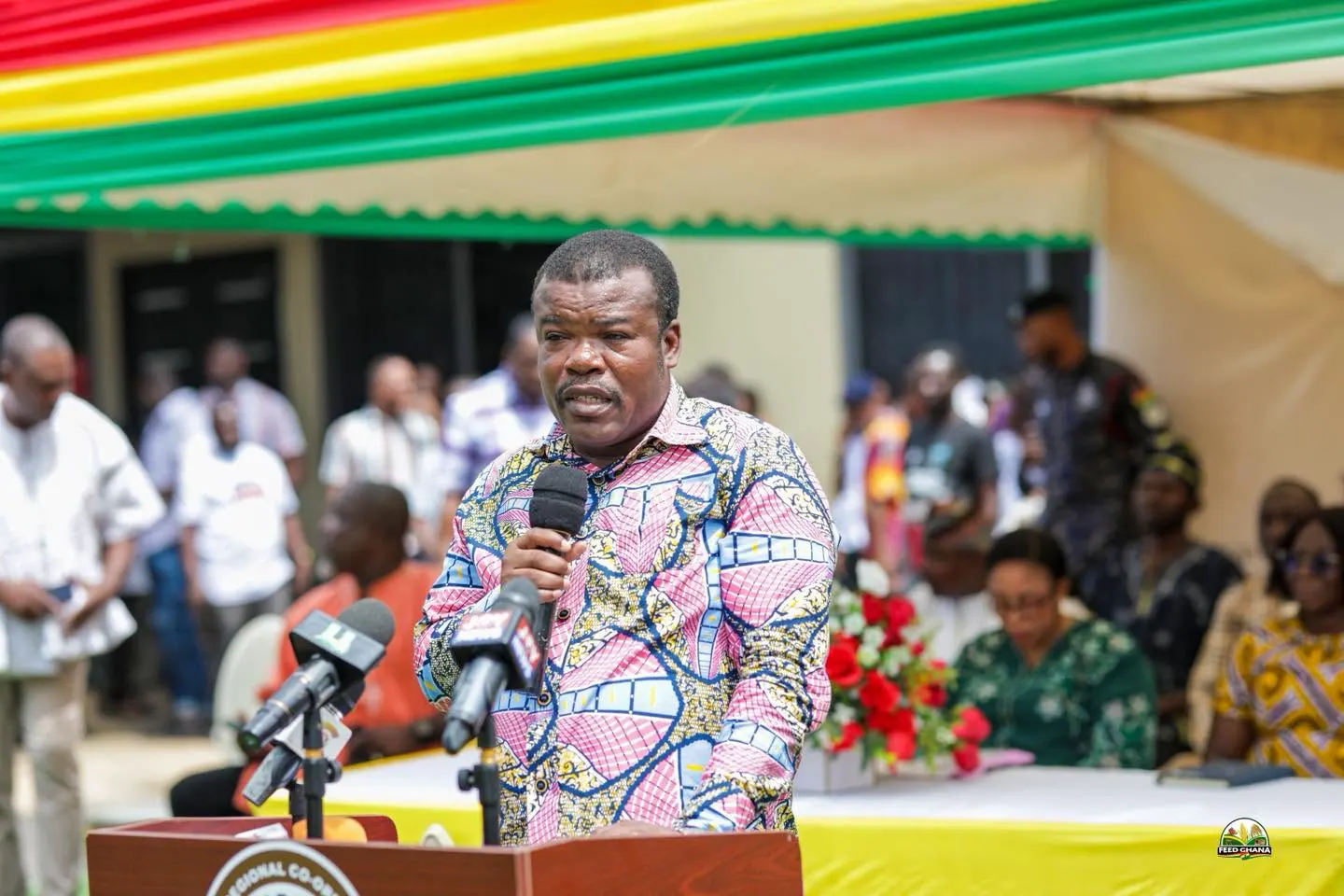
The Feed Ghana Programme (FGP) has made significant strides in reducing Ghana's dependence on imported food. Launched in April 2025, the programme has led to increased domestic production of key crops such as maize, rice, and tomatoes, as well as poultry. According to Mr. Bright Kwadzo Demordzi, National Coordinator of the FGP, the programme has achieved notable success, with maize production exceeding 100 per cent of national consumption.
The programme's impact is evident in the statistics. Rice sufficiency has risen from 42 to 56 per cent, while poultry sufficiency has grown from five to 21 per cent over the past 17 months. Tomato farmers in major producing areas have also recorded abundant harvests. However, challenges persist, particularly in terms of purchasing and off-taking to secure market access. Mr. Demordzi attributes the production gains to government support, including the Nkoko Nkitinkiti poultry programme and provision of fertiliser and other farm inputs.
The government has demonstrated its commitment to the programme, allocating GH¢1.5 billion in the 2025 budget to agriculture-sector initiatives, including the FGP. The 2026 budget has also allocated GH¢245 million to the agriculture sector to scale up food security and agro-industrial value chains. Mr. Demordzi expressed optimism that the programme is on course to achieve its import substitution goals, with maize production exceeding 100 per cent of consumption and surplus paddy in the fields.
Despite these achievements, Mr. Demordzi noted that the next phase of the programme will focus on linking farmers to value-chain players and innovative technologies to improve storage, transportation, and processing. He emphasized the need to organise processes to purchase farmers' products, ensuring high profitability levels. The programme's second phase is set to begin in October, with additional interventions expected to drive prices down by December.
The Feed Ghana Programme has also sparked calls for stronger collaboration among stakeholders. Mr. Demordzi stressed the need for partnerships that directly involve farmers and cooperative leaders through practical demonstrations and exposure to innovations. Ms. Françoise Sayi, Country Director of the Global Alliance for Improved Nutrition, Benin, advocated for value-chain transformation, emphasizing that production alone is not enough to achieve nutrition, food sustainability, and security.
The West Africa Agri Show, which took place in Accra, provided a platform for stakeholders to discuss the programme's progress and future prospects. Ms. Zarreen Akhtar, Director of Azalix Business Media, organisers of the West Africa Agri Show, expressed optimism about the region's agricultural prospects, citing opportunities for collaboration among participating businesses. The event drew participation from over 25 countries, with companies from Europe, the US, the Middle East, and China in attendance.
As the Feed Ghana Programme moves forward, it is clear that sustaining momentum will require continued collaboration and investment. With the programme's second phase set to begin, stakeholders are eager to build on the progress made so far. The programme's success has significant implications for Ghana's food security and economic development, and its impact will be closely watched in the coming months.
Key points
- The Feed Ghana Programme has increased domestic production of maize, rice, and tomatoes, reducing reliance on imports.
- The programme's second phase will focus on linking farmers to value-chain players and innovative technologies.
- Stakeholders are calling for stronger collaboration and investment to sustain the programme's momentum.