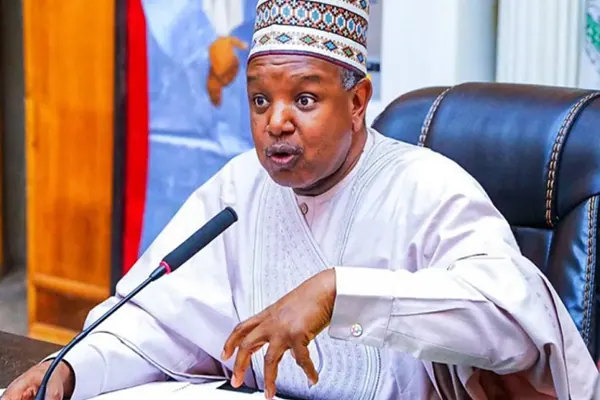
Nigeria's government is wooing German investors to deepen the country's industrial sector, with Minister of Budget and Economic Planning, Senator Abubakar Atiku Bagudu, urging German companies to invest more actively in the sector. This effort is part of the country's push to build a $1 trillion economy by 2030. Bagudu made the call at the Germany–Nigeria Industrial Technology Conference in Abuja, themed "Business Meets Nigeria," which was organised by the German Engineering Federation (VDMA) in partnership with the German Embassy in Nigeria.
The conference brought together Nigerian and German business owners, government officials, bankers, and industry leaders to discuss industrial investment, technology transfer, and infrastructure projects. It was part of a wider business trip by 14 top German companies working in cement, mining, construction, and industrial technology, who had earlier met with Nigerian firms in Lagos before moving to Abuja. The event provided a platform for both countries to explore opportunities for collaboration and investment.
Bagudu pointed to the economic reforms of President Bola Ahmed Tinubu, describing them as efforts to clear away barriers that have long discouraged investors, strengthen the business environment, and give the private sector room to grow. He said the government's plan is to build an economy where businesses can invest freely, expand operations, and create jobs for Nigerians. According to the Minister, Nigeria's $1 trillion economy target cannot be met without strong support from the private sector, more local production of goods, and heavier investment in manufacturing, mining, construction, and infrastructure.
The Nigerian Economic Summit Group (NESG) has said that Nigeria must move beyond economic stabilisation and translate recent reforms into productive investment capable of expanding businesses, creating jobs, raising incomes, and improving living standards. The group identified agriculture, manufacturing, infrastructure, technology, energy, mining, logistics, and the creative economy as sectors with significant investment opportunities. Unlocking these opportunities will require improvements in the investment climate, fewer barriers to business expansion, deeper capital markets, and stronger policies that give investors greater confidence to make long-term decisions.
Dr. Chux Onaa, who led the VDMA delegation, said German machinery and equipment makers have strong experience in materials handling, cement and mineral processing, digital technology, and environmental solutions that can help Nigerian industries produce more and compete better globally. He said VDMA remains committed to turning the discussions from the conference into real technology transfer deals and business partnerships. Ambassador Johannes Lehne, Deputy Head of Mission at the German Embassy, said the relationship between both countries continues to grow, noting that Nigeria's economic reforms have already boosted trade and made it easier to do business in the country.
The NESG said investment in physical businesses and infrastructure must be matched by investment in Nigerians themselves. The country's large young population represents an important economic asset, but significant gaps remain in education, healthcare, workforce readiness, and skills development. The summit will examine investment in education, healthcare, and digital skills to equip Nigerians with the skills needed to drive economic growth.
The conference ended with both countries agreeing to keep working together, with the aim of turning their long-standing relationship into concrete industrial projects that can boost local production, strengthen competitiveness, and support Nigeria's long-term economic growth. The NESG's policy document for the 32nd Nigerian Economic Summit (NES #32) emphasised the need to attract and mobilise capital on a scale that would strengthen businesses and industries while also developing the people needed to sustain long-term growth.
Key points
- Nigeria aims to build a $1 trillion economy by 2030.
- German companies are being urged to invest more in Nigeria's industrial sector.
- The Nigerian government is working to improve the business environment and attract investment.