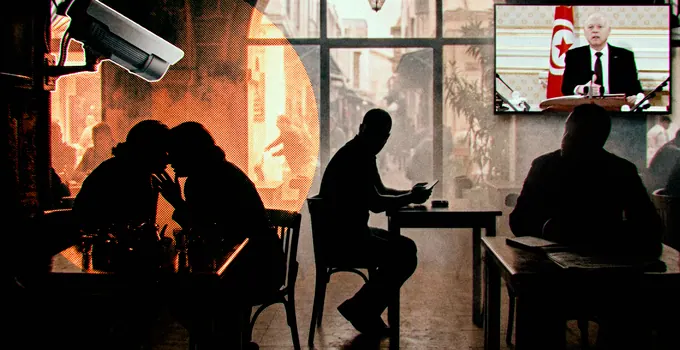
The recent wave of arrests and persecution targeting journalists, activists, and political opponents in Tunisia has instilled fear in the minds of citizens, leading to self-censorship that has become a systemic phenomenon. This fear is palpable in everyday conversations, with people avoiding discussions on politics and sensitive topics. The once-vibrant public spaces, such as cafes and markets, where Tunisians would freely discuss politics and current events, have become increasingly quiet.
In Jebeniana, a town in the Sfax governorate, a renowned cafe that was once a hub for intellectual debates and discussions has lost its luster. Regulars, such as Ghazi Ben Alia, a 49-year-old teacher and unionist, have noticed a significant change in conversations over the years. Ben Alia recalls that previously, debates on politics and public affairs were a staple, but now people approach such topics with caution, often changing the subject or remaining silent.
The fear of reprisals and persecution has led citizens to be cautious about expressing their opinions, especially on politics and governance. Ben Alia attributes this shift to the fear of being reported by informants and the consequences that follow. As a result, people have become disillusioned with politics and public life, preferring to focus on their daily concerns, such as work, family, and health.
A report by the human rights organization "Intersection" highlights the scale of the problem, documenting 285 cases of rights violations across various regions between March 2025 and February 2026. These abuses include restrictions on freedom of expression and assembly, unfair trials, and violations of the right to housing and basic services. The report confirms that these incidents are not isolated but part of a broader trend.
The pervasive fear has led to self-censorship, with citizens monitoring their words and thoughts to avoid attracting unwanted attention. This has resulted in the suppression of publications and the avoidance of commenting on or sharing information that could lead to persecution. As this behavior becomes ingrained, fear turns into self-censorship, stifling public debate and free expression.
The situation has also affected the media landscape, with many outlets avoiding sensitive topics to avoid antagonizing the authorities. Some media outlets have become mouthpieces for disinformation and propaganda, further eroding the public's trust in the media. This has contributed to the growing disillusionment with politics and public life.
The consequences of this stifling of free expression and public debate are far-reaching, with Tunisia's democratic gains since 2011 being slowly eroded. The country's journalists, activists, and citizens are facing increased pressure and persecution, leading to a culture of fear and self-censorship that threatens the foundations of a healthy democracy.
Key points
- Widespread fear and self-censorship have gripped Tunisia's journalism and public discourse.
- The recent wave of arrests and persecution has led to a stifling of public debate and free expression.
- Self-censorship has become a systemic phenomenon, with citizens monitoring their words and thoughts to avoid persecution.