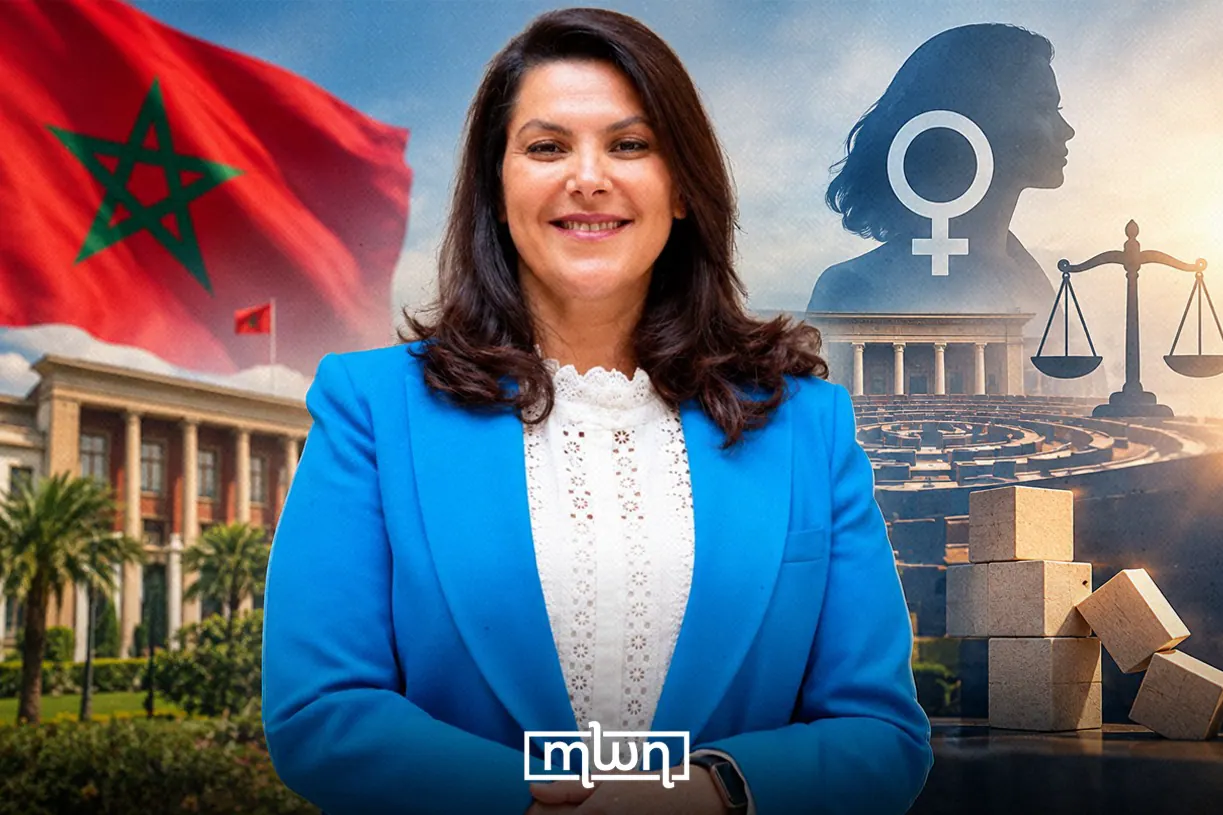
On September 29, 2026, Fatima Ezzahra El Mansouri was appointed as the head of government in Morocco, becoming the first woman to hold this position in the country's history. Her appointment followed the legislative elections of September 23, 2026, in which the Authenticity and Modernity Party (PAM) emerged as the leading party with 97 seats in the House of Representatives. This historic appointment is seen as a significant moment in contemporary Moroccan politics, but also raises questions about access to political power in the country.
El Mansouri's rise to power is not considered a revolutionary change, but rather a culmination of years of cooptation and patient political accumulation inside the institutional order. Her trajectory combines several dimensions of Moroccan political life, including being a highly educated lawyer, former municipal leader, parliamentarian, minister, and party leader. She also belongs to an established social milieu and is part of the founding generation of the PAM, a party historically associated with Fouad Ali El Himma, a close adviser to King Mohammed VI.
Born in Marrakech in 1976, El Mansouri studied private law at Mohammed V University in Rabat and obtained postgraduate training in contract and business law at the University of Montpellier. She also received a certificate in Anglo-Saxon law from Pace University in the United States. Her professional background is relevant to her later ministerial responsibilities, particularly in areas such as land, housing, urbanization, and territorial planning.
El Mansouri's political career began in 2007 with the Movement for All Democrats, followed by her role as a founding member of the PAM in 2008. She became president of the Marrakech municipal council in 2009, making her the first woman to hold the city's mayoral office. She subsequently served in Parliament from 2011 to 2016 and again from 2016 to 2021, chaired the PAM National Council from 2015 to 2024, and returned to the presidency of the Marrakech municipal council in 2021.
El Mansouri's appointment as head of government is both an electoral consequence and a constitutional act, as Article 47 of the 2011 Constitution provides that the King appoints the Head of Government from the party that comes first in elections to the House of Representatives. However, her trajectory also raises questions about the degree of autonomy within a political system in which the monarchy remains central. Her case illustrates how institutional mechanisms supporting women's representation may open political opportunities, while individual experience, local visibility, and party support can subsequently generate political capital.
The significance of El Mansouri's appointment lies not only in her being the first woman to occupy the country's top political office but also in the construction of a political identity rooted in a major economic, cultural, and tourist center like Marrakech. Her return to the municipal presidency in 2021 suggests that her political resources cannot be explained solely by proximity to the Palace. She had accumulated local knowledge, electoral experience, and negotiating capacity of her own, making her a strong candidate for the national executive.
As El Mansouri takes on her new role, she faces the dual challenge of constructing a parliamentary majority and responding to a broader problem of political representation in Morocco. With a low turnout of 38.08 percent in the legislative elections, the new government must address the issue of political representation and work towards building a more inclusive and representative political system. El Mansouri's appointment is a step towards this goal, but the road ahead will require careful navigation of Morocco's complex politics.
Key points
- Fatima Ezzahra El Mansouri's appointment as Morocco's first female head of government marks a significant milestone in the country's politics.
- El Mansouri's trajectory raises questions about access to political power in Morocco and the degree of autonomy within a political system in which the monarchy remains central.
- Her appointment is both an electoral consequence and a constitutional act, and her case illustrates how institutional mechanisms supporting women's representation may open political opportunities.