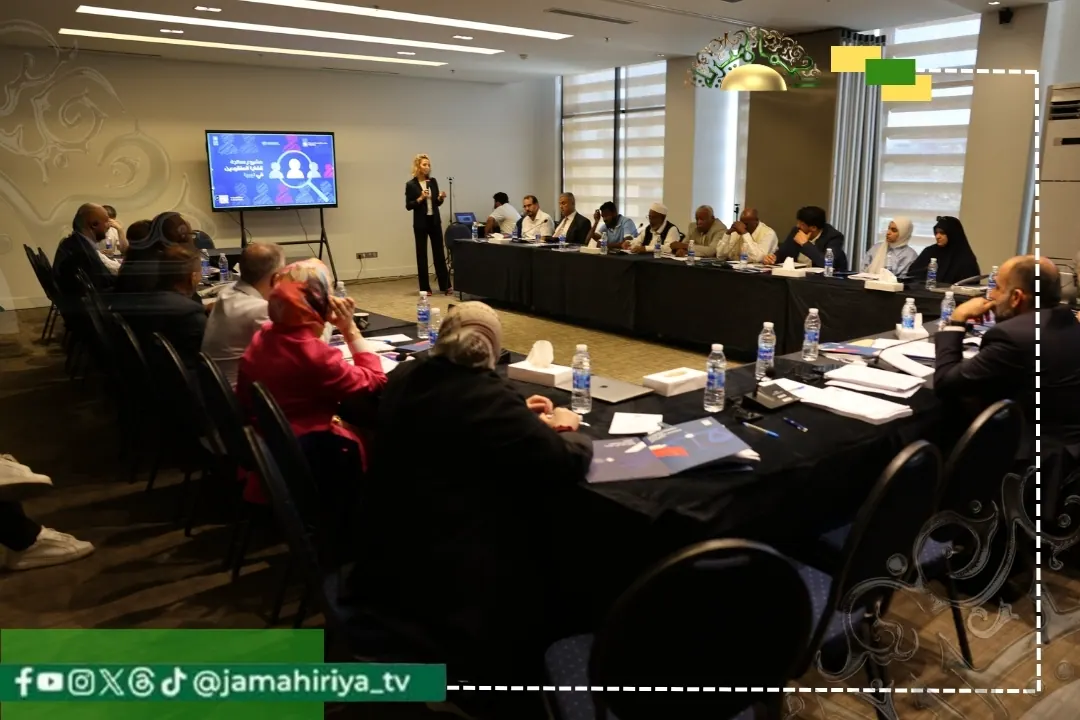
Libyan institutions, families of missing persons, and civil society organizations have called for the adoption of a law on missing persons and enforced disappearances. This call to action was made during a meeting in Tripoli on September 10, attended by around 30 participants. The meeting was facilitated by the United Nations Support Mission in Libya and the UN Development Programme. The discussions aimed to support Libya's alignment with international standards on missing persons.
The meeting brought together various stakeholders, including families of victims, civil society organizations from different regions such as Tarhuna, Tawergha, and Derna, and representatives from the Presidential Council, House of Representatives, and the General Authority for Research and Identification of Missing Persons. Also in attendance were the Dutch ambassador and representatives from the International Committee of the Red Cross. A draft law on missing persons and enforced disappearances, prepared with technical support from the UN, was a key topic of discussion.
The draft law, submitted to parliament in May, is seen as a crucial step towards harmonizing Libyan legislation with international standards on missing persons. Participants emphasized that national legislation should not only focus on search and identification efforts but also address the legal, social, economic, and financial rights of families. They also stressed the importance of protecting personal and genetic data. Parliamentarians present at the meeting expressed their commitment to supporting the law's progress and ensuring its consistency with Libya's international obligations.
The meeting also marked the third anniversary of the Derna disaster, which occurred on September 10 and 11, 2023. The catastrophic floods caused by the collapse of dams resulted in widespread destruction, killing thousands and leaving many more missing. A mother who lost three of her four daughters in the disaster described the traumatic experience, likening it to "the Day of Judgment." Her account highlighted the urgent need for support and resolution for families affected by such tragedies.
Participants called for the empowerment of the General Authority for Research and Identification of Missing Persons to resume its operations in Derna and other affected areas. This would enable direct and regular communication with families, updating them on identification progress, and dignified burial of identified remains. Displaced persons from Derna reported difficulties in obtaining identification documents, accessing bank accounts, and meeting basic needs while awaiting conditions for their safe return.
The meeting concluded with a commitment to expedite communication with families in cases where DNA samples have been collected. This would allow them to bury their loved ones. However, despite efforts, hundreds of victims remain unidentified. Concerns were also raised about the challenges faced by communities in Tarhuna, Tawergha, and other regions with large numbers of missing persons. In Tarhuna, families urged the resumption of excavation works at a site known as the "Triangle of Death," where at least 66 missing persons are believed to be buried.
Key issues discussed included the need for a comprehensive law on missing persons, support for affected families, and the importance of international cooperation. Three key points emerged: the need for a national law on missing persons and enforced disappearances; the importance of empowering the General Authority for Research and Identification of Missing Persons; and the necessity of addressing the challenges faced by communities affected by missing persons.
Key points
- Libyan institutions and families of missing persons urge adoption of law on enforced disappearances
- Empowerment of General Authority for Research and Identification of Missing Persons crucial
- Hundreds of victims remain unidentified three years after Derna disaster