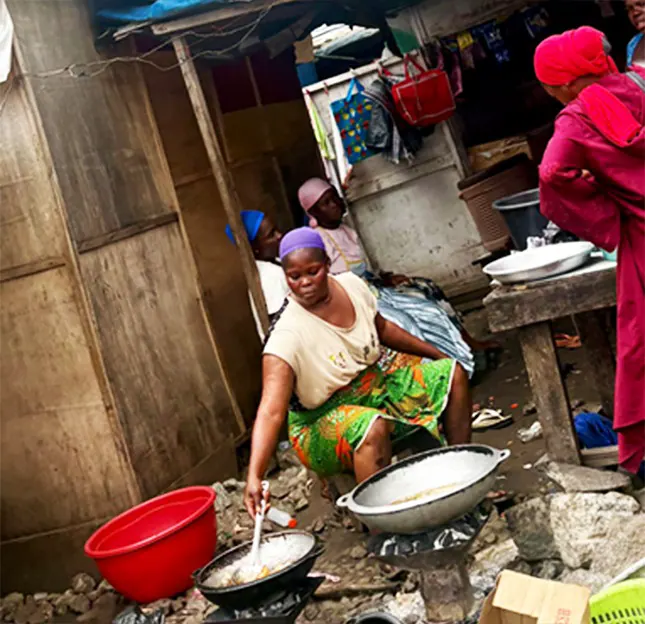
In the Ashaiman scrapyard in Accra, Ghana, Salma Iddrisu has been selling food to workers for six years. Her five-year-old daughter often joins her after school, but Iddrisu noticed a change in her daughter's behavior and hearing. A hospital visit revealed anemia, which doctors linked to the girl's exposure to the scrapyard environment. Anemia can be caused by smoke and fine particles from the scrapyard, which inflame the body and make it harder to absorb iron, essential for healthy red blood cells.
Iddrisu's experience is not isolated, as informal recycling sites in Ghana pose a wider concern. Workers, traders, and children spend long hours near activities involving lead-containing batteries and scrap materials, exposing them to lead-containing dust and fumes. When used batteries are opened, processed, or burned without proper controls, lead can enter the air and settle on soil, food, and household surfaces. This creates possible routes of exposure for people living and working nearby, particularly children, who are vulnerable to lead poisoning.
A national blood lead level survey conducted between November 2022 and January 2023 found that more than half of the 3,227 children tested had blood lead levels at which the World Health Organization recommends action. Lead poisoning is a significant concern in Ghana, with the World Health Organization stating that no level of lead in the body is safe. Lead exposure can cause seizures, strokes, blindness, and lifelong intellectual disabilities, making it a major public health concern.
The survey identified some of the highest blood lead levels among children living near formal lead-polluting industries, including used lead-acid battery recycling facilities in Greater Accra. Children living near two formal battery-recycling businesses, Success Africa Ghana Ltd and White Star Global Ltd, had dangerously high levels of lead in their blood. This highlights the need for action to address the issue of lead pollution from battery recycling.
Evans Akornor, a 58-year-old man who has spent 27 years working in battery recycling, claims that he sees no danger in his work. He opens batteries without protective gear and believes that his forefathers also did the work without issues. However, he has been experiencing persistent eye irritation, which he attributes to his work. Akornor's situation illustrates the risks faced by workers in the informal recycling sector.
Dr. Collins Hodoli, Founder and Executive Director of Clean Air One Atmosphere, notes that informal battery recyclers often break open used lead-acid batteries and smelt their plates over open fires or crude furnaces without emission controls. This releases not only lead but also other pollutants, including lead oxides, sulphates, antimony, arsenic, and sulphur dioxide. These pollutants can combine with lead dust to form a toxic airborne mixture that spreads beyond the recycling site.
The health impacts of lead exposure can be catastrophic, particularly for workers like Akornor and children who are exposed to lead dust. Long-term exposure can damage the kidneys, raise blood pressure, and increase the risk of heart disease and stroke, as well as cause anemia, memory loss, and hearing loss. The World Health Organization emphasizes that there is no safe level of lead in a child's blood, and the damage to a child's brain and learning can be permanent.
Key points
- Informal battery recycling in Ghana poses significant health risks, particularly for children, due to lead exposure.
- A national survey found that more than half of the children tested had blood lead levels at which the World Health Organization recommends action.
- Lead exposure can cause severe health problems, including seizures, strokes, blindness, and lifelong intellectual disabilities.