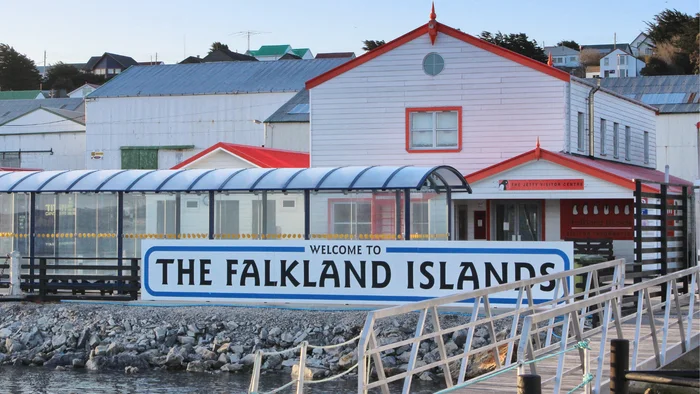
Some residents of the Falkland Islands are advocating for restrictions on visitors from Argentina following incidents of tourists displaying Argentine flags and messages that challenge British sovereignty over the territory. This development has sparked a heated debate about the islanders' rights and the limits of free expression. The issue has been brought to the attention of the Falkland Islands Legislative Assembly, which is exploring possible measures to address the concerns of the islanders.
According to Michael Goss, a member of the Falkland Islands Legislative Assembly for Camp, residents have been vocal about preventing Argentine visitors from entering the islands. However, Goss noted that any action taken must be within the bounds of the law. He stated that the Assembly is examining possible options, but it is crucial to consider the legal implications of any measures implemented. The goal is to find a balance between addressing the concerns of the islanders and respecting the rights of visitors.
The dispute over the Falkland Islands has been ongoing, with Argentina claiming sovereignty over the territory, which it calls the Islas Malvinas. Recently, Argentine President Javier Milei reiterated his country's claim to the South Atlantic territory at the United Nations General Assembly in New York. Milei emphasized that Argentina will not remain indifferent to the exploitation of resources under what it considers to be illegal foreign occupation. This has led to renewed tensions between Argentina and the United Kingdom.
The Falkland Islands Government has issued guidance advising visitors to refrain from displaying Argentine flags or wearing Argentine military uniforms, as such actions may cause public concern and distress. Additionally, the term "Malvinas" is considered highly offensive locally, as it is used by Argentina to assert its sovereignty claim over the islands. The guidance aims to promote respect and understanding among visitors, but some residents believe that more needs to be done to address the issue.
In response to Milei's remarks, the British UN delegation reaffirmed the United Kingdom's sovereignty over the Falkland Islands. The delegation emphasized that the Falkland Islanders have the right to self-determination and to freely pursue their economic, social, and cultural development. The UK's stance has been consistent, and it has expressed its support for the islanders' right to determine their political status.
Michael Goss addressed the wider sovereignty dispute, stating that the latest statements from Buenos Aires would not unsettle the islanders. He described the comments as "noise" and emphasized that the islanders are strong and resilient. Goss expressed confidence that the islanders would continue to grow and develop, despite the ongoing tensions with Argentina. His comments reflect the determination of the Falkland Islanders to maintain their way of life and assert their rights.
Under existing arrangements, visitors can enter the Falkland Islands subject to immigration requirements, including a valid passport, evidence of accommodation, sufficient funds, and a return ticket and travel insurance for land-based travelers. While the Falkland Islands Government has not announced a ban on Argentine visitors, possible measures are being considered to address the concerns of the islanders. The goal is to find a solution that balances the rights of visitors with the need to protect the islanders' way of life and sovereignty.
Key points
- The Falkland Islands Legislative Assembly is exploring possible measures to restrict Argentine visitors from displaying flags and messages that challenge British sovereignty.
- Argentine President Javier Milei has renewed his country's claim to the Falkland Islands, leading to renewed tensions with the United Kingdom.
- The Falkland Islands Government has issued guidance advising visitors to refrain from displaying Argentine flags or using the term "Malvinas".