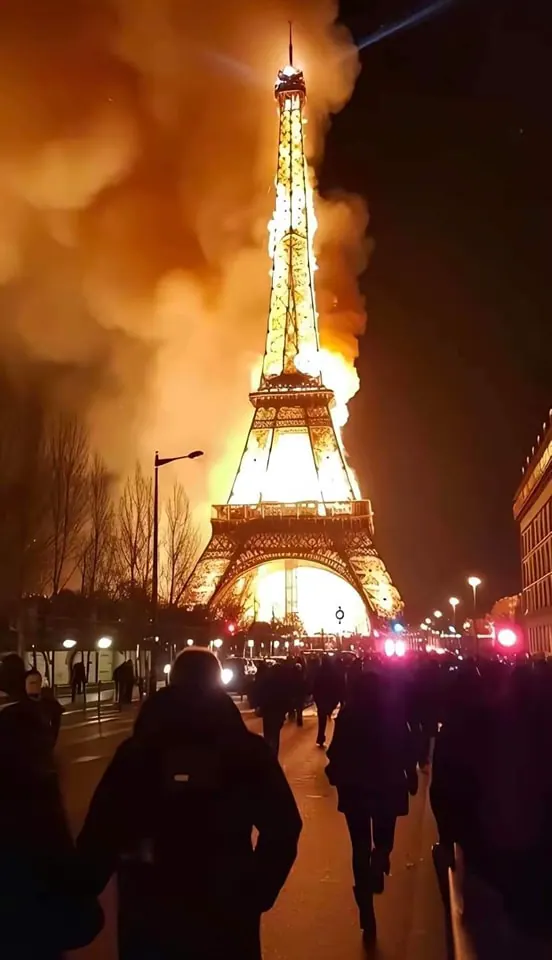
On January 24, 2024, at 12:14 PM Libyan time, a social media account on X (formerly Twitter) posted a claim that the Eiffel Tower was on fire, garnering approximately 88.1 thousand views, 961 interactions, and 118 comments by January 25, 2024. The post included a picture that appeared to show the iconic landmark engulfed in flames. The claim was quickly picked up by other social media pages, spreading misinformation.
An investigation by Annir, a fact-checking organization, found that the claim was false. Using reverse image search on Google, they discovered a post on X (formerly Twitter) with a "Community Notes" feature, which indicated that the image was AI-generated and not based on real events. The note also mentioned that the video the image was taken from was deleted but an archived version revealed that it was created to illustrate a hypothetical scenario.
Further investigation by Annir involved checking the official social media pages of the Eiffel Tower on Facebook and X. A recent image posted on January 23, 2024, showed the tower with no indication of a fire. Additionally, live streams from the tower's surveillance cameras were monitored, and no signs of a fire were observed. These findings contradicted the initial claim of the Eiffel Tower being on fire.
The image used in the fake claim was AI-generated, and its purpose was to spread misinformation. The use of such technology to create convincing but false images is becoming increasingly common, making it more challenging to distinguish between fact and fiction online. Annir's investigation highlights the importance of verifying information through multiple sources before accepting it as true.
The fake claim about the Eiffel Tower's fire is not an isolated incident. Similar incidents of misinformation have been reported on social media platforms, including fake news about Libya. For instance, a fake claim about the Libyan Supreme Court issuing a law that forces a married man to marry a second woman if caught with her was previously debunked.
Annir's findings demonstrate the need for critical thinking and media literacy in the digital age. With the ease of creating and sharing content online, it is crucial to verify information through reputable sources to prevent the spread of misinformation. By doing so, individuals can help maintain the integrity of online information and prevent harm caused by false claims.
In conclusion, the claim that the Eiffel Tower caught fire on January 24, 2024, is false. The image used to support the claim was AI-generated, and no evidence of a fire was found on the official social media channels of the Eiffel Tower or its surveillance cameras.
Key points
- The claim that the Eiffel Tower caught fire was based on an AI-generated image.
- The image was taken from a deleted TikTok video that was created to illustrate a hypothetical scenario.
- Official sources, including the Eiffel Tower's social media channels, reported no fire.