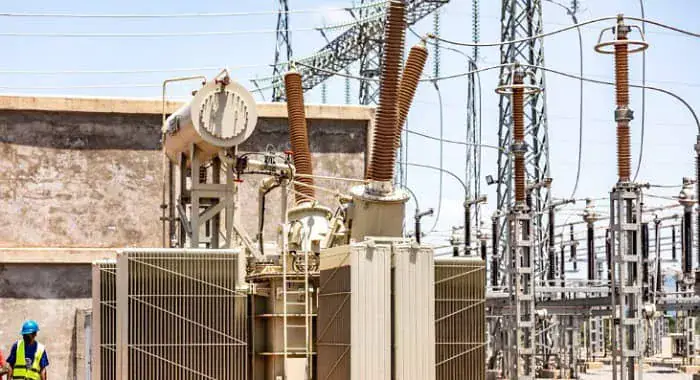
Guinea's national electricity operator, Électricité de Guinée (EDG), is facing severe financial difficulties, impacting the state's finances. The operator's inability to pay its bills to the Kaléta and Souapiti hydroelectric dam operators has resulted in a significant loss of revenue for the state. The situation was highlighted during the presentation of the 2026 revised finance bill at the National Assembly on October 31.
The Guinean state holds strategic stakes in the two hydroelectric dam operating companies, SOGEKA (Kaléta) and SOGES (Souapiti), with 49% and 51% stakes respectively. However, these companies are struggling due to EDG's failure to meet its financial obligations. As of September 2026, the situation is critical, with SOGEKA having only recovered $4.5 million out of $139.4 million billed to EDG, representing a recovery rate of 3.22%.
Similarly, SOGES has only received $6 million out of $240.9 million billed, translating to a recovery rate of 2.49%. This has resulted in a substantial decline in revenue for the state, with a total of 2,594 billion GNF in dividends blocked since 2021. The decline in EDG's payments is not an isolated incident but rather a continuous deterioration, with SOGEKA's recovery rate dropping from 77.81% in 2022 to 0.37% in 2025.
A similar trend is observed in SOGES, with its recovery rate declining from 66.37% in 2022 to 1.12% in 2025. This downward trend has significant implications for the state's finances, as the 2026 national budget allocates 3,000 billion GNF to support EDG, while legitimate revenue from the dams remains frozen. The state's investments in the dams are not yielding expected returns due to EDG's inefficiencies.
The National Assembly's Finance Commission has called for an immediate overhaul of EDG, citing the need for a thorough restructuring of the company's governance and internal management. The commission also recommends improving the recovery of bills from final consumers and streamlining financial flows between EDG and the dam operating companies.
The Assembly has instructed the Ministries of Energy and Finance to sanitize the sector's financial chain, ensuring the security of public revenue and the viability of the country's major hydroelectric projects. The situation highlights the need for urgent reforms in Guinea's energy sector to prevent further financial losses.
The EDG crisis has far-reaching implications for Guinea's energy sector and the state's finances. The National Assembly's recommendations aim to address the root causes of the problem and ensure a stable and efficient energy supply for the country. The implementation of these recommendations will be crucial in resolving the EDG crisis and securing the state's revenue.
Key points
- EDG's failure to pay hydroelectric dam operators has blocked 2,594 billion GNF in state dividends since 2021.
- The Guinean state's stakes in SOGEKA and SOGES have been impacted by EDG's financial difficulties.
- The National Assembly has called for a thorough restructuring of EDG to address the crisis.