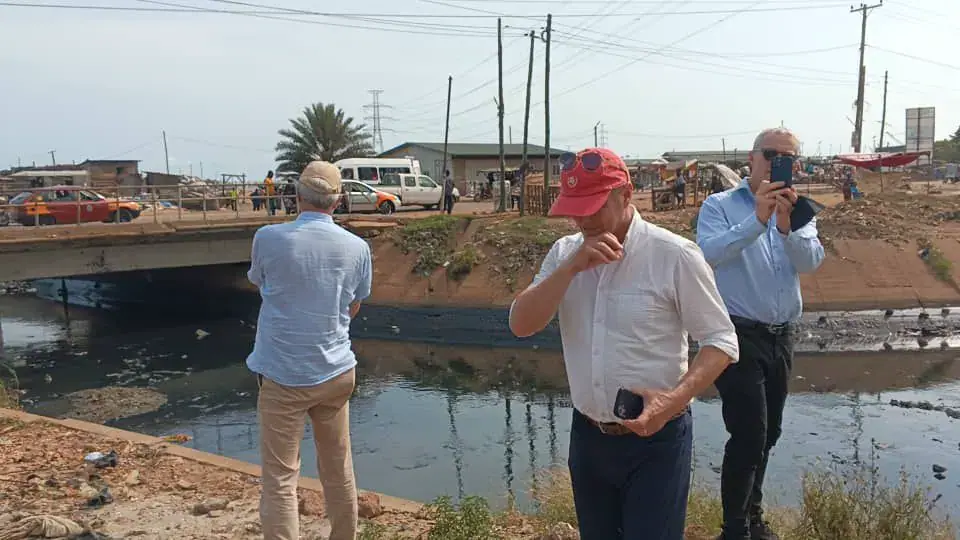
The Chemu Lagoon in Tema, Ghana, is facing severe environmental challenges due to untreated chemical and metal waste from the city's industrial zone. According to Benjamin Bampoe, Urban Roads Engineer of the Tema Metropolitan Assembly (TMA), factories upstream are discharging waste into the rivers that feed the lagoon without proper treatment. This has resulted in the loss of fish and other aquatic life in the lagoon. The TMA is working with the Environmental Protection Agency (EPA) to address the issue.
The industrial area of Tema has several major rivers that flow through it before emptying into the Chemu Lagoon and then the sea. Industries involved in aluminium, cement, chemicals, oil, and metal production are contributing to the pollution. Bampoe emphasized that the combined effect of the waste is devastating for the lagoon's ecosystem. He made these remarks during a tour of the lagoon by TMA officials and eight Danish politicians and parliamentarians, who were in Ghana to learn about the country's development and security programmes.
In addition to chemical pollution, the waterways in Tema are also blocked due to sand and mud from unpaved roads in nearby communities. This blockage has been building up over 15 years and has contributed to the flooding that occurred in the area on 29 June. Bampoe linked the flooding directly to the blocked waterways and emphasized the need for industries to treat their wastewater before releasing it into the environment. He stressed that trying to clean the lagoon after pollutants have entered the water will not solve the problem.
The TMA, in collaboration with the EPA, is working to get factories to treat their wastewater at source. Bampoe, who also leads the climate team under the Strategic Sector Cooperation (SSC) programme, highlighted the importance of nature-based drainage solutions and green approaches to tackle flooding in Tema. The SSC programme aims to address the environmental challenges facing the city, including flooding and pollution.
Denmark has committed to supporting Ghana through the SSC programme until 2030. Mathias Thuborg Madsen, Councillor for Cities, Water and Climate at the Embassy of Denmark, stated that the programme brings together the City of Aarhus, Danish water utility company Aarhus Vand, Ghana Water Company Limited, and the TMA. The programme focuses on addressing industrial wastewater, which requires specialized treatment to prevent damage to ordinary water treatment facilities.
The Danish team is also supporting efforts to reduce water losses from leaking pipelines, improve public water supply, and develop affordable, nature-based drainage systems to mitigate flooding in Tema. Madsen noted that industries are legally required to treat their wastewater before discharge, while local assemblies are primarily responsible for managing domestic waste. The collaboration aims to find sustainable solutions to the environmental challenges facing Tema.
The issue of industrial waste pollution in Tema's Chemu Lagoon highlights the need for effective waste management and environmental regulation. The TMA and EPA are working together to address the problem, with support from international partners like Denmark. The goal is to restore the lagoon's ecosystem and prevent future flooding and pollution. Key efforts include getting industries to treat their wastewater at source and implementing nature-based drainage solutions.
Key points
- Untreated industrial waste from Tema's factories is polluting the Chemu Lagoon, killing fish and worsening floods.
- The TMA and EPA are working together to address the issue, with support from international partners like Denmark.
- The goal is to restore the lagoon's ecosystem and prevent future flooding and pollution through effective waste management and environmental regulation.