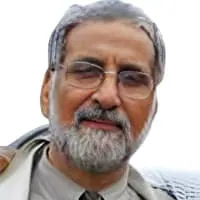
In a recent discussion on Libyan television, the topic of reviving ancient sciences took center stage. The conversation, which aired on September 21, 2026, on Wasat TV, focused on the works and ideas of influential Muslim philosophers. The program, hosted by Ibrahim Agniyou, delved into the contributions of these thinkers and their impact on their surroundings. The discussion aimed to shed light on the connections between ancient Greek philosophers and their Muslim counterparts.
One of the philosophers highlighted was Al-Kindi, a renowned Arab physician and astronomer who lived from 801 to 870 AD. Al-Kindi played a significant role in translating Greek heritage into Arabic during the reign of Al-Mamun. His works included commentaries on the ideas of Pythagoras, Aristotle, and Plato. Al-Kindi attempted to reconcile reason and faith using Platonic methods. He wrote a letter to Al-Mu'tasim, discussing the Prophet Muhammad and the concept of revelation.
Another prominent figure discussed was Al-Farabi, a Turkish philosopher known as the "Second Teacher" after Aristotle. Born in 870 AD, Al-Farabi was a prolific writer who authored works on various subjects, including philosophy, politics, and music. He was known to have spoken multiple languages and had a deep understanding of Aristotle's works. Al-Farabi's philosophical ideas were influenced by Plato and Aristotle, and he attempted to integrate their concepts into his own theories.
Al-Farabi's work, "The Ideal City," was heavily influenced by Plato's "The Republic." In it, he discussed the concept of a utopian society and the role of philosophers in governance. Al-Farabi's ideas on politics and ethics were shaped by his understanding of Aristotle's concept of "mean" and Plato's theory of forms. His philosophical views were not without criticism, with some accusing him of misinterpreting Aristotle's works.
The discussion also touched on the life and works of Ibn Sina, a renowned Persian philosopher and physician. Born in 980 AD, Ibn Sina was a polymath who made significant contributions to various fields, including medicine, philosophy, and science. His philosophical ideas were influenced by Aristotle and Plato, and he attempted to reconcile their views with Islamic theology. Ibn Sina's concept of the soul and its relationship to the body was a central theme in his philosophical works.
Ibn Sina's views on the nature of God and the universe were shaped by his understanding of Aristotle's and Plato's ideas. He proposed a theory of emanation, which posited that the universe was created through a series of emanations from the divine. Ibn Sina's philosophical works had a profound impact on Islamic thought and continue to be studied by scholars today.
The discussion on Wasat TV highlighted the significance of these philosophers' contributions to the development of Islamic thought and their ongoing relevance in modern times. By exploring their ideas and works, Libyan scholars aim to revive ancient sciences and promote a deeper understanding of the cultural and intellectual heritage of the Islamic world.
Key points
- The discussion on Wasat TV focused on the works and ideas of influential Muslim philosophers, including Al-Kindi, Al-Farabi, and Ibn Sina.
- These philosophers' contributions to the development of Islamic thought and their ongoing relevance in modern times were highlighted.
- The revival of ancient sciences aims to promote a deeper understanding of the cultural and intellectual heritage of the Islamic world.