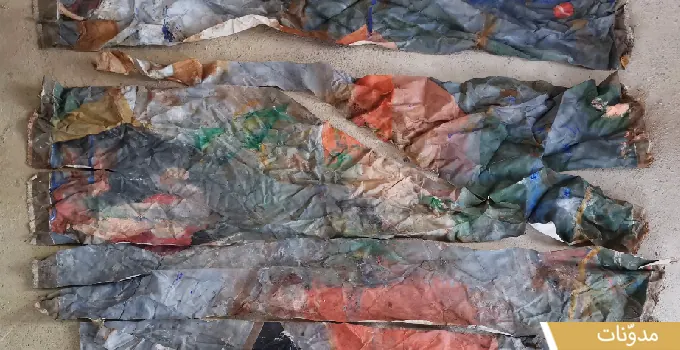
In a recent conversation with Syrian artist Saad Shueib, the discussion revolved around the concept of memory and its relationship with art. Shueib's work challenges traditional notions of authorship and memory, inviting the audience to reconsider the role of the artist in the creative process. His use of unconventional materials, such as mold and water, has become a hallmark of his artistic approach.
Shueib's journey as an artist has been marked by significant events, including the loss of his home and studio in the Beirut port explosion. This experience led him to re-examine his approach to art, resulting in a series of works that explore the intersection of memory and collaboration. His project, "In Honor of Tammam," is a testament to this new approach, as he invited the audience to participate in the creative process.
The concept of "co-authorship" is central to Shueib's work, as he seeks to redefine the role of the artist in the creative process. By introducing elements of chance and unpredictability, Shueib's art challenges traditional notions of control and authorship. His use of mold, for example, has become a symbol of this approach, as it grows and changes over time, independent of the artist's direct intervention.
Shueib's artistic approach is characterized by a willingness to experiment and take risks. His use of systems and rules allows him to create complex and dynamic works that evolve over time. In his "Triptych" project, Shueib developed a sophisticated color system that generated unexpected visual relationships, blurring the lines between control and chance.
The artist's use of repetition is also a key element in his work, as he seeks to discover new forms and patterns. By repeating a single action or gesture, Shueib invites the audience to participate in the creative process, blurring the lines between artist and viewer. This approach has led to the development of new forms and textures, as seen in his use of mold and water.
Shueib's work has also been influenced by his experiences in Syria and Tunisia. His use of local materials and references to his cultural heritage has added a new layer of depth to his art. In his recent project, "The Archive," Shueib explored the concept of memory and its relationship with the past, using mold and decay as a metaphor for the passage of time.
Ultimately, Shueib's work challenges us to rethink our assumptions about memory, authorship, and the creative process. By inviting the audience to participate in the creative process, Shueib's art becomes a dynamic and evolving entity, one that continues to grow and change over time. As we reflect on his work, we are forced to confront the complexities of memory and its relationship with art.
Key points
- Saad Shueib's artistic approach challenges traditional notions of authorship and memory.
- The use of mold and decay in his work serves as a metaphor for the passage of time and the power of memory.
- Shueib's concept of "co-authorship" redefines the role of the artist in the creative process.