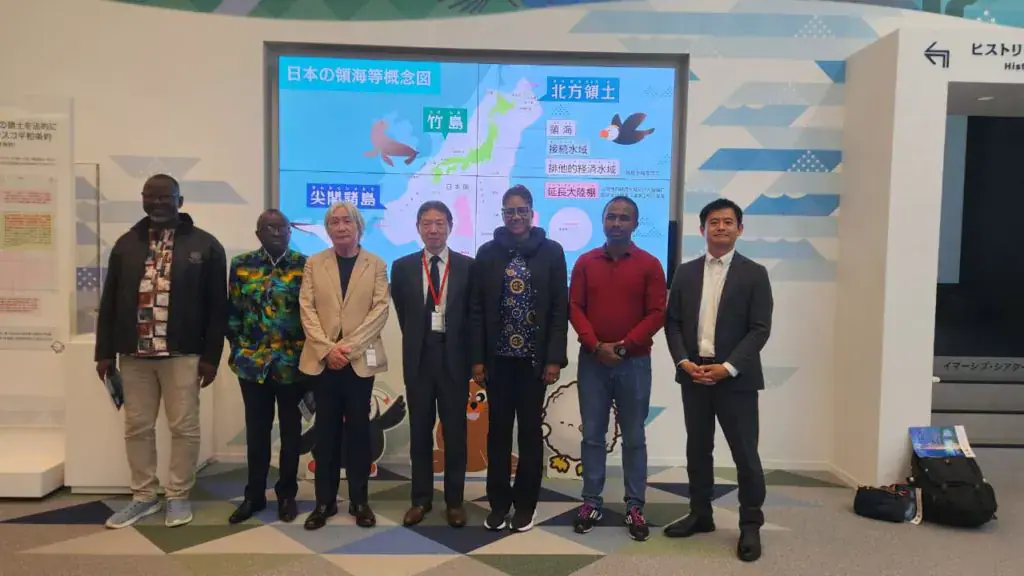
The National Territory and Sovereignty Museum in Tokyo, Japan, serves as a platform for sharing historical memory and raising awareness about territorial issues. Through archival documents, geographical maps, and immersive technological devices, the museum presents Japan's perspective on its territorial history and disputes with neighboring countries. This institution, established in January 2018 under the Japanese Cabinet Secretariat, aims to inform Japanese citizens and the international community about the government's official stance on territorial matters.
The museum features three main geographical areas of concern for Tokyo: the Northern Territories, Takeshima, and the Senkaku Islands. Using maps, archives, photographs, and audiovisual materials, the museum recounts the history of these territories, their geographical situation, and the arguments made by Japanese authorities to defend their claims. However, these issues are subject to differing positions among the countries involved. The museum's presentation primarily reflects the Japanese government's historical and legal perspective, particularly regarding disputes with Russia, South Korea, and China.
Beyond its historical role, the museum serves as an instrument of institutional communication and civic education. It highlights several aspects of sovereignty, including the preservation of territorial integrity, control of maritime spaces, protection of strategic interests, and transmission of national memory. The museum's approach combines history, geography, and diplomacy, presenting territory not just as a geographical boundary but as a constituent element of national identity, state continuity, and international relations.
On April 18, 2025, the museum reopened after renovation, introducing a more interactive and immersive experience. Visitors can now engage with audiovisual projections, historical animations, and immersive devices that provide a better understanding of the geographical areas concerned. The use of modern technologies aims to make territorial issues more accessible, especially to younger generations, and to enhance the transmission of knowledge.
One of the key takeaways from this experience is the importance of knowledge and documentation in defending national interests. Sovereignty extends beyond military and diplomatic dimensions to include mastery of history, conservation of documentary evidence, institutional communication, and the ability to explain positions to the international public opinion. This approach resonates with realities in Africa and Burkina Faso, where issues of sovereignty, territorial integrity, and preservation of collective memory are significant.
The Japanese experience offers valuable lessons for Burkina Faso, particularly in documenting national history, preserving archives, and developing spaces for transmitting knowledge about territory and institutions. For Burkina 24, this visit highlights the role of media in documenting history, explaining strategic issues, and contributing to the construction of collective memory. It inspires the development of high-value journalistic content, such as special dossiers, reports, documentaries, and analyses on African territories, borders, natural resources, sovereignty, and diplomatic relations.
Ultimately, the knowledge of one's history, the valorization of territory, and the transmission of memory are crucial for building national identity and international influence. The visit to the National Territory and Sovereignty Museum underscores the importance of these elements in fostering a deeper understanding of national and international issues. By exploring these themes, individuals and nations can better comprehend their environment, appreciate their history, and grasp the challenges that shape their future.
Key points
- The museum serves as a platform for sharing historical memory and raising awareness about territorial issues.
- The use of modern technologies aims to make territorial issues more accessible, especially to younger generations.
- The experience offers valuable lessons for Burkina Faso in documenting national history and preserving archives.