Africa, the world's second-largest continent, is home to 54 countries and an estimated 1.4 billion people. The continent's vast scale translates into variety, with no two regions feeling alike. From the Sahara's silence to the noise and energy of Lagos, and from the Swahili coast's salt and spice to the highlands of Ethiopia's cool and dramatic landscape, Africa has something to offer every kind of traveller. For investors and executives who travel frequently, the continent also offers destinations that remain genuinely underexplored by mass tourism.
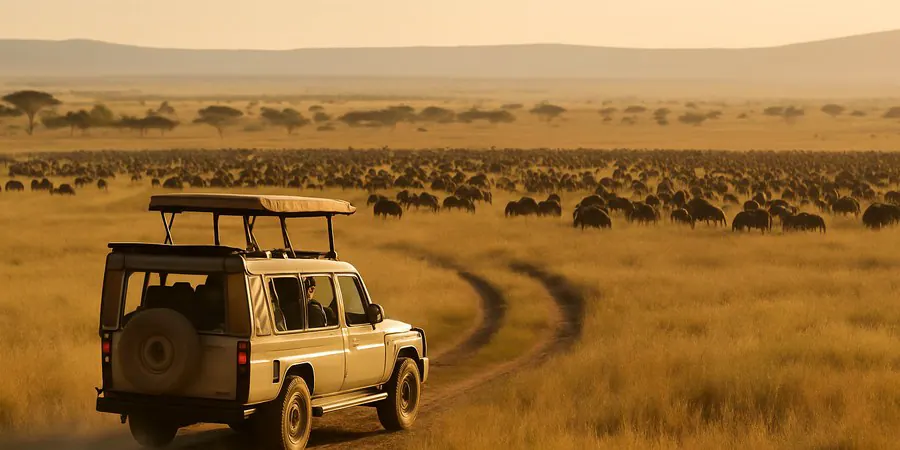
Wildlife safaris remain Africa's most iconic draw, with Tanzania's Serengeti hosting the Great Migration of roughly 1.5 million wildebeest each year. Kenya's Maasai Mara receives the same herds from July to October, while Botswana's Okavango Delta offers a water-based alternative: mokoro canoe trips through papyrus channels, with elephant and hippo at close range. South Africa's Kruger National Park, one of Africa's largest game reserves, supports all of the Big Five — lion, leopard, elephant, rhino, and buffalo — and offers guided night drives and walking safaris in its private concessions.
For a unique wildlife encounter, Rwanda's Volcanoes National Park offers mountain gorilla trekking permits, issued by the Rwanda Development Board, for $1,500 per person per visit. Numbers are tightly controlled, making the experience of sitting within metres of a habituated gorilla family truly singular. This opportunity allows travellers to connect with nature in a way that few others can.
Africa's cultural calendar is dense and varied, with Ethiopia's Timkat festival, celebrated each January, drawing Orthodox Christian pilgrims to cities including Gondar and Lalibela. Lalibela, a UNESCO World Heritage Site, contains eleven rock-hewn churches carved from a single volcanic plateau in the twelfth century. This festival offers a glimpse into the continent's rich cultural heritage.
Morocco's medinas, from Fez to Marrakech, offer labyrinthine souks, hammams, and some of the world's finest Islamic architecture. West Africa rewards the historically curious, with Ghana's Cape Coast Castle and Senegal's Gorée Island interpreting the transatlantic slave trade through preserved colonial fortifications. Both sites carry UNESCO World Heritage status, highlighting their importance in understanding the continent's complex history.
The ancient city of Djenné in Mali, built on an island in the Niger River delta, contains the world's largest mud-brick structure — the Grand Mosque of Djenné. This architectural wonder is a testament to the ingenuity and craftsmanship of the region's people. Travellers can explore the city's rich history and culture through its well-preserved landmarks.
Music and food anchor city visits across Africa, with Accra's Osu neighbourhood pulsing with Afrobeats venues, Nairobi's Karen district serving some of East Africa's best contemporary cuisine, and Cape Town's waterfront and Bo-Kaap neighbourhood blending food markets, colonial heritage, and Cape Malay cooking into a weekend itinerary. These cities offer a taste of the continent's vibrant urban culture and its many delights.
Key points
- Africa offers a wide range of experiences for travellers, from wildlife safaris to cultural festivals.
- The continent's vast scale and variety make it an ideal destination for investors and executives who travel frequently.
- Africa's cultural calendar is dense and varied, with many festivals and events taking place throughout the year.