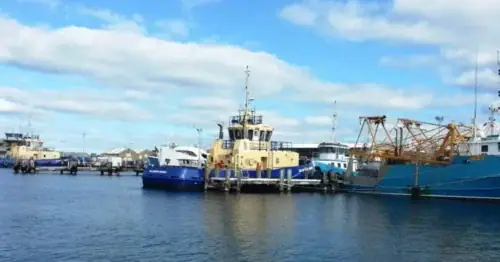
The expiration of the fishing protocol between Mauritania and the European Union has brought an end to European vessels operating in Mauritanian waters. This development marks the first time since 1987 that an agreement governing European fleet access to Mauritanian fish resources has lapsed. As a result, dozens of European vessels have begun to leave Mauritanian waters, potentially leading to significant economic losses and job insecurity for hundreds of people in European countries that benefited from the agreement.
The failed negotiations between Nouakchott and Brussels over the past six months, which included four rounds of talks, have stalled the renewal of the protocol. The agreement, which was set to expire, allowed European vessels to catch up to 280,000 tonnes of various fish species annually, including small pelagic fish, tuna, crustaceans, and squid. In return, the European Union provided a financial contribution of €57.5 million per year, supplemented by €16.5 million to support the Mauritanian maritime fishing sector.
A key point of contention in the negotiations was the financial contribution from the European Union. Mauritania sought an increased financial compensation for access to its waters, but the European Commission's offer of €60.8 million per year, including an average aid of €3.3 million for the fishing sector, fell short of Nouakchott's expectations. Additionally, disagreements arose over fishing quotas, particularly for small pelagic fish, which make up a significant portion of European fleet catches.
The Spanish fishing industry appears to be the most affected by the expiration of the protocol. With approximately 30 of the 60 European vessels that benefited from fishing rights in Mauritanian waters, Spain faces significant economic losses. The country's fishing fleet, particularly those operating off the coast of Nouadhibou, relies heavily on Mauritanian waters for its operations. Spanish estimates suggest that the sector could incur losses of around €50 million.
Other European countries, including France, the Netherlands, Lithuania, Latvia, Poland, Germany, Ireland, Portugal, and Italy, also benefited from the expired protocol. These countries had varying quotas for different fish species and fishing methods. The loss of access to Mauritanian waters may have far-reaching consequences for these nations' fishing industries and the communities that depend on them.
The Mauritanian government has not made an official statement on the expiration of the protocol, but indications suggest that Nouakchott is preparing for a potential suspension of the agreement. The country's stance on the negotiations and its expectations for a new agreement remain unclear.
As the situation unfolds, European fishing industries and governments will likely continue to assess the impact of the expired protocol. With ongoing efforts to secure a new agreement, the future of European fishing activities in Mauritanian waters remains uncertain.
Key points
- European fishing vessels have stopped operating in Mauritanian waters due to the expiration of the fishing protocol.
- The expiration may lead to significant economic losses and job insecurity for hundreds of people in European countries.
- A new agreement remains elusive due to disagreements over financial contributions and fishing quotas.