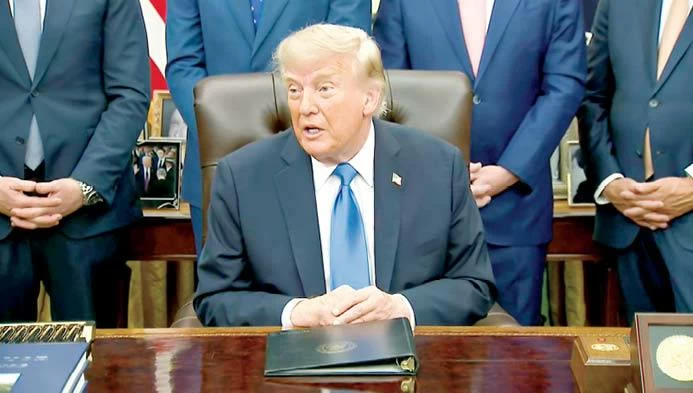
The recent decision by US President Donald Trump to bar certain media outlets, including CNN, MSNBC, and Politico, from accessing the White House has reignited debate about his relationship with the media. Trump's interactions with the media have been a point of contention throughout his presidency. According to Dr. Mahmoud Khalil, a professor of journalism at Cairo University, Trump has sought to bypass traditional media outlets to convey his message directly to the public through social media platforms like Truth Social.
Dr. Khalil noted that Trump's approach to traditional media is influenced by his perception of certain outlets as biased against him. Trump believes that some media outlets do not provide balanced coverage of his policies and instead present what he sees as a misleading picture of his positions. This perception has led Trump to favor alternative means of communication, allowing him to present his views without the editorial filtering typical of traditional media.
Dr. Sara Fawzi, a lecturer in digital media and head of the Artificial Intelligence Unit at Cairo University, offered a different perspective on Trump's dealings with the media. According to Fawzi, Trump uses access to information and events as leverage against media outlets that criticize him or publish investigations that contradict his narrative. This dynamic has contributed to the strained relationship between Trump and certain media outlets.
The tension between Trump and some media outlets is not a recent development, but rather a continuation of a trend that began earlier in his political career. Fawzi pointed out that Trump has previously used specific terminology to describe his policies, while media outlets have employed different labels. These differences in framing have contributed to the current state of affairs, with Trump viewing certain outlets as adversaries.
Trump's decision to restrict access to the White House for certain media outlets has been seen as a form of retribution against those who have criticized him. This move has sparked concerns about the role of the media in a democratic society and the importance of a free press in holding those in power accountable. The issue has also raised questions about the impact of Trump's actions on the relationship between the media and the public.
The controversy surrounding Trump's relationship with the media has implications for the broader media landscape. The President's preference for social media platforms has highlighted the changing nature of communication in the digital age. As the media continues to evolve, it is likely that Trump's approach to journalism will remain a topic of discussion and debate.
In conclusion, Trump's interactions with the US media have been marked by controversy and tension. Experts agree that his perception of certain outlets as biased or hostile has driven his approach to communication. As the media landscape continues to shift, it remains to be seen how Trump's relationship with the media will evolve and what implications this will have for the role of journalism in society.
Key points
- Trump's dealings with the media have sparked controversy and debate about the role of journalism in a democratic society.