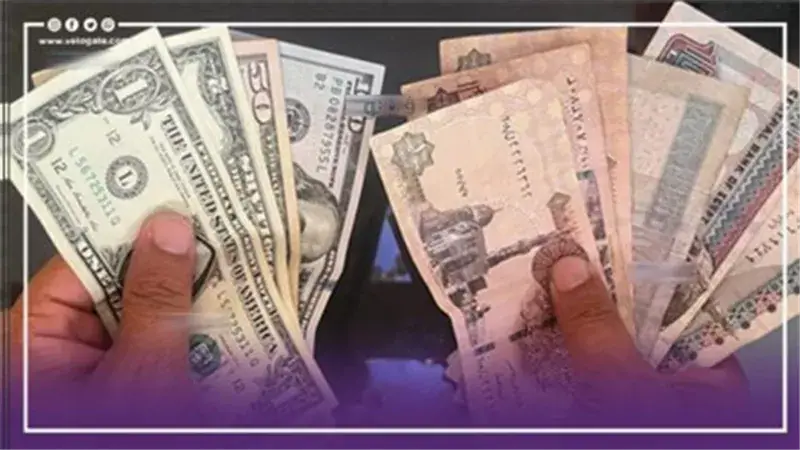
The Egyptian pound's recent performance against the US dollar has garnered significant attention, with experts weighing in on the factors that will influence its future trajectory. As the dollar reached record levels, concerns arose about the local currency's ability to recover and maintain stability. With the current exchange rate in focus, experts are examining the potential for the pound to continue its recovery and whether it can reach the predicted level of 45 pounds per dollar.
According to Dr. Khaled El-Shafei, an economic expert and head of the Cairo Center for Economic Studies, the pound's recovery is closely tied to the availability of foreign currency and increased dollar inflows into the banking system. He notes that reaching a level of 45 pounds per dollar is contingent upon sustained improvement in the state's foreign currency resources, including exports, tourism, remittances from Egyptians abroad, and foreign direct investment. El-Shafei emphasizes that a significant gap of around 8.5 pounds per dollar, or approximately 16%, exists between the current rate and the predicted level.
Dr. Mohamed Abdel Baset, an economic expert and finance professor at Ain Shams University, concurs that the dollar's movement against the pound must be considered in the context of various economic and monetary variables. He stresses that continued decline in the dollar's value requires stable dollar inflows that exceed market needs, accompanied by improved balance of payments indicators and increased capacity to provide foreign currency from sustainable production sources. Abdel Baset highlights that achieving a level of 45 pounds per dollar would represent a substantial change in transaction costs and financing, with implications for import bills and export revenues.
Both experts agree that the potential for the dollar to rise again is linked to several factors, including increased demand for imports, higher energy and commodity prices, and reduced foreign currency sources. They also emphasize the importance of managing dollar liquidity, strengthening foreign reserves, and expanding the production and export base to ensure a stable exchange rate. El-Shafei and Abdel Baset caution that failure to address these factors could lead to renewed pressure on the dollar and undermine efforts to stabilize the exchange rate.
The Egyptian economy's reliance on imports and external obligations adds complexity to the exchange rate dynamics. With a significant portion of the population dependent on imported goods, fluctuations in the exchange rate can have far-reaching consequences for inflation and living standards. As such, experts stress the need for a balanced approach to managing the exchange rate, one that takes into account the competing demands of economic growth, stability, and social welfare.
In the short term, market participants and citizens alike are closely monitoring the exchange rate, seeking clues about the pound's future trajectory. While some predict a continued decline in the dollar's value, others caution that external factors, such as global economic trends and interest rate movements, could influence the exchange rate. As Egypt navigates these challenges, experts emphasize the importance of a well-coordinated economic policy that prioritizes stability, growth, and social equity.
Ultimately, the Egyptian pound's recovery against the US dollar will depend on a combination of factors, including foreign currency inflows, economic growth, and prudent monetary policy. As experts continue to analyze the situation, their assessments underscore the need for a comprehensive approach to addressing Egypt's economic challenges and promoting sustainable growth. With the exchange rate remaining a key indicator of economic stability, stakeholders will be closely watching developments in the coming months.
Key points
- Experts stress the importance of sustained foreign currency inflows to support the pound's recovery against the dollar.
- A stable exchange rate is crucial for promoting economic growth, stability, and social welfare in Egypt.
- Egypt's economic policy should prioritize a balanced approach to managing the exchange rate, taking into account competing demands of growth, stability, and social equity.