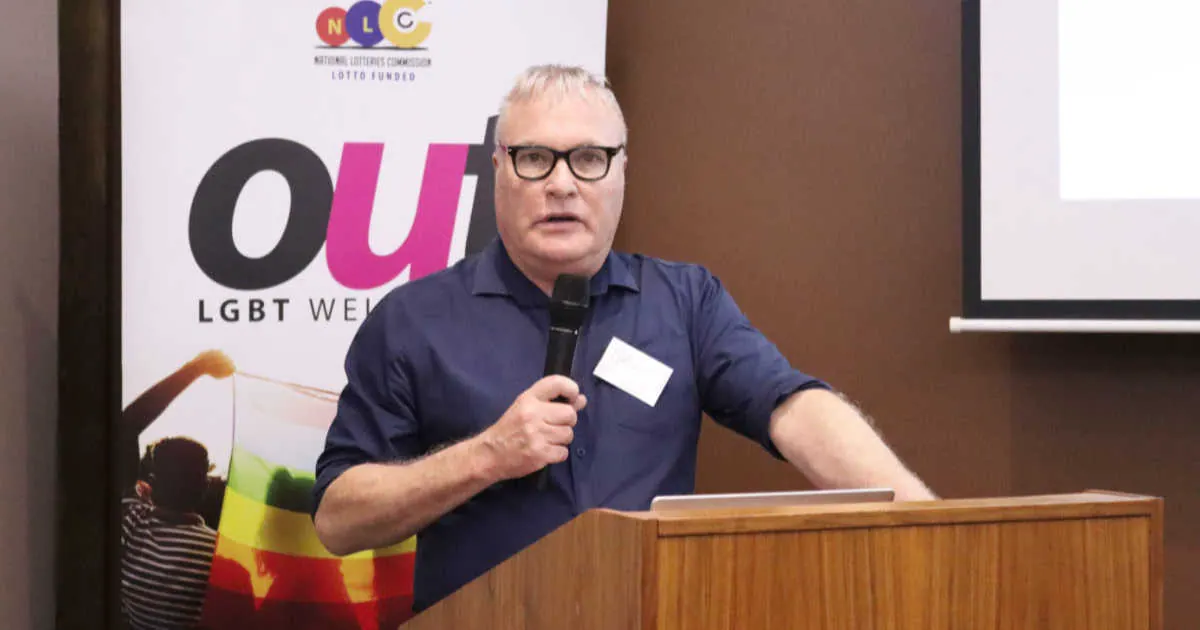
A recent seminar in Johannesburg, titled "Advancing Men Who Have Sex With Men (MSM) Health Seminar: Beyond the Basics," brought together around 40 public health professionals and advocates to discuss key gaps in health services for gay, bisexual, and other men who have sex with men. The event, hosted by OUT LGBT Well-being, aimed to share expertise and experience with the public health sector. OUT Executive Director Dawie Nel stated that the organization has provided sexual health services to MSM in Johannesburg since 2019.
The seminar focused on two key areas: sexually transmitted infections (STIs), particularly undiagnosed asymptomatic STIs, and sexualised drug use, known as chemsex. Dr. Elaine Saayman, who works with Sediba Hope Medical Centre and OUT's +DR medical practice, highlighted that healthcare providers in South Africa typically do not test patients for STIs unless they have obvious symptoms. She also discussed the use of Doxy-PEP as a preventive measure for syphilis, chlamydia, and gonorrhoea.
Research presented at the seminar showed high STI rates among MSM. A 2023 study conducted with OUT's assistance found that 15% of MSM who showed no symptoms tested positive for an STI. Recent data from the Gauteng Department of Health also showed that the percentage of men with STIs in the province rose from 12% in 2020 to 15% in 2023. Dr. Etienne Muller, a principal medical scientist at the National Institute for Communicable Diseases, emphasized the need for wider testing for asymptomatic STIs among MSM.
The seminar also tackled the topic of chemsex and harm reduction. OUT's Social Worker Hulisani Mudzanani presented the organization's work among a group of HIV-positive MSMC in Soweto, which used a targeted harm reduction approach. The presentation sparked debate among participants about how the public health sector could implement a harm reduction strategy while substance use remains criminalized.
Jay Matlou, Programme Manager at Access Chapter 2, emphasized the importance of broadening sexual health services for MSM. He stated that the country has done significant work on HIV and TB, but STI information needs to be integrated into mainstream services. Matlou added that conversations focusing on MSM health are crucial due to ongoing struggles around MSM people accessing healthcare.
Expanding access to healthcare for MSM requires ensuring that services are equipped to respond to their specific health needs. The seminar highlighted that this includes addressing asymptomatic STIs, anal health, chemsex, and harm reduction without stigma or judgment. As specialized MSM services become less available, the challenge of providing accessible and comprehensive healthcare becomes increasingly urgent.
The seminar's key takeaway is that access to healthcare means little if people do not feel understood, respected, and safe enough to use it. The event demonstrated the need for collaboration between public health professionals and advocates to address the neglected health issues among gay men in South Africa.
Key points
- Healthcare providers in South Africa typically do not test patients for STIs unless they have obvious symptoms.
- 15% of MSM who showed no symptoms tested positive for an STI in a 2023 study.
- Expanding access to healthcare for MSM requires ensuring services are equipped to respond to their specific health needs.