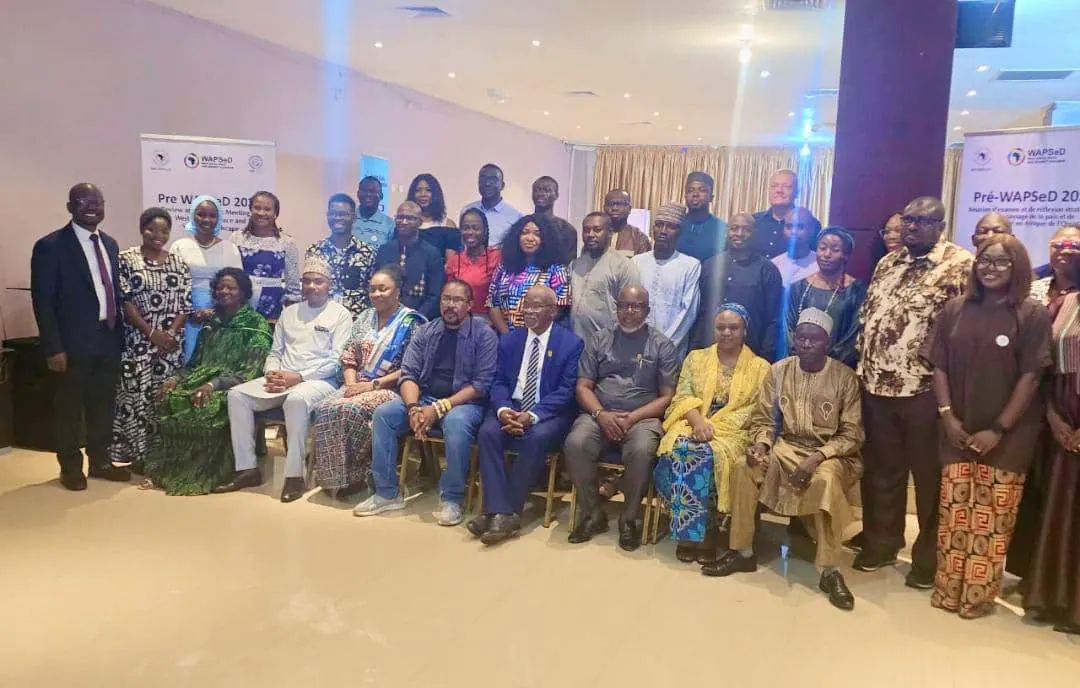
West African governments, regional institutions, and civil society organisations have been called upon to develop a more flexible and complementary security architecture to address the region's evolving peace and security challenges. This call was made at the pre-WAPSeD 2027 strategy and review meeting, themed "From Dialogue to Action: Reflecting on the WAPSeD 2025 Commitment and Setting the Agenda for WAPSeD 2027." The meeting aimed to reflect on past experiences, identify emerging opportunities, and chart a way forward for peacebuilding in the region.
The Board Chair of the Building Blocks for Peace Foundation, Prof. Charles Ukeje, delivered the keynote address, emphasising that security challenges vary significantly across societies and require responses that take local circumstances into account. He advocated for overlapping arrangements capable of responding to challenges at the national, regional, and transnational levels, rather than relying exclusively on a single regional framework. Ukeje stressed that peace and security ultimately concern people's rights, dignity, opportunities, and quality of life.
The Executive Director of BBFORPEACE, Mr Rafiu Lawal, noted that many of the challenges previously discussed had not disappeared but were increasingly interacting with new and more complex threats. He mentioned disinformation and information manipulation affecting public trust and social cohesion, as well as drug trafficking and illicit economies becoming increasingly connected to organised crime, corruption, and insecurity. Lawal added that the regional political and institutional environment has evolved considerably, and assumptions about regional cooperation can no longer be taken for granted.
The meeting reviewed the recommendations of WAPSeD 2025 and assessed the extent to which they had influenced peacebuilding, governance, and security practices across West Africa. Participants developed an action-oriented roadmap for WAPSeD 2027, including key themes, stakeholders, partnerships, and expected outcomes. The Director of Political Affairs at ECOWAS, Dr. Babatunde Afolabi, reaffirmed the organisation's commitment to strengthening peace and security across the region, emphasising the need for greater cooperation among governments, civil society organisations, development partners, and other stakeholders.
Dr. Constant Gnacadja, representing Afolabi, highlighted three principles essential to achieving sustainable peace: people, prevention, and partnership. He noted that West Africa continues to face complex and interconnected challenges, including violent extremism and terrorism, political tensions, organised crime, humanitarian pressures, and emerging threats that increasingly transcend national borders. Addressing these challenges requires collective action rather than reliance on any single institution, government, or sector.
The Director-General of the Institute of Peace and Conflict Resolution, Dr. Joseph Ochogwu, reaffirmed the institute's commitment to promoting peace, stability, regional integration, and sustainable socioeconomic development across West Africa. He called for stronger efforts to translate dialogue and policy recommendations into concrete action, noting that the region continues to face violent conflict, insecurity, and criminality, alongside longstanding challenges such as poverty, illiteracy, human rights abuses, and poor governance.
The engagement supports aspirations for a peaceful, secure, and prosperous Nigeria under the Renewed Hope Agenda, as well as a peaceful and prosperous West Africa and Africa. Key stakeholders, including experts, peace practitioners, and other stakeholders, gathered to strengthen efforts to develop sustainable responses to violent conflict and insecurity. The meeting demonstrated a collective commitment to addressing the region's complex peace and security challenges.
Key points
- West African governments and institutions must develop a flexible and complementary security architecture to address evolving peace and security challenges.
- The region faces complex and interconnected challenges, including violent extremism, terrorism, and organised crime.
- Collective action and cooperation among governments, civil society organisations, and development partners are essential to achieving sustainable peace in West Africa.