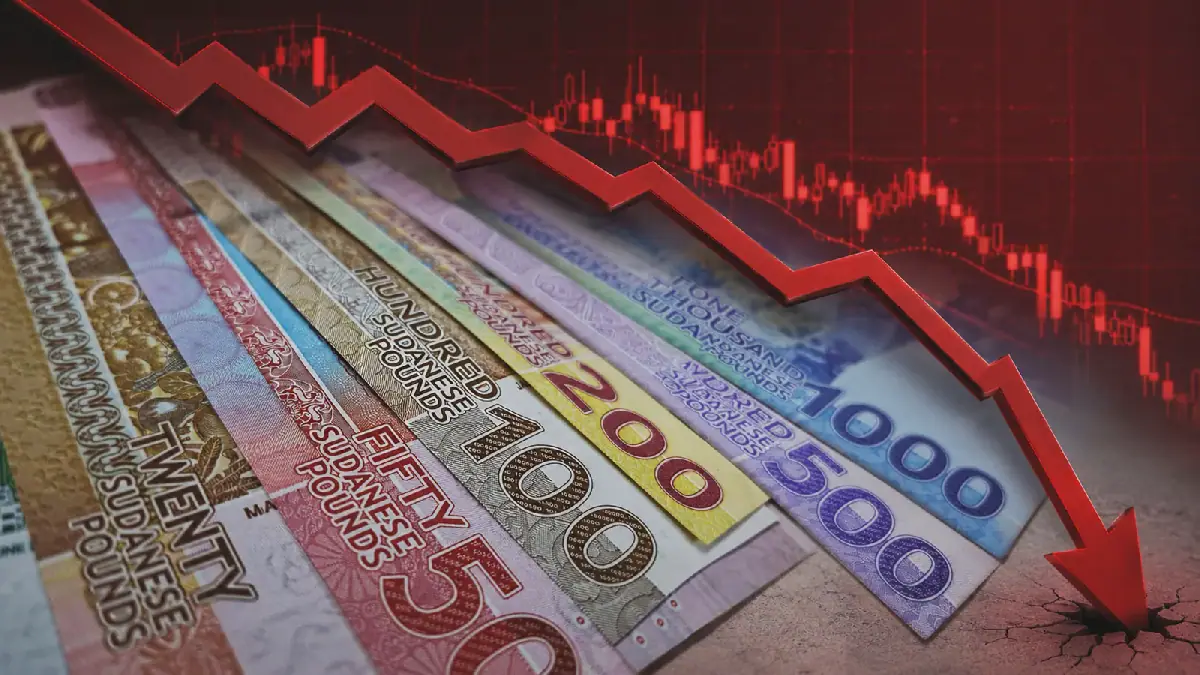
The International Monetary Fund (IMF) has revised its forecast for Sudan's economic growth, projecting a 7% increase in 2026 and 15% in 2027. However, experts warn that these projections may not accurately reflect the country's economic situation. According to Financial and banking expert Omar Sayed Ahmed, the growth forecasts do not demonstrate a sustained recovery from the devastation caused by war. Unemployment, inflation, and a widening current account deficit continue to cloud the outlook.
The IMF's World Economic Outlook forecasts global growth of 3.1% in 2026, rising to 3.4% in 2027. For Sudan, the IMF projects growth of 7% in 2026, up from an earlier estimate of 0.7%, followed by 15% in 2027. The fund has also revised its inflation forecast for Sudan in 2026 downwards, from 75.1% to 41.3%. However, it estimates that public debt will remain exceptionally high, at 334.4% of gross domestic product (GDP) in 2026.
Sayed Ahmed notes that the projections in the IMF's April and October 2026 reports suggest a possible rebound after a sharp economic contraction. However, he emphasizes that recovery must be assessed through output, production, employment, and household incomes, rather than the annual growth rate alone. The expert highlights the contrast between projected growth, unemployment estimated at about 59.5% in 2026, high inflation, and a widening current account deficit.
The IMF's forecasts rely on incomplete data, according to Sayed Ahmed. The World Economic Outlook database contains historical data, estimates, and projections covering output, growth, inflation, unemployment, public finances, trade, and the current account. However, in Sudan's case, the latest actual national accounts data date from 2019, while the latest data for public finances and the balance of payments date from 2021.
The conflict in Sudan has disrupted statistical collection, production, and markets, increasing reliance on incomplete data and assumptions. Growth forecasts have been revised sharply upwards, with the IMF raising its forecast for Sudan's economic growth in 2026 from 0.7% to 7%. The projection for 2027 rose from 8.1% to 15%, while the estimate for 2025 was revised downwards from 3.2% growth to zero.
Sayed Ahmed stresses that inflation measures the rate at which prices rise, not the overall price level or purchasing power. The IMF projects inflation of 41.3% in 2026, down from 99.9% in 2025 and below the earlier estimate of 75.1%. However, it expects inflation to rise again to 50.9% in 2027, suggesting that the slowdown is not expected to be sustained.
The current account deficit is projected to widen from 8.6% of GDP in 2025 to 14.6% in 2026, before narrowing to 13% in 2027. A larger deficit does not necessarily cause an immediate rise in prices, as its effects depend on financing, foreign currency, and other factors. Experts emphasize the need for a comprehensive assessment of Sudan's economic situation, including independent indicators such as agricultural and industrial production, electricity supply, transport, exports, investment, employment, and household incomes.
Key points
- Experts question the accuracy of IMF growth forecasts for Sudan amid ongoing economic challenges.
- The IMF projects growth of 7% in 2026 and 15% in 2027, but experts warn of unreliable data and a widening current account deficit.
- Recovery in Sudan will depend on sustained peace, macroeconomic stability, and a broad-based rebound in economic activity.