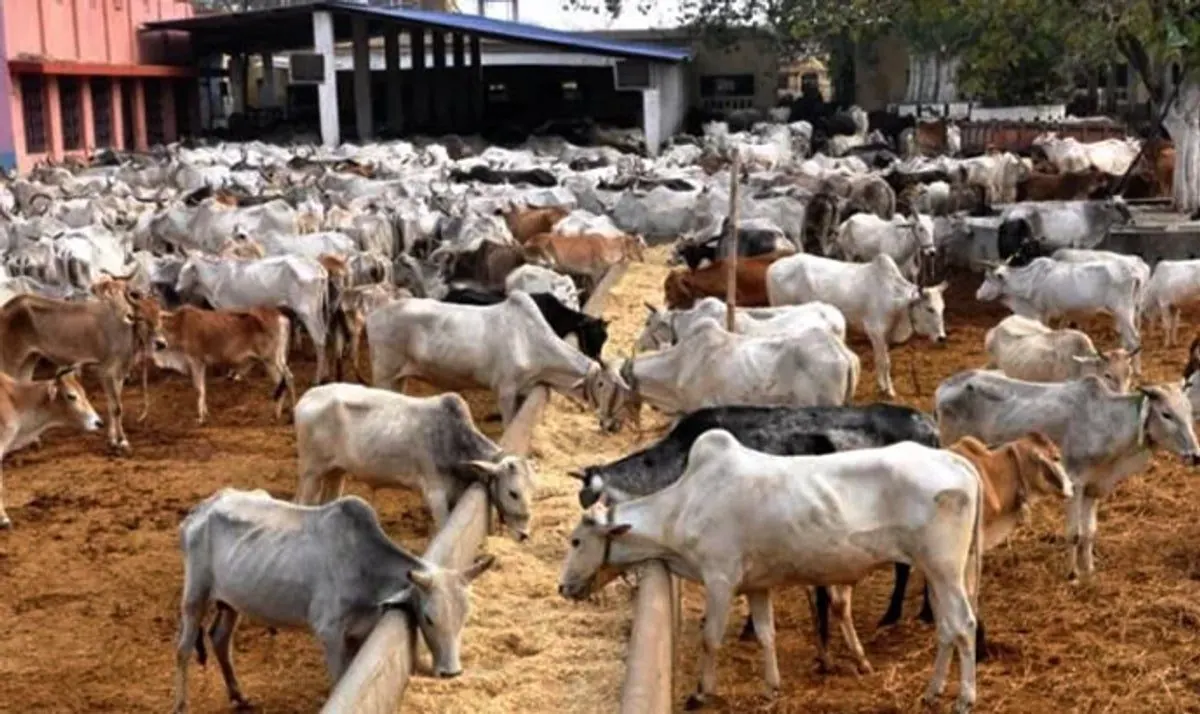
Agricultural experts in Nigeria are urging the federal government to establish a reliable and regularly updated livestock database. This would support the government's plan to grow Nigeria's livestock sector from an estimated $32 billion to $74 billion by 2035. The experts emphasize that accurate data on the country's livestock population and distribution is critical for effective planning, investment, and animal health management.
The Nigeria Livestock Growth Acceleration Strategy (NL-GAS) is the federal government's 10-year roadmap for transforming the livestock sector. The strategy estimates that livestock accounts for about 9% of Nigeria's $363 billion Gross Domestic Product in 2023, representing approximately $32 billion. The government aims to increase the sector's value to $74 billion by 2035. This target is expected to reduce Nigeria's dependence on imported animal products, create millions of rural jobs, and position the country as a major player in Africa's livestock market.
Achieving the target would require significant growth in the country's livestock herd and flock. The strategy targets an increase from about 400 million animals to at least 900 million by 2035, while improving productivity across the value chain. However, experts argue that the reliability of existing livestock population estimates must be addressed if the government is to plan effectively and assess whether the ambitious growth targets are being achieved.
An agribusiness practitioner and researcher, Terkula Aduku, highlights the importance of a proper census. He notes that changes in livestock numbers, reproduction, and movement of animals across national and state boundaries could contribute to differences in population estimates. Aduku emphasizes that the government needs accurate information on the number of animals in the country and their distribution to plan and make policy effectively.
Reliable data would also help the government plan revenue generation and regulate livestock movement, particularly where the movement of animals across state or national boundaries affects other economic activities. Agricultural policy expert Jeffrey Hemba also stresses the need for a reliable, regularly updated database for the sector. He notes that accurate livestock data would enable the government to determine the actual size and distribution of the country's animal population.
Hemba further emphasizes that accurate data would improve planning for animal health and feed supply, guide investment, and provide a basis for measuring the impact of livestock development programs. He also notes that the planned census should clearly define its methodology and reference period so that figures generated by different government agencies can be properly compared.
The government's strategy identifies animal nutrition, water supply, breeding and genetics, animal health, and data as key areas for focus. With a reliable livestock census, the government can make informed decisions and track progress toward its goals. The experts' calls for a reliable census are significant, as they would enable the government to effectively plan and implement its NL-GAS strategy.
Key points
- The Nigerian government aims to grow the livestock sector from $32 billion to $74 billion by 2035.
- A reliable livestock census is necessary for effective planning, investment, and animal health management.
- The census would help the government track progress toward its goals and make informed decisions.