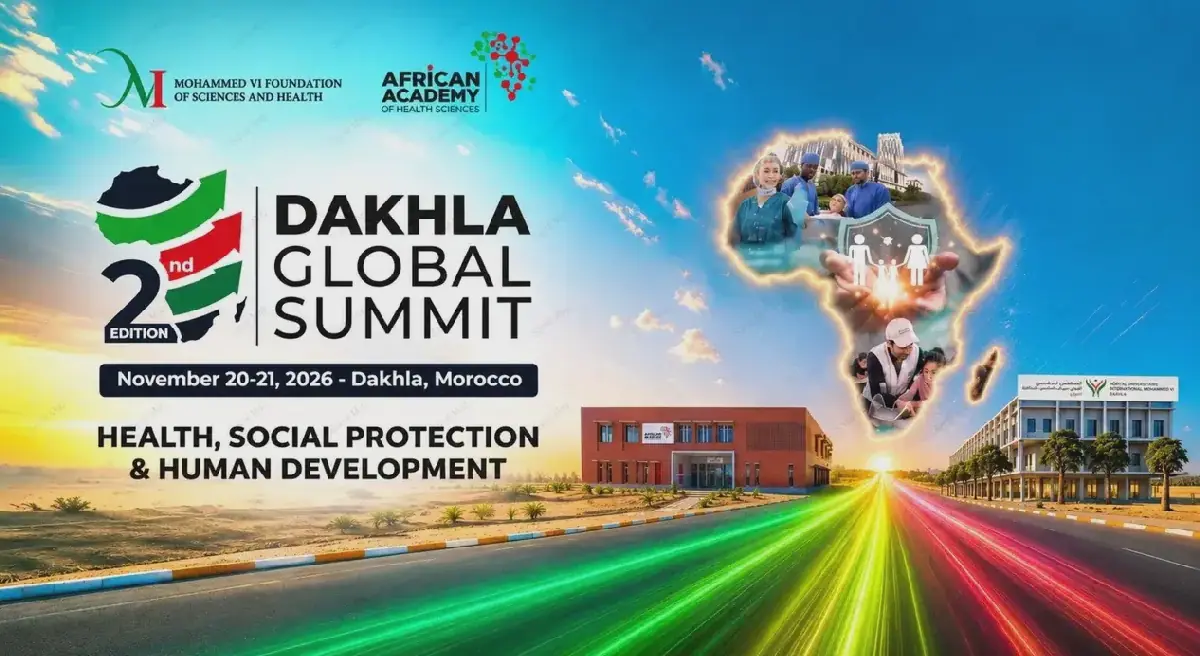
The second edition of the Dakhla Global Summit, organized by the Mohammed VI Foundation for Science and Health, brought together institutional leaders, researchers, and experts to discuss major health challenges in Africa. A panel discussion focused on the prevention and screening of prevalent infectious diseases, highlighting the importance of vaccination and diagnosis. Experts examined the stakes of collective immunity, the health and economic benefits of vaccination, and ways to better anticipate epidemics and pandemics.
Professor Ahd Oulad Lahsen, director of the Pasteur Institute in Casablanca, emphasized the role of vaccination in protecting populations against infectious diseases through collective immunity. This form of indirect protection reduces the circulation of infectious agents and their transmission. Her intervention was part of a session on "Collective Immunity, a Challenge and an Objective of Mass Vaccination."
Professor Pétronille Acray-Zengbé, a public health specialist from Côte d'Ivoire, highlighted the underfunding of prevention and vaccination programs in African countries. She explained that the benefits of prevention, often delayed and less visible, struggle to influence budgetary decisions compared to emergency health expenditures. Acray-Zengbé advocated for strengthened national health financing, including a collaborative regional approach to vaccine production and the digitization of vaccination data.
Professor Jean-Luc Gala, a geneticist from the Catholic University of Louvain, discussed the predictability of epidemics and pandemics. He emphasized the contribution of bacterial genetics in understanding the mechanisms of infectious disease transmission. According to Gala, pandemics are not mere accidents but follow common rules that can be studied through genetic analysis, enabling better comprehension and anticipation of epidemic phenomena.
The Dakhla Global Summit aims to address significant health challenges in Africa through dialogue and collaboration among experts. The event features various sessions and discussions on pressing health issues, including infectious diseases, vaccination strategies, and health system strengthening. By sharing knowledge and experiences, participants seek to develop effective solutions to improve health outcomes in Africa.
Key speakers at the summit underscored the need for increased investment in health infrastructure, research, and innovation to combat infectious diseases. They also stressed the importance of community engagement, public awareness, and cooperation among countries to address health security challenges. The summit provides a platform for experts to share best practices and explore new approaches to tackling health crises.
The Mohammed VI Foundation for Science and Health, in collaboration with the African Academy of Health Sciences, organized the Dakhla Global Summit to promote health development and scientific research in Africa. The event brings together leading figures in the health sector to discuss critical issues and develop strategies for improving health outcomes and responding to health emergencies.
Key points
- Experts emphasize the importance of vaccination and diagnosis in combating infectious diseases.
- The Dakhla Global Summit aims to address major health challenges in Africa through dialogue and collaboration.
- Strengthening health systems, investing in research, and promoting community engagement are crucial in fighting infectious diseases.