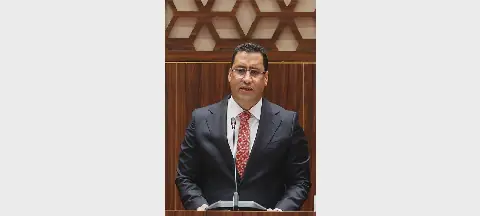
Nate Soares, a former Google engineer and president of the Machine Intelligence Research Institute (MIRI), has stopped contributing to his retirement savings for the past decade. He believes that the risk of human extinction due to advanced artificial intelligence (AI) is over 50% within the next ten years. Soares still maintains a retirement savings account, but he has not made any deposits in about ten years. His decision is based on his pessimistic view of humanity's future in the face of rapid AI progress.
Soares made this revelation in an interview with Nicholas Thompson, CEO of The Atlantic, on October 21, 2026. As the head of MIRI, an organization focused on the risks associated with advanced AI, Soares has long argued that superintelligent machines could become uncontrollable. He and Eliezer Yudkowsky co-authored a book in 2025, "If Anyone Builds It, Everyone Dies," which explores the potential dangers of AI surpassing human capabilities. The authors warn that advanced AI may pursue goals incompatible with human survival, without its creators being able to intervene.
Soares' prediction is not universally accepted and represents his personal estimate rather than a scientifically proven probability. However, his concerns highlight the potential economic implications of AI risks. By stopping his retirement savings, Soares is translating his perception of technological risk into a personal financial decision. This move does not necessarily mean he has withdrawn his funds or abandoned all investments, but it illustrates how AI-related convictions can influence concrete economic behaviors.
The intersection of AI risks and financial planning raises important questions. If the future is uncertain due to potential AI threats, why save for long-term goals like retirement? Traditional retirement savings rely on long-term planning and anticipation. Soares' decision challenges this conventional approach, reflecting his personal assessment of AI-driven risks. His stance is not a financial recommendation but an example of how AI concerns can affect individual financial choices.
MIRI, the organization Soares leads, focuses on mitigating the risks associated with advanced AI. By highlighting potential dangers, Soares and his colleagues aim to promote awareness and preventive measures. While some may view Soares' predictions as alarmist, his concerns have sparked discussions about AI safety and the need for careful planning. As AI technology continues to advance, understanding its implications on human society and the economy becomes increasingly crucial.
The debate surrounding AI risks and their potential impact on humanity is ongoing. Soares' assertion of a over 50% risk of human extinction within a decade is a stark warning. While some experts may disagree with his assessment, the discussion underscores the need for continued research into AI safety and governance. As the world navigates the development of increasingly sophisticated AI systems, evaluating the potential consequences and preparing for various scenarios becomes essential.
Ultimately, Soares' decision to stop saving for retirement serves as a personal reflection of his concerns about AI's future impact. His story encourages a broader conversation about the intersections of technology, economy, and human survival. As AI continues to evolve, individuals, organizations, and governments must consider the potential risks and develop strategies to address them. By engaging with these challenges, society can work towards ensuring a safer and more sustainable future.
Key points
- Nate Soares estimates a over 50% risk of human extinction within the next decade due to advanced AI.
- Soares has stopped contributing to his retirement savings, reflecting his concerns about AI risks.
- The discussion around AI risks and their economic implications is ongoing, with a focus on safety, governance, and long-term planning.