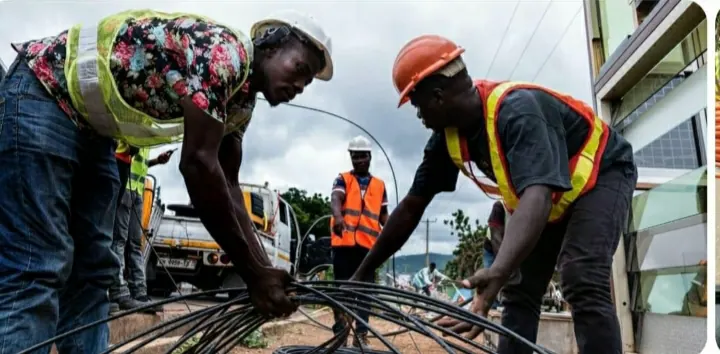
An Information and Communication Technology (ICT) expert, Israel Ihaza, has called for stronger community involvement in protecting telecommunications infrastructure in Nigeria. Ihaza made the call during a radio programme on Radio One 103.5 FM, where he warned that damage to fibre-optic cables was no longer simply a telecommunications industry problem but one capable of affecting banking, businesses, startups and everyday digital services. He suggested that local security personnel could be incentivised to monitor vulnerable areas and help identify suspicious activities around telecom infrastructure.
According to the Nigerian Communications Commission (NCC), more than 5,000 fibre-cut incidents occurred in the first half of 2026, largely from road construction, excavation and related civil works. The Commission has warned that damage to communications infrastructure can disrupt banking, commerce, government services, healthcare, security and emergency communications. Ihaza said the public needed to understand the wider consequences of damaging telecom infrastructure, noting that many people did not regard fibre cables with the same caution given to electricity infrastructure because they posed no obvious physical danger.
Ihaza said deliberate vandalism and accidental damage were both contributing to the problem, particularly when construction or excavation work was carried out without adequate knowledge of underground infrastructure. He suggested that stronger surveillance should be introduced around vulnerable telecom infrastructure, including the use of closed-circuit television cameras and increased involvement of security personnel. Ihaza also urged Nigerians to complement such measures by reporting suspicious activities instead of assuming that damage to telecom infrastructure was somebody else’s concern.
The expert argued that a damaged fibre cable could have consequences far beyond the immediate location of the incident, particularly in an economy where financial transactions, communications and businesses increasingly depend on connectivity. He said construction companies, engineers and other professionals whose activities could affect telecom infrastructure should be better educated about the location and importance of fibre cables. Ihaza also called for clearer identification of underground fibre routes to reduce accidental damage during construction.
MTN Nigeria’s Chief Technical Officer, Yahaya Ibrahim, said the company budgets about ₦7 billion annually for fibre relocation projects arising from road expansion and other incidents, including cases where infrastructure has to be moved or repaired. He described the expenditure as money that could otherwise be deployed to new network infrastructure. The MTN figure provides an industry perspective on the financial burden created by damage and disruption to telecom infrastructure, beyond the immediate impact experienced by subscribers.
Ihaza maintained that protecting telecom infrastructure required collective responsibility because the networks increasingly underpin the daily activities of Nigerians. He stressed the need for greater public awareness and participation in protecting the infrastructure that connects individuals, businesses and essential services. The NCC has similarly called for stronger coordination between telecommunications operators, contractors, government agencies, regulators and security agencies.
The NCC has established a joint standing committee involving the Federal Ministry of Works and the Federal Ministry of Communications, Innovation and Digital Economy to develop mechanisms for protecting fibre infrastructure during road works. Ihaza’s call for incentives for local security personnel and community involvement in protecting telecom infrastructure comes as the country seeks to mitigate the impact of fibre cuts on its economy and digital services.
Key points
- Over 5,000 fibre-cut incidents were recorded in Nigeria in the first six months of 2026.
- Expert calls for community involvement and incentives for local security personnel to protect telecom infrastructure.
- Damage to fibre-optic cables can disrupt banking, commerce, government services, healthcare, security and emergency communications.