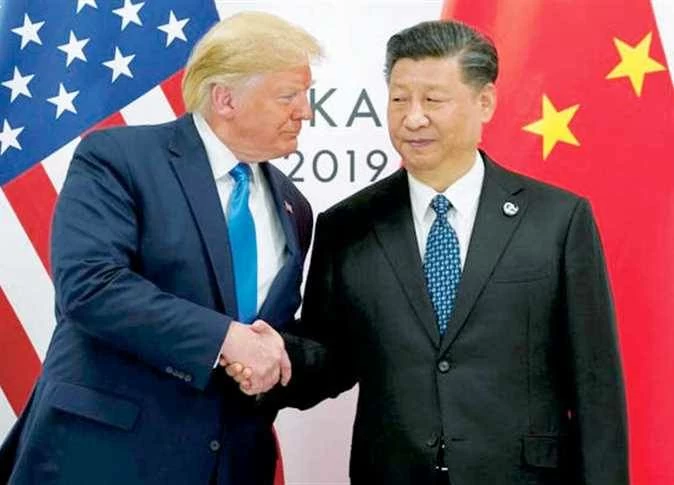
Peter Dickinson, a Ukraine affairs expert, has stated that US President Donald Trump and Chinese President Xi Jinping have the capability to pressure Russian President Vladimir Putin to negotiate a peace settlement in Ukraine. However, Dickinson questions whether they are willing to do so. He notes that both leaders have significant interests tied to their relationships with Russia and Putin, which may deter them from taking decisive action.
Dickinson highlights that the United States, as a global superpower, possesses considerable economic and military leverage over Russia. Trump, in particular, could reinitiate military support to Ukraine and impose stringent sanctions on Russia, which would likely compel Putin to engage in negotiations. Nevertheless, Dickinson suggests that Trump's reluctance to confront Putin directly may be attributed to their personal rapport and his desire to avoid antagonizing Russia.
According to Dickinson, China's interests are aligned with prolonging the conflict in Ukraine. By doing so, China can capitalize on Russia's weakened position and its growing dependence on China. This dynamic allows China to expand its influence in the region while navigating the geopolitical landscape to its advantage. As a result, Dickinson doubts that China will play a significant role in brokering a peace deal or exerting pressure on Putin.
Dickinson emphasizes that China's motivations are driven by its strategic interests, which are being served by the ongoing conflict. Consequently, it is unlikely that China will act as a peacemaker or work towards a peaceful resolution. While China has the capacity to influence Putin, Dickinson believes that China's current priorities and objectives do not align with promoting peace in Ukraine.
The situation in Ukraine remains complex, with multiple factors at play. The international community continues to monitor developments, as the conflict has significant implications for regional stability and global security. Dickinson's insights underscore the importance of understanding the motivations and interests of key players, including the United States, China, and Russia, in shaping the trajectory of the conflict.
The relationship between Trump and Putin has been a subject of interest, particularly in the context of the Ukraine conflict. Dickinson's comments suggest that Trump's approach towards Russia may be influenced by his personal rapport with Putin, which could impact his willingness to take a firm stance on the issue. This dynamic has raised concerns among some observers, who argue that a stronger stance may be necessary to address Russian aggression.
The international community remains engaged on the Ukraine issue, with various stakeholders advocating for a peaceful resolution. While challenges persist, there is a recognition that a negotiated settlement will require the involvement and cooperation of key players, including the United States, China, and Russia. The situation continues to evolve, with ongoing diplomatic efforts aimed at finding a solution to the conflict.
Key points
- Trump and Xi Jinping have the capability to pressure Putin to negotiate a peace settlement in Ukraine.
- China's interests are aligned with prolonging the conflict in Ukraine, which serves its strategic objectives.
- The international community continues to monitor developments in Ukraine, advocating for a peaceful resolution.