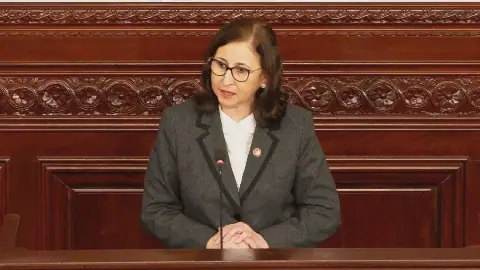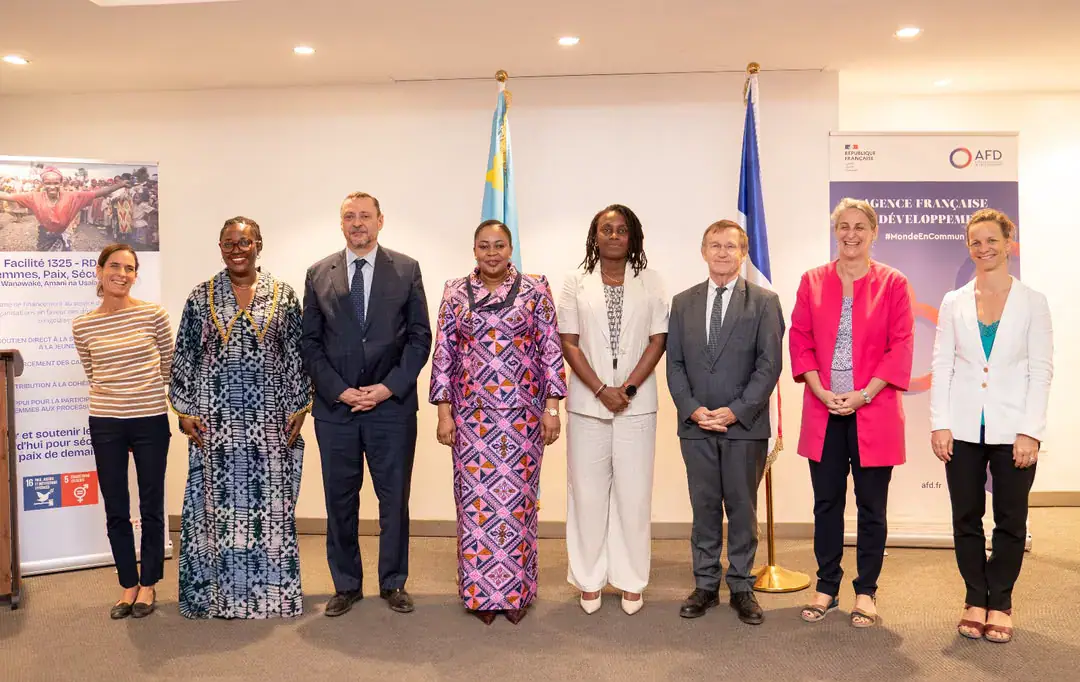
The 1325 Resolution Facility in the Democratic Republic of Congo has begun its activities, focusing on implementing the UN Resolution 1325 "Women, Peace, and Security". The initiative is funded by the French Development Agency and implemented by Expertise France. Winnie Tshilobo, national coordinator of the facility, shared insights on the project's objectives and challenges. The facility's primary goal is to promote women's participation in peace and security processes.
Expertise France's contributions to the initiative are centered around three main areas. The first area involves structuring and supporting public institutions, particularly the Ministry of Gender, through the National Secretariat for Resolution 1325. The second area focuses on strengthening the capacities of feminist organizations, supporting those engaged in conflict prevention, community mediation, and advocacy for women's participation. The third area involves working at the provincial level, specifically in Ituri and Tshopo.
Despite the progress made, several challenges hinder the effective implementation of the 1325 Resolution in the DRC. Tshilobo identified the weak institutionalization of the Women, Peace, and Security mechanisms, particularly at the provincial level, as a significant challenge. Additionally, the limited resources dedicated to the National Action Plan (PAN) 1325 pose a substantial obstacle. The facility aims to address these challenges and ensure the long-term sustainability of the initiative.
The approach adopted by Expertise France is inspired by the principles of feminist diplomacy, which emphasizes the importance of women's participation in peace and security decision-making processes. This approach aims to transform local power dynamics by supporting institutions in integrating gender into public policies, empowering feminist organizations, and creating inclusive dialogue spaces. By doing so, the initiative seeks to ensure that women are at the center of peace and security efforts.
To strengthen the impact of French expertise in implementing the 1325 Resolution in the DRC, Tshilobo recommended consolidating national ownership by supporting Congolese expertise and local feminist initiatives. This includes reinforcing coordination mechanisms, ensuring close articulation between national and provincial levels, and promoting synergies between institutions and civil society. By adopting this approach, the initiative can ensure a more sustainable and effective implementation of the resolution.
Expertise France's strategy for the 1325 Facility involves four key pillars. The first pillar focuses on strengthening public institutions through support to the Ministry of Gender and the National Secretariat for Resolution 1325. The second pillar involves supporting feminist organizations through a call for projects, identifying "Sauti ya Mama Mukongomani" (SMM) as a lead organization to support local feminist groups. The third pillar emphasizes a territorial approach, adapting to specific provincial contexts.
The 1325 Resolution Facility in the DRC aims to transform the resolution into a lever for structural transformation, anchored in local realities, and promoting effective and inclusive participation of women in peace negotiations. By adopting a comprehensive approach that addresses the challenges and complexities of the local context, the initiative seeks to ensure that women play a central role in shaping peace and security efforts in the DRC.
Key points
- Empowering women and promoting their participation in peace and security processes is crucial for sustainable development and conflict resolution in the DRC.
Reporting sources
- Trois questions à la Coordonnatrice nationale de la Facilité de Résolution 1325 en RDC · Congolese press agency