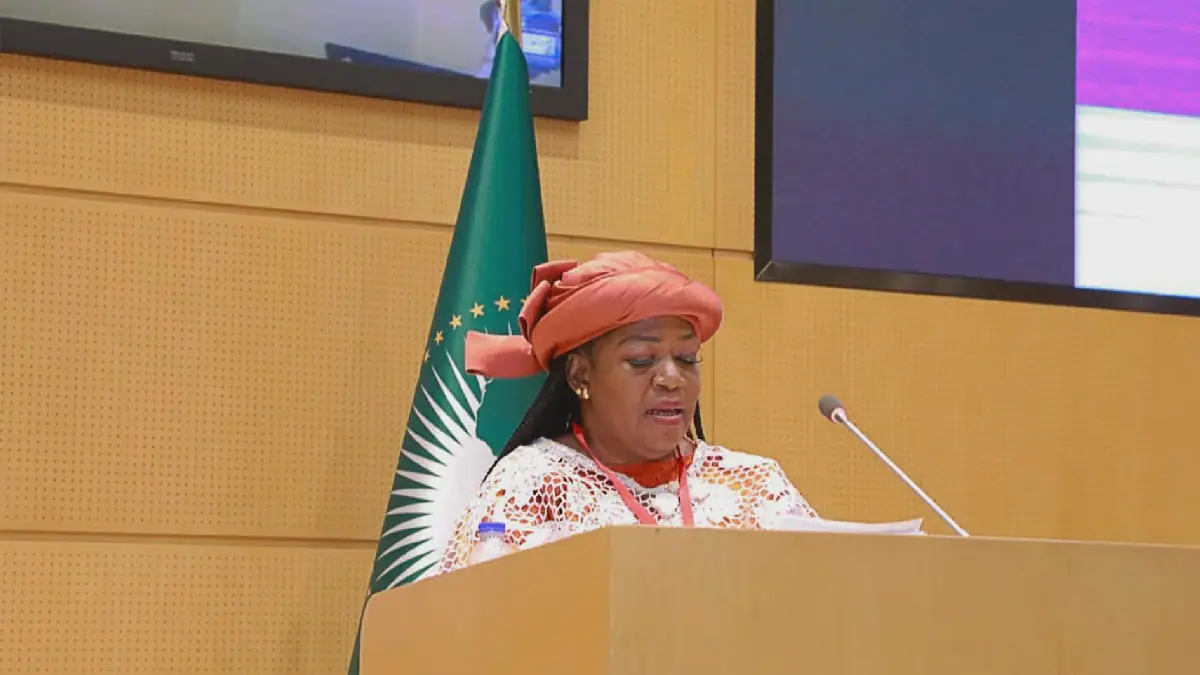
Dr. Chizoba Christiana Anyika, a Nigerian maritime and coastal tourism expert, has urged African governments, development institutions, and private-sector stakeholders to prioritise water security, safe sanitation, and sustainable tourism development. This call was made during her participation as a guest speaker at the African Tourism Dialogue, held at the African Union Headquarters in Addis Ababa, Ethiopia. Her presentation, titled "Unlocking Africa's Tourism Potential Through Water Security and Safe Sanitation," aligns with the African Union's 2026 Theme of the Year.
The African Union's 2026 Theme of the Year, "Assuring Sustainable Water Availability and Safe Sanitation Systems to Achieve the Goals of Agenda 2063," highlights the importance of sustainable water management, improved sanitation, and resilient infrastructure in advancing Africa's socioeconomic transformation. Anyika emphasised that Africa's ambition to become a leading global tourism destination must be supported by adequate water infrastructure, environmental protection, and effective governance. She noted that water security should be viewed as a critical economic development priority.
According to Anyika, Africa cannot build globally competitive tourism destinations while host communities struggle with inadequate access to clean water, poor sanitation, and environmental degradation. She stated that sustainable tourism must create value for both visitors and the communities that sustain these destinations. Anyika's presentation drew attention to the African Union's long-term development blueprint, Agenda 2063, which envisions a prosperous Africa based on inclusive growth and sustainable development.
Anyika explained that tourism could contribute significantly to Agenda 2063's Aspiration 1. She noted that the development of sustainable tourism destinations could strengthen several interconnected sectors, including transportation, hospitality, agriculture, fisheries, renewable energy, cultural industries, and digital services. The maritime expert stressed that Africa must move beyond promoting its natural attractions towards building competitive, environmentally responsible, and investment-ready tourism destinations.
Anyika advocated for stronger collaboration among ministries and institutions responsible for tourism, water resources, transportation, environment, maritime affairs, and investment promotion. She identified marine and coastal tourism as important opportunities for economic diversification, particularly in countries endowed with extensive coastlines, rivers, lakes, and wetlands. Anyika observed that Nigeria's coastal states possess significant opportunities for sustainable waterfront development, marine recreation, ecotourism, and community-based tourism enterprises.
However, Anyika cautioned that the economic potential of these destinations could only be realised through deliberate investments in water infrastructure, sanitation, visitor safety, environmental conservation, and responsible destination management. She further stressed that the benefits of tourism development must extend to local communities, particularly women, young people, small businesses, and indigenous entrepreneurs. Anyika advocated for inclusive tourism policies that promote skills development, access to financing, local enterprise participation, and sustainable employment.
Anyika emphasised that the success of Agenda 2063 should ultimately be reflected in tangible improvements in infrastructure, economic opportunities, environmental sustainability, and the wellbeing of African communities. She recommended that tourism development performance should be evaluated not only through visitor arrivals and tourism receipts but also through employment creation, local economic participation, environmental protection, and community benefits.
Key points
- Dr. Chizoba Christiana Anyika calls for prioritising water security and sustainable tourism to achieve African Union's Agenda 2063.
Reporting sources
- The Guardian · The Guardian