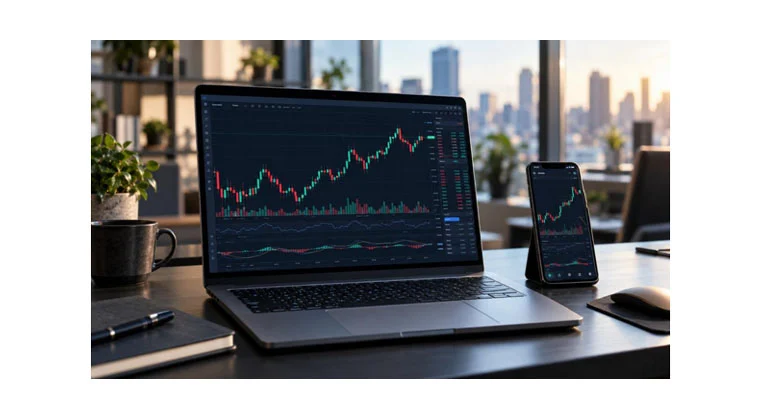
A recent article by The Punch highlights the importance of selecting a trading platform that fits an individual's specific needs. The article notes that there is no universally best trading platform, as different traders have unique requirements. For instance, a retiree investing in dividend stocks occasionally and a young trader dealing with currency pairs during lunch breaks require distinct tools.
The article suggests that traders should start by identifying what they want to trade, as this immediately eliminates some platform options. The markets or assets an individual wants to trade, such as stocks, ETFs, forex, or cryptocurrencies, will significantly influence the choice of platform. Additionally, traders must consider whether they prefer local or international markets.
Another crucial factor to consider is trading frequency, as it affects which costs are most important. Long-term investors prioritize custody fees, dividend handling, and low costs for occasional buys, while active traders focus on spreads, commissions, execution speed, and charting tools. A platform with slightly wider spreads but zero account fees may suit a buy-and-hold investor but not someone making multiple trades weekly.
The amount of capital an individual starts with also plays a significant role in selecting a trading platform. Minimum deposits vary significantly, ranging from almost nothing to thousands. Some platforms charge flat fees that may be negligible for large trades but substantial for small ones. Traders with modest amounts should look for low minimums, fractional shares or micro lots, and fees that scale with trade size.
The safety of a trader's funds is a non-negotiable aspect of choosing a trading platform. It is essential to verify the regulator that licenses the platform, ensure client funds are kept separate from the company's own money, and check for investor compensation schemes. The article advises traders to verify licenses on the regulator's website, as a logo on a homepage is not sufficient.
The user experience of a trading platform is also vital, as a confusing interface can lead to costly mistakes. Traders should open a demo account and test the platform for a week to ensure they can place orders confidently, find their trade history, and navigate the mobile and desktop versions seamlessly. If a platform causes stress or confusion, it is not the right fit.
Finally, traders should evaluate a platform's support and educational resources. They should test support by sending questions via chat or email and assess the speed and clarity of responses. Additionally, they should look for platforms that offer demo accounts, educational articles and videos, risk management tools, and clear trade history and performance reports.
Key points
- The best trading platform is one that aligns with an individual's trading goals, budget, and style.
- There is no universally best trading platform, as different traders have unique requirements.
- Choosing a platform that fits one's needs and sticking with it long enough to master it is crucial for making genuine progress as a trader.