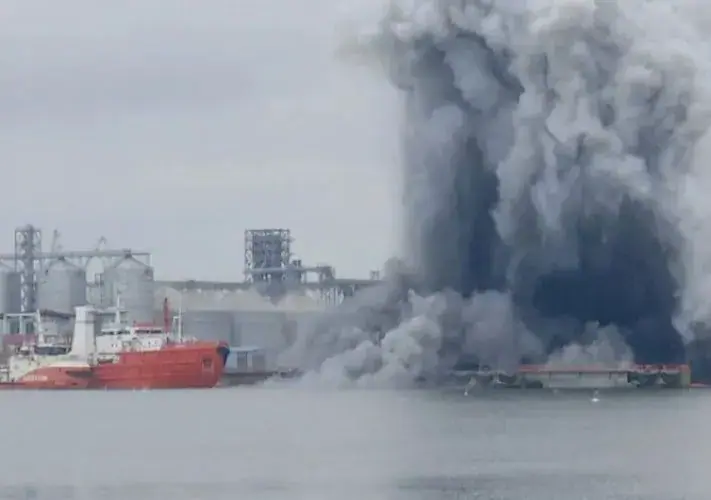
The International Bargaining Forum (IBF) has expanded the high-risk zone in the Black Sea to include waters off Romania and Bulgaria, following a series of attacks on commercial vessels. The move comes after a Somali-flagged cargo ship, BETUL 8, was attacked off the Bulgarian coast while en route from Romania to Egypt with 3,000 tons of grain. The updated classification, agreed upon this week and published by the International Transport Workers' Federation, extends protection southward along the western Black Sea.
The revised classification provides IBF-covered mariners with additional benefits, including extra pay equivalent to their daily basic wage for each day spent in the high-risk zone, doubled death and disability compensation, and the right to refuse sailing in the designated area. If mariners exercise this right, they can return to their home country at the company's expense, with a two-month basic wage compensation. This decision responds to calls from the Philippines to expand protection after the sinking of a liquefied gas tanker, Gas Husky, off Bulgaria's coast.
The IBF also adjusted classifications for other regions, downgrading the southern Red Sea and Gulf of Aden from war-like operation zones to high-risk areas. This change eliminates the minimum five-day extra pay entitlement while maintaining other protective measures. The waters within 12 nautical miles of Yemen's mainland remain classified as a war-like operation zone. The Gulf, Strait of Hormuz, and Gulf of Oman continue to be designated as war-like operation zones, with the current classification extended until December 3.
The updated high-risk zone in the Black Sea excludes a 12-nautical-mile strip off Romanian and Bulgarian coasts. Mariners covered by IBF collective bargaining agreements will receive enhanced protection and compensation in the expanded area. The decision aims to address concerns over the safety of mariners following recent attacks and incidents in the region.
The Philippines had urged for an expansion of the high-risk zone after the Gas Husky incident, which saw 19 Filipino mariners rescued, with two sustaining minor injuries. The IBF's move is intended to provide better protection and benefits for mariners operating in high-risk areas. The classification changes reflect ongoing efforts to adapt to evolving security situations and ensure the safety of seafarers.
The International Transport Workers' Federation published the updated IBF classifications, which will be implemented to enhance safety measures for mariners. The changes demonstrate a commitment to addressing the concerns of seafarers and ensuring their protection in high-risk zones. The IBF's decision is expected to have a positive impact on the safety and well-being of mariners operating in the affected regions.
The expanded high-risk zone in the Black Sea and adjusted classifications for other regions are set to take effect, providing mariners with enhanced protection and benefits. The IBF's move is a response to the evolving security landscape and a commitment to prioritizing the safety and well-being of seafarers.
Key points
- Mariners covered by IBF agreements will receive extra pay and doubled death and disability compensation when sailing in the expanded high-risk zone.