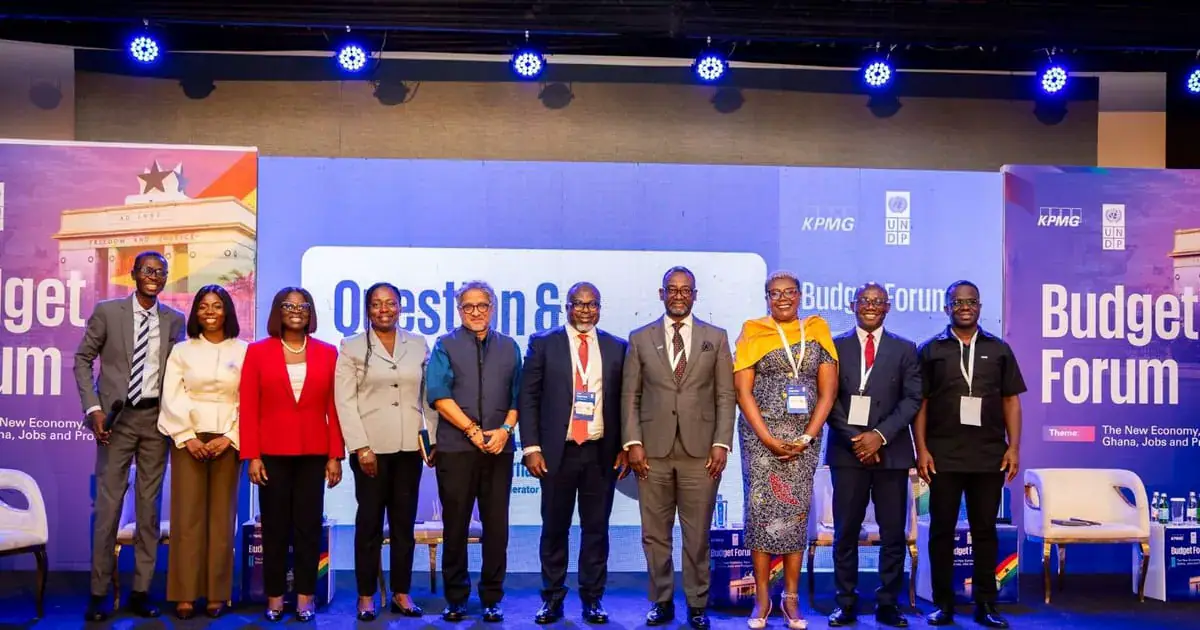
Ghana's business leaders, development partners, and the Ghana Revenue Authority (GRA) are cautiously optimistic about the country's 2027 budget, which is expected to play a crucial role in turning economic stability into production and job creation. The budget is part of a larger US$10bn transformation programme aimed at driving growth and development. With GH¢30bn earmarked for the first year of the programme, stakeholders are keenly watching how the government will execute its plans.
The 2027 budget comes at a time when Ghana is facing a heavy debt-service calendar, which could potentially constrain the government's ability to implement its ambitious plans. Despite these challenges, the government is expected to outline measures to boost production and job creation, which are critical to the country's economic growth and poverty reduction. The budget is also expected to provide clarity on how the government intends to mobilize revenue to support its development agenda.
The passage of the Affirmative Action (Gender Equity) Act, 2024 (Act 1121) has moved the conversation about equality from the abstract to the operational, reflecting a broader shift in Ghana's workplace dynamics. This development is part of a larger transformation in Ghana's economy, which is expected to be driven by a combination of policy reforms, investment in infrastructure, and support for the private sector.
The Ghana Stock Exchange (GSE) has recently undertaken a corporate social investment initiative, handing over a newly constructed borehole water project to the Anglican Agbogba Cluster of Schools. This project, which will provide clean drinking water and improve sanitation for over 1,350 pupils and staff, reflects the Exchange's commitment to contributing to Ghana's development agenda.
Ghana's economic growth has raised questions about who owns Africa's wealth and how it can be harnessed to drive development. The country's achievement has sparked a larger conversation about the need for African countries to take control of their resources and use them to drive growth and development.
The 2027 budget is also expected to address the challenges facing Ghana's artisanal fishers, who have been impacted by the expansion of the inshore exclusion zone. For over 22 years, Kwesi Atta has fished out of Ezilinbo, a coastal community in the Jomoro Municipality of the Western Region, and is among those who will be affected by the government's plans to make the exclusion zone work for artisanal fishers.
African Tiger Holdings has been named the winner of the 2026 Dutch Entrepreneur of the Year Ghana award, ahead of Kuipers Breeders Ghana Limited and Safisana Ghana Limited. This award reflects the company's innovative approach to business and its impact on Ghana's economy, and is a testament to the country's growing entrepreneurial spirit.
Key points
- The 2027 budget will test Ghana's ability to turn economic stability into production and job creation.
- The budget is part of a larger US$10bn transformation programme aimed at driving growth and development.
- The government's ability to execute its plans will be critical to the success of the budget.
Reporting sources
- Business and Financial Times · Business and Financial Times