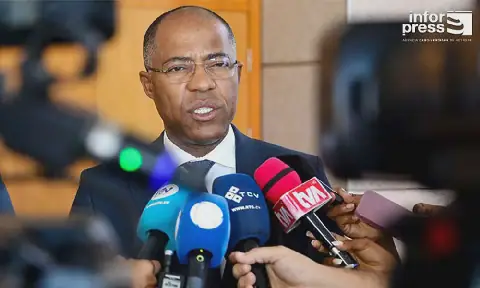
Dr Alex Glover-Quartey, who led Ghana's Civil Service between 2003 and 2006, has expressed concerns about the country's public service pay structure. He argues that entrusting officials with over a million dollars in public funds while paying them about $400 a month contributes to corruption. In an interview with Kafui Dey, Dr Glover-Quartey questioned the wisdom behind this mismatch between responsibility and reward.
Dr Glover-Quartey recalled that one of his first actions as Head of the Civil Service was to meet with World Bank and UK representatives to press for better monthly pay for Chief Directors. He proposed a figure of about $2,500 a month, which initially shocked the officials. However, he convinced them that it made little sense to put someone in charge of over $1 million in public resources while paying them around $400 a month.
Dr Glover-Quartey emphasized that the government must address the pay gap before expecting senior officials to manage large sums of public money without temptation. He stated that paying a pittance and expecting officials not to touch it is unrealistic. The former Head of Civil Service also questioned the practice of covering senior officials' electricity, water, and telephone bills instead of simply paying them adequately.
Dr Glover-Quartey suggested that reworking allowances alongside a fairer base salary could strengthen accountability without costing the state more. He argued that some benefits, such as free telephone calls, get abused. By adjusting these allowances, the government could promote accountability and reduce corruption.
Public sector pay in Ghana is governed by the Single Spine Salary Structure, a harmonized framework aimed at ensuring equity across the civil service. Salaries for workers paid from the Consolidated Fund are set by the Fair Wages and Salaries Commission. Negotiations over pay increases for 2027 and 2028 are ongoing, with reports indicating that public sector workers will receive a 9% rise in 2027 and 10% in 2028.
Dr Glover-Quartey's comments add to the debate over public sector pay, particularly regarding the salaries of Chief Directors overseeing ministry budgets. His statements come as the government continues to negotiate pay increases for public sector workers. The former Head of Civil Service's concerns highlight the need to address the pay gap and promote accountability in the management of public funds.
The issue of public sector pay is crucial in Ghana, as it affects the management of large sums of public money and the prevalence of corruption. Dr Glover-Quartey's criticism of the current pay structure underscores the need for reforms to ensure that senior officials are adequately compensated and motivated to manage public resources effectively.
Key points
- Dr Glover-Quartey proposes a monthly salary of $2,500 for Chief Directors to address the pay gap.