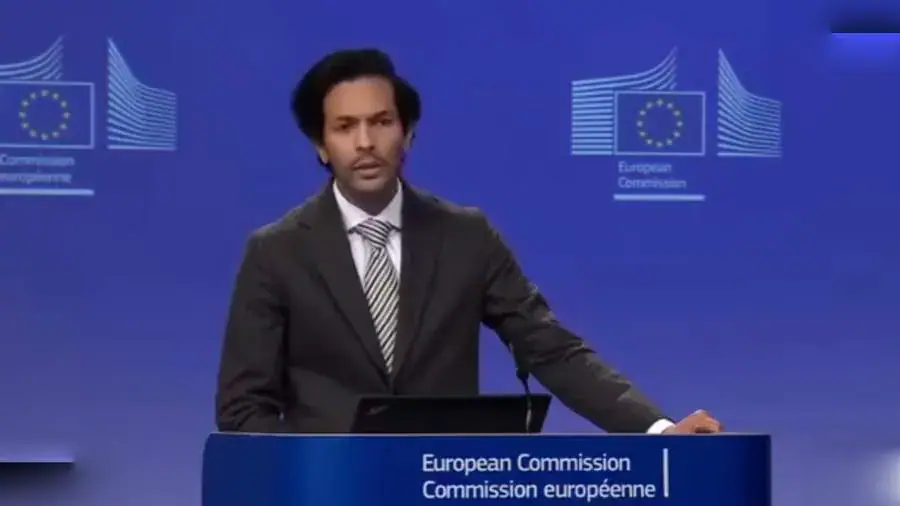
The European Union has reversed its stance on the deployment of Algerian military units in Niger, with the EU's foreign affairs spokesperson stating that the union respects the sovereignty of both Niamey and Algiers. This move comes after the EU was summoned by both countries to provide clarification on its intentions. The spokesperson, Anouar El Anouni, confirmed that the EU's ambassador in Algeria and chargé d'affaires in Niger were summoned by local authorities.
The EU's change in tone comes after a coordinated reaction from Niamey and Algiers, with both countries denouncing the EU's initial request for clarification as an interference in their sovereign affairs. The Nigerien government described the EU's move as "unfortunate and irresponsible," while Algiers stated that it would have rejected any such request. The EU's reversal aims to close an embarrassing episode without explicitly acknowledging the initial mistake.
The Algerian military deployment in Niger was decided at the request of the Nigerien authorities, according to the Algerian chief of staff, General Saïd Chanegriha. The deployment aims to protect common energy projects and installations, including oil exploration and a trans-Saharan gas pipeline. The move has already been implemented, with a convoy of Algerian military trucks and fuel tankers arriving in Agadez on October 31.
The EU's initial request for clarification on the deployment was made on October 30, with the spokesperson stating that the union was seeking information on the scope, objective, and basis of the deployment. However, this stance was quickly reversed, with the EU now claiming that it never intended to seek clarification. The EU's about-face has been seen as a recognition of the sovereignty of both Niger and Algeria.
The incident highlights the complexities of international relations and the challenges of navigating sovereignty and cooperation. For Niamey, the episode confirms that the choice of security partners is a decision for the state concerned, and not subject to external interference. The EU's reversal has been seen as a positive development, allowing for improved relations between the EU and both Niger and Algeria.
The Algerian military deployment in Niger is part of a broader effort to strengthen cooperation between the two countries. The two nations have several joint energy projects, including oil exploration and a trans-Saharan gas pipeline. The deployment has been seen as a demonstration of Algeria's commitment to supporting its neighbor, particularly in the face of security challenges.
The EU's decision to drop its request for clarification has been welcomed by both Niamey and Algiers, which had seen the move as an attempt to interfere in their internal affairs. The incident serves as a reminder of the importance of respecting sovereignty and avoiding interference in the internal affairs of other nations. The EU has reaffirmed its commitment to maintaining good relations with both Niger and Algeria through respectful dialogue.
Key points
- The European Union has reversed its stance on the deployment of Algerian military units in Niger, citing respect for the sovereignty of both countries.
- The Algerian military deployment in Niger aims to protect common energy projects and installations.
- The incident highlights the complexities of international relations and the importance of respecting sovereignty.
Reporting sources
- Militaires algériens au Niger : l'Union européenne fait marche arrière · Nigerdiaspora - Niger