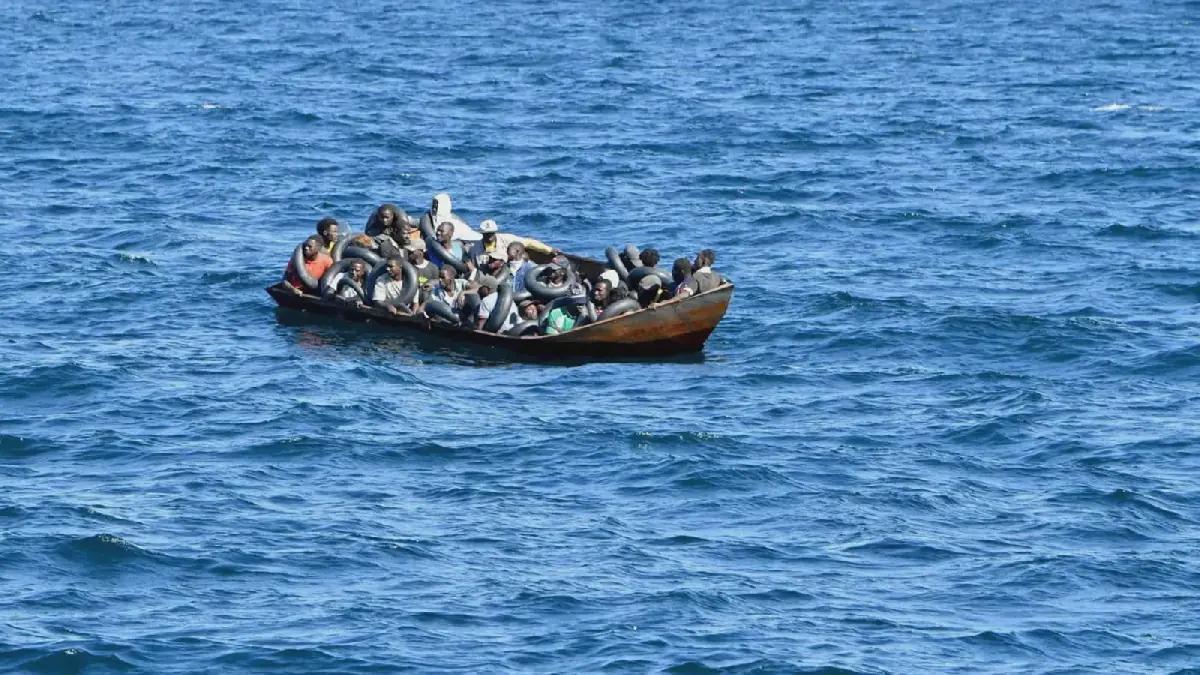
A European research study has found that Frontex, the European border agency, has played a significant role in the interception and forced return of migrants to Libya and Tunisia. The study, published by the Liminal project, analyzed operational data from Frontex and found that its aerial surveillance detected 611 boats carrying 33,107 migrants. These migrants were subsequently intercepted by Libyan or Tunisian authorities and returned to their respective countries between August 2018 and October 2024.
According to the study, Frontex's aerial surveillance contributed to at least 36% of recorded forced returns in 2021, with more recent data suggesting that the agency's involvement may have increased to nearly half of these operations. The researchers concluded that Europe's role goes beyond mere surveillance, as it also provides information on migrant boat locations to Libyan and Tunisian authorities, facilitating interception and return.
The study highlighted concerns about Frontex's actions, citing 16 instances where European aerial surveillance did not alert nearby humanitarian rescue vessels to the presence of migrant boats, despite having the capability to do so. Additionally, 13 cases were documented where Libyan coast guards intercepted migrant boats within Malta's search and rescue area after being alerted by Frontex, and subsequently returned the migrants to Libya.
The study also revealed a significant increase in Frontex's spending on aerial surveillance, with a value of €278.6 million in 2026, up from €11.7 million in 2018. The agency's budget for aerial surveillance in 2027 is estimated to be around €330.9 million, with a new tender of €522.6 million for a two-year period.
Critics have expressed concerns about the shift in European surveillance from sea to air, arguing that this approach allows European authorities to facilitate interception and return operations while distancing themselves from direct responsibility for the fate of migrants. In response, Frontex asserts that its aerial operations aim to monitor borders and contribute to life-saving efforts.
The study's findings have sparked concerns about the human rights implications of Frontex's actions, particularly given the documented abuses faced by migrants in Libya and Tunisia. The agency's increased reliance on aerial surveillance has raised questions about its accountability and the potential consequences for migrants attempting to cross into Europe.
Key points
- Frontex's aerial surveillance has contributed to the forced return of over 33,000 migrants to Libya and Tunisia.
- The agency's spending on aerial surveillance has increased significantly, with a budget of €330.9 million estimated for 2027.
- Critics argue that Europe's shift to aerial surveillance allows it to facilitate interception and return operations while avoiding direct responsibility for migrant welfare.