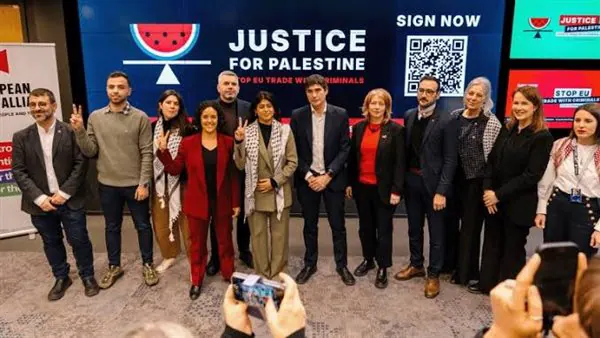
In a growing wave of protests, popular movements across Europe are intensifying their pressure on Israel, condemning its actions in Gaza as a "war of extermination" that has severe humanitarian consequences. The protests, which are expected to continue throughout October, are led by 56 French organizations, parties, and associations that are demanding a halt to French arms exports to Israel. The French government allows the export of military equipment worth approximately $22.782 million annually.
The French popular movements, led by the French-Palestinian Solidarity Association, the Boycott Movement in France, and the "Stop Arming Israel - France" campaign, aim to expand public, union, and political pressure on the government and French companies linked to the arms industry. The signatory parties stress that continued military cooperation and trade in arms enable Israel's military operations and provide technologies and components used against Palestinian civilians, contradicting France's international commitments.
According to reports, the French state has permitted over 525 deliveries of military equipment to Israel since October 2023, including ammunition links, combat drone parts, night combat equipment, and armored vehicle components. These components are used in Israeli weapon systems employed in military operations. Protest organizers emphasize that there is no distinction between "offensive" and "defensive" equipment, as all military components can enhance Israel's military capabilities.
The French movements are expected to inspire similar protests in other European countries, particularly after British parties expressed support for the campaign. The British parties, including the left-leaning "La France Insoumise" and the Communist Party of France, have backed the efforts to prevent French arms exports to Israel. Organizers believe that synchronized protests may take place in other European countries, especially given the decisions by several European governments to ban the import of Israeli settlement products.
The current protests reflect the growing impact of popular movements on government decisions. In Britain, for example, Foreign Secretary Ed Miliband described Israeli settlers as "Israeli terrorists" practicing "ethnic cleansing" in the West Bank, announcing new measures to address the contradiction between rhetoric and reality. These changes may lead to sanctions on banks and companies providing services to Israeli settlements.
Israel is facing increasing diplomatic isolation since launching its war on Gaza on October 7, 2023. Prime Minister Benjamin Netanyahu cannot travel to many countries due to International Criminal Court arrest warrants issued against him on charges of war crimes and crimes against humanity. Recently, Britain, France, and Canada imposed sanctions on Israeli settlements in the occupied West Bank, a move met with a lukewarm response from Washington.
Netanyahu responded to the sanctions by accusing the leaders of these countries of succumbing to "anti-Semitic" mobs and choosing "weakness" and "appeasement." However, these statements were largely ignored by the countries involved, which instead focused on the impending Israeli legislative elections scheduled for October 27. The protests and sanctions have contributed to Netanyahu's increasingly isolated position, both domestically and internationally.
Key points
- European popular movements are demanding a halt to arms exports to Israel.
- The protests are inspired by the French popular movements and may spread to other European countries.
- Israel is facing growing diplomatic isolation due to its actions in Gaza.