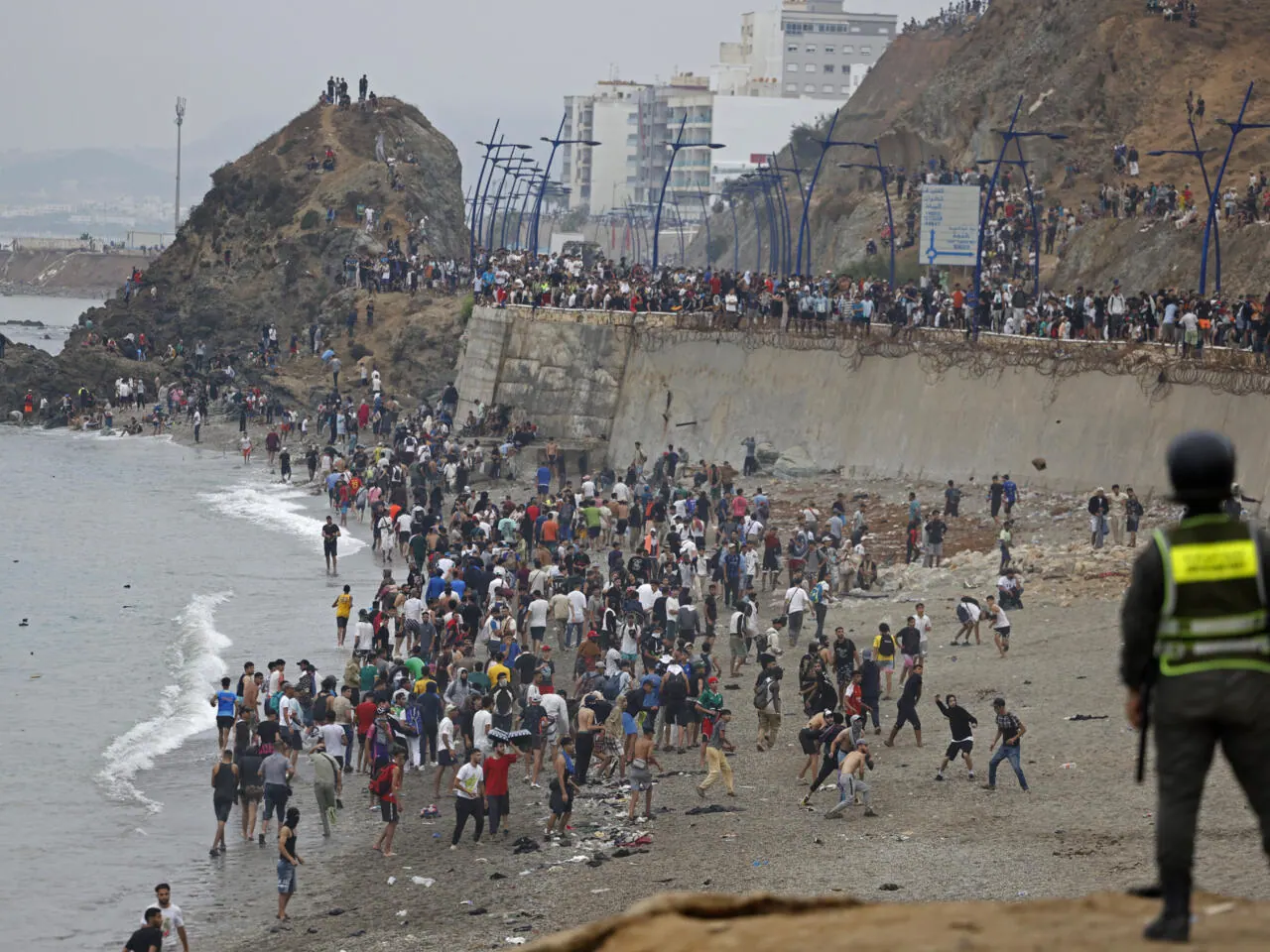
The recent mass influx of migrants across the Moroccan border has become a collective national security issue for Europe, placing Rabat's policies under intense scrutiny. The European criticism comes as a response to what they describe as Morocco's "deliberate laxity" in addressing the migration crisis. This issue was a central topic at a meeting of European interior ministers in Munich, Germany, where officials called for a stricter security and legal approach to deter what they termed as Morocco's lenient border policies.
The meeting in Munich highlighted the need for a new European emergency mechanism to deal with migration crises, aiming to establish exceptional measures for immediate deportation and the suspension of standard judicial deadlines for processing asylum requests. Additionally, there was a push to enhance the powers of the European Coast and Border Guard Agency, Frontex, to enforce direct and strict surveillance over borders adjacent to Morocco. This development indicates a significant shift in Europe's strategy to manage migration flows and ensure the security of the Schengen Area.
On the political front, tensions within the European Parliament have escalated against Rabat. Prominent political leaders, including the head of the European People's Party (EPP), have warned Morocco of severe political and diplomatic consequences if it continues to use the migration issue as a tool for political pressure or blackmail against EU member states. They emphasized the necessity for Morocco to fully and unconditionally respect the territorial integrity of the European Union.
European parliamentarians described any Moroccan statements questioning Spain's sovereignty over its borders as "unacceptable and totally rejected." This stance underscores the EU's commitment to defending its territorial integrity and the principles of international law. The criticism from European officials and lawmakers reflects a broader concern about the impact of migration on European security and stability.
Human rights organizations across Europe and internationally have also responded to these developments by criticizing Morocco's handling of the migration crisis. They have condemned the blatant violations of human rights and the violent repression by Moroccan security forces against migrants and minors on beaches and around border crossings. These organizations argue that Morocco's security approach is an attempt to conceal the failure of its developmental and economic policies.
According to human rights groups, the harsh security measures adopted by Morocco serve to overshadow the country's shortcomings in terms of development and economic opportunities, which drive thousands of young people to seek risky and often fatal migration routes. This perspective highlights the complex interplay between migration policies, human rights, and economic development.
The situation remains a critical challenge for both Morocco and the European Union, with calls for a more coordinated and humane approach to managing migration flows. The discussions in Munich and the statements from European officials underscore the urgency of finding a balanced solution that addresses the concerns of all parties involved, including the rights and safety of migrants.
Key points
- European officials criticize Morocco's approach to migration crisis
- Calls for stricter security and legal approach to deter migration
- Human rights organizations condemn Morocco's handling of migration crisis