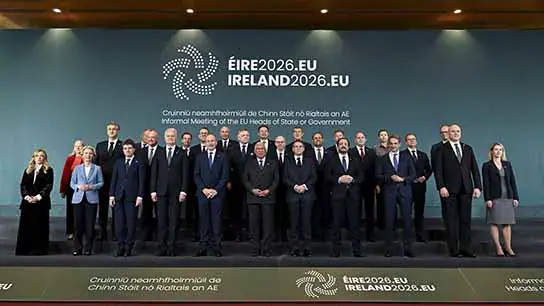
European Union leaders held their first strategic discussion on artificial intelligence in Dublin on November 13. The meeting focused on accelerating investment, strengthening infrastructure, and reducing Europe's critical dependencies on AI. The informal meeting did not adopt new regulations or a definitive budget but set key policy priorities. These priorities include computing capacity, financing, supply chains, affordable energy, and adoption by businesses and public administrations.
The EU leaders recognized that developing AI requires significant infrastructure, including data centers, semiconductors, networks, electricity, and skilled personnel. They linked technological sovereignty to access to clean and affordable energy and secure supply chains. This discussion highlights the financial stakes, with the President of the European Council estimating that catching up would require significant additional funding. The next EU budget, particularly the future European Competitiveness Fund, is expected to play a decisive role.
The EU aims to accelerate the adoption of AI in the real economy, moving it from laboratories to businesses and public services. The expected benefits include productivity gains, improved industry performance, and better quality services. However, this depends on the ability of small and medium-sized enterprises to access tools, data, and skills. The leaders also discussed trust, security, and governance, with the goal of developing human-centered AI without compromising competitiveness.
The European Union's approach to AI is driven by the desire to reduce critical dependencies and strengthen its technological sovereignty. The leaders emphasized the need for affordable energy and secure supply chains to support the development of AI. This approach is expected to influence businesses, subcontractors, and digital solution providers working with European clients. As a result, countries like Mauritius will need to follow these developments closely.
Mauritius, with its significant BPO, finance, software, and training sectors, will need to adapt to the changing requirements and compliance standards. The EU's norms and regulations often influence companies working with European clients, and Mauritius will need to be aware of these changes to remain competitive. The discussion in Dublin sets an important policy direction for the EU's approach to AI.
The EU's AI strategy is focused on developing human-centered AI that prioritizes competitiveness and trust. The leaders recognized the need for significant investment in AI infrastructure and the importance of secure supply chains. The next steps will involve confirming the budget and legislative proposals, which will determine the specifics of the EU's AI strategy.
The outcome of the EU's AI strategy will have implications for countries like Mauritius, particularly in terms of compliance and competitiveness. As the EU continues to develop its approach to AI, businesses and governments in Mauritius will need to stay informed and adapt to the changing landscape. The EU's goal of developing human-centered AI will require careful consideration of the social and economic implications.
Key points
- The EU aims to reduce critical dependencies and strengthen technological sovereignty in AI.
- The EU's AI strategy prioritizes human-centered development and competitiveness.
- Mauritius and other countries will need to adapt to the changing requirements and compliance standards.