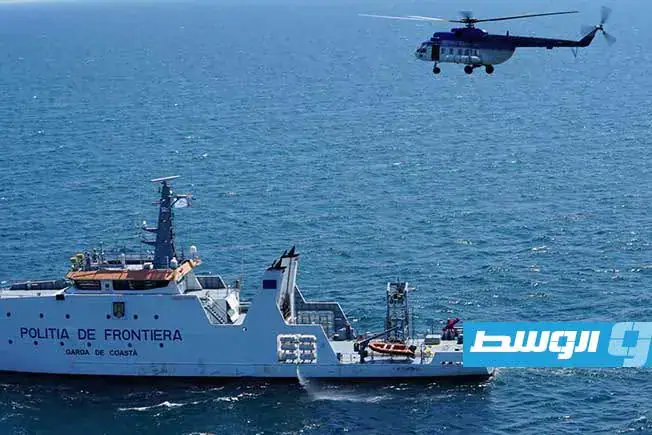
A recent European investigation has found that aerial surveillance operations conducted by the European Union's border agency, Frontex, contributed directly to the interception and return of over 33,000 migrants to Libya and Tunisia between 2018 and 2024. The investigation, published by the Belgian website 'Upsobserver' on Tuesday, was based on research by the European project 'Liminal'. It revealed that Frontex's aircraft participated in monitoring migrant boats and provided information that helped Libyan and Tunisian maritime authorities locate and intercept them.
Frontex relies on a network of manned and unmanned aircraft, operated by private companies, to monitor the movements of migrant boats across the central Mediterranean. These operations not only involve monitoring maritime risks but also contribute to preventing migrants from continuing their journey to Europe. The investigation highlighted that Frontex uses equipment such as the 'Heron' unmanned aerial vehicle, produced by the Israeli Aerospace Industries and operated by an Airbus subsidiary.
The information collected by Frontex's aircraft during patrols is transmitted to the relevant authorities responsible for maritime operations, enabling them to locate migrant boats and facilitate their interception by Libyan or Tunisian coast guards. According to the research, Frontex's surveillance operations were linked to the return of over 33,000 individuals to Libya and Tunisia during the period under investigation.
In 2021, Frontex's aerial surveillance was associated with at least 36% of recorded returns during that year. Researchers also identified 16 cases where Frontex's devices detected migrant boats without alerting nearby humanitarian vessels that could have intervened and provided assistance. Frontex claims that alerts can be sent via general maritime radio frequencies that can be received by ships in the area.
The investigation coincides with Frontex's plans to expand its aerial surveillance capabilities, with 330 million euros allocated for this purpose in 2027. The European Commission has requested an additional 169 million euros to support drones, maritime equipment, and high-altitude surveillance systems. In July 2026, Frontex and the Italian Coast Guard completed a trial to operate two drones from a patrol vessel in the central Mediterranean.
The trial aimed to expand maritime surveillance and overcome the limitations of direct visual range for ship crews. The expansion of Frontex's surveillance capabilities has raised concerns about its impact on migrants and search and rescue operations in the Mediterranean. Human rights organizations have expressed concerns about the agency's role in preventing migrants from reaching Europe.
The investigation's findings have sparked renewed debate about Frontex's operations and its accountability in ensuring the safety and rights of migrants in the Mediterranean. As the European Union continues to grapple with the challenges of migration and border control, the role of Frontex and its surveillance activities will likely remain a contentious issue.
Key points
- Frontex aerial surveillance contributed to the return of over 33,000 migrants to Libya and Tunisia between 2018 and 2024.
- The investigation revealed that Frontex's surveillance operations were linked to the return of migrants, with at least 36% of recorded returns in 2021 associated with aerial surveillance.
- Frontex plans to expand its aerial surveillance capabilities with 330 million euros allocated for this purpose in 2027.