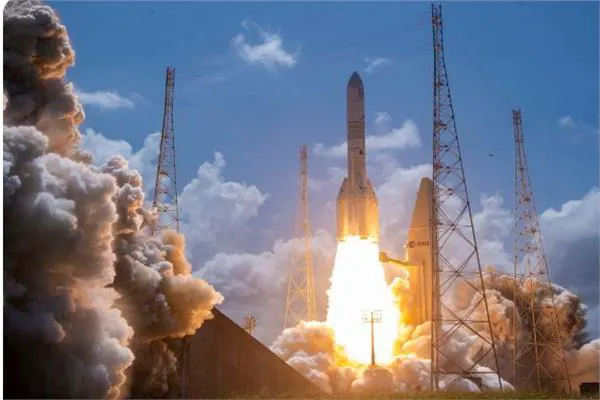
The European Commission has warned that the continent is on the brink of a critical gap in space launch capabilities, with a significant surge in demand for satellites expected over the next decade. European Commissioner for Defense and Space, Andrus Kookleius, emphasized that ensuring independent access to space is the top strategic priority for Europe. He made these remarks at the "Access to Space" conference in Brussels.
The European Union aims to increase its satellite launch rate by six times by 2034 to keep pace with accelerating security and strategic challenges. To meet the demands of major programs like the Galileo navigation system, Copernicus Earth observation program, and the new IRIS² secure communication network, the EU will need to conduct 62 launches annually by 2034. Currently, the production rate of the Ariane 6 rocket is around 10 launches per year, which is insufficient to meet future demands.
The Ariane 6 rocket and the Vega rocket face significant capacity constraints. The Ariane 6 is expected to have a launch rate of 14 per year by 2031, while the Vega rocket will be limited to six launches annually, compared to an estimated demand of eight launches by 2030. To address this shortfall, the EU is exploring alternative launch sites within and outside Europe, including facilities in Norway, the UK, Portugal, and Canada.
Commissioner Kookleius criticized the current fragmented and under-invested state of Europe's space industry, highlighting that public investments in European space endeavors account for only 11% of global investments, compared to 60% in the United States. He stressed the need for urgent consolidation of resources and industrial capabilities to ensure Europe's strategic independence and sovereignty in space.
The European Commission's concerns are set against a backdrop of rapidly increasing demand for satellite capabilities, driven by growing requirements for military, governmental, and commercial applications. The Commission is working to enhance Europe's launch capabilities and ensure the continent remains competitive in the global space market.
Europe's space industry faces significant challenges in meeting the rising demand for satellite launches, with far-reaching implications for the continent's strategic autonomy and competitiveness. The European Commission's efforts to address these challenges will be crucial in determining Europe's future role in the global space economy.
The outcome of these efforts will have significant implications for Europe's ability to launch satellites and maintain its presence in space, with potential consequences for the continent's security, economy, and technological advancement.
Key points
- Europe faces a critical gap in space launch capabilities amid rising demand for satellites
- The European Union aims to increase its satellite launch rate by six times by 2034
- Public investments in European space endeavors account for only 11% of global investments