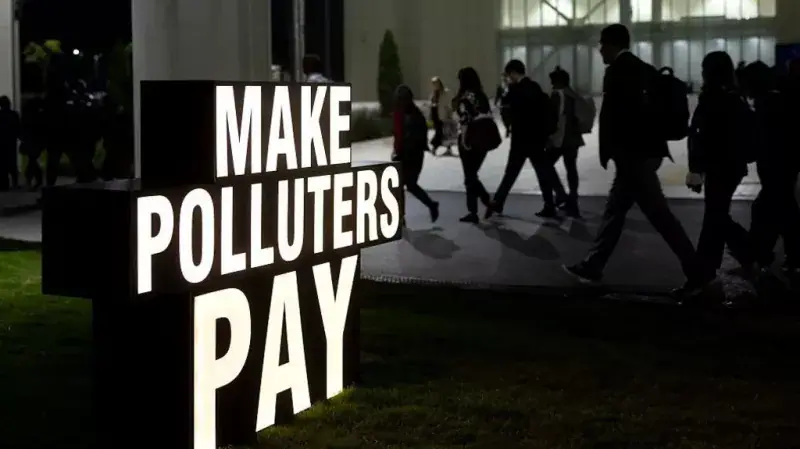
African countries are demanding more funding from developed nations to cope with climate change at the UN climate summit in Turkey. The effects of climate change are being felt in countries such as Uganda and Malawi, where severe droughts and floods have destroyed crops and displaced people. In Uganda's Karamoja region, a severe drought has led to food shortages, with 90% of crops failing. Local farmer Elijah Lobur said his family now eats just one meal a day.
In Malawi, Mathews Nkhambala experienced devastating floods in April 2024, which displaced people in Chikwawa district. He lost a harvest of 15 bags of sorghum and part of his farmland, and his children were traumatized by the experience. The Malawian government has reported over 50 disasters linked to storms, floods, landslides, and droughts since 1980, affecting millions of people. These countries are among 23 African nations yet to submit National Adaptation Plans (NAPs) to the UN climate convention secretariat.
The African Group of Negotiators at the UN climate summit is pushing for adaptation finance to be tripled by 2035, from an annual $40bn baseline. However, the European Union says the priority should be ensuring existing commitments reach vulnerable countries rather than setting new funding targets. EU delegation leader Darragh O'Brien said the focus should be on deploying existing funds, acknowledging that developing countries face difficulties accessing available funding.
European Commission climate commissioner Wopke Hoekstra argued that the summit should focus on delivering existing pledges rather than making new ones. He said the EU had provided $30bn of the $100bn in climate finance committed by developed countries in recent years. The UN's Adaptation Gap Report published last year found that sub-Saharan Africa requires about $51bn annually in adaptation finance.
According to the UN's latest report, developing countries will need about $300bn annually by 2035. However, they received only about 10% of that amount from developed countries in 2024. Climate-related loss and damage in Africa is projected to cost $440bn between 2020 and 2030. Under the 2015 Paris climate agreement, developed countries are required to provide financial support to developing nations, including for climate adaptation.
Experts say that countries that have not submitted NAPs are often dealing with multiple crises, including debt distress and economic pressures. Oxfam's climate justice lead David Abudho said governments' ability to invest in climate adaptation is limited. ActionAid's regional climate justice adviser Sheila Apiny argued that the lack of plans reflects a wider shortage of financial and technical support.
The absence of NAPs creates a vicious cycle, where countries lack support to prepare plans, making it harder to secure funding for climate resilience. Amos Wemanya, senior climate adviser at Power Shift Africa, said this forces governments into a cycle of responding to disasters instead of preventing or reducing their impacts.
Key points
- The European Union is urging the use of existing climate funds to help African countries adapt to climate change.
- African countries are pushing for adaptation finance to be tripled by 2035.
- Many African countries have not submitted National Adaptation Plans to the UN climate convention secretariat.