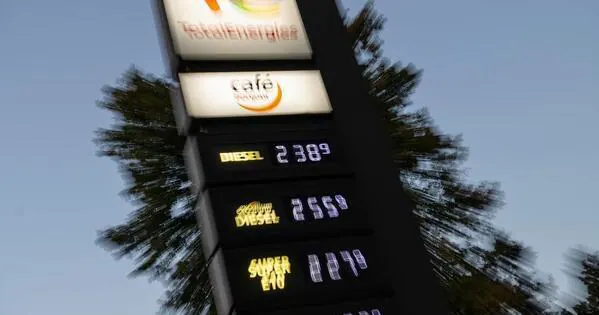
Europe is grappling with a severe diesel price surge, with the consumption-weighted average retail diesel price across the European Union reaching a record 2.23 euros per liter. Wholesale prices have also hit record levels, with the price of 10 ppm ultra-low-sulfur diesel cargoes delivered into Northwest Europe reaching 1,642.25 dollars per metric ton on September 15. This significant increase has raised concerns about the potential impact on Europe's economy, particularly in the transportation and logistics sectors.
The diesel shortage has significant implications for Europe's road freight industry, which relies heavily on diesel. Around 96 percent of trucks currently on EU roads run on diesel, and even among new trucks registered in the first half of 2026, diesel accounted for 92.1 percent. With EU trucks transporting 13.3 billion tonnes of goods in 2025, generating nearly 1.9 trillion tonne-kilometers of freight activity, higher diesel prices can quickly reverberate across the wider economy. Germany, Europe's largest economy, offers a glimpse of the pressure facing the sector, with fuel accounting for roughly one-third of a trucking company's total costs.
The cost increases are already mounting, with Transport & Environment estimating that elevated diesel prices are costing Europe an additional 203 million euros per day. The extra bill for road diesel alone has reached around 40 billion euros since the Middle East conflict began in late February. The broader energy shock is also weighing on Europe's economic outlook, with European Central Bank estimates suggesting that a geopolitical oil supply shock could reduce euro-area real GDP growth by around 0.4 percentage points in its first year.
A severe shortage of refined middle-distillate fuels is one of the main drivers of the price surge. The International Energy Agency said diesel and gasoil account for nearly 30 percent of global oil demand, while two of the world's most important sources of supply have been hit at the same time. Net diesel and gasoil exports from Gulf countries averaged only 390,000 barrels per day in August, just over a quarter of their pre-war level.
European governments are stepping up measures to ease the pressure, with France allowing some summer-grade diesel to remain on sale during the first half of November. Germany's federal and state governments have agreed to temporarily cut the energy tax on petrol and diesel, with the reduction expected to take effect on October 1. Finland has also decided to allocate around 8.7 million euros in EU-funded emergency aid to farms hardest hit by rising costs linked to the Middle East crisis.
The uncertainty over supplies from the United States has further complicated Europe's diesel squeeze. US President Donald Trump said his administration was considering restrictions on diesel exports amid pressure from Republican lawmakers seeking to lower costs for American farmers and truckers. The possibility has alarmed Brussels, with the European Commission stressing that there is currently "no concrete shortage of diesel" in the EU but acknowledging the scale of Europe's reliance on US supplies.
The reliance on US supplies has grown rapidly as Europe sought alternatives to Russian energy after 2022 and, more recently, as Middle Eastern supplies were disrupted. According to market intelligence firm Kpler, the United States has supplied around 180,000 barrels per day of the EU's roughly 580,000 barrels per day of extra-EU diesel imports this year, or about 32 percent. In Northwest Europe, US supplies account for around 57 percent of diesel imports from outside the region.
Key points
- Europe's diesel price surge has significant economic implications, with record-high prices straining supply chains and logistics sectors.
- European governments are implementing measures to ease the pressure, including temporary cuts in energy taxes and emergency aid to affected industries.
- The uncertainty over US diesel exports has added to Europe's supply concerns, highlighting the region's reliance on external sources of diesel.