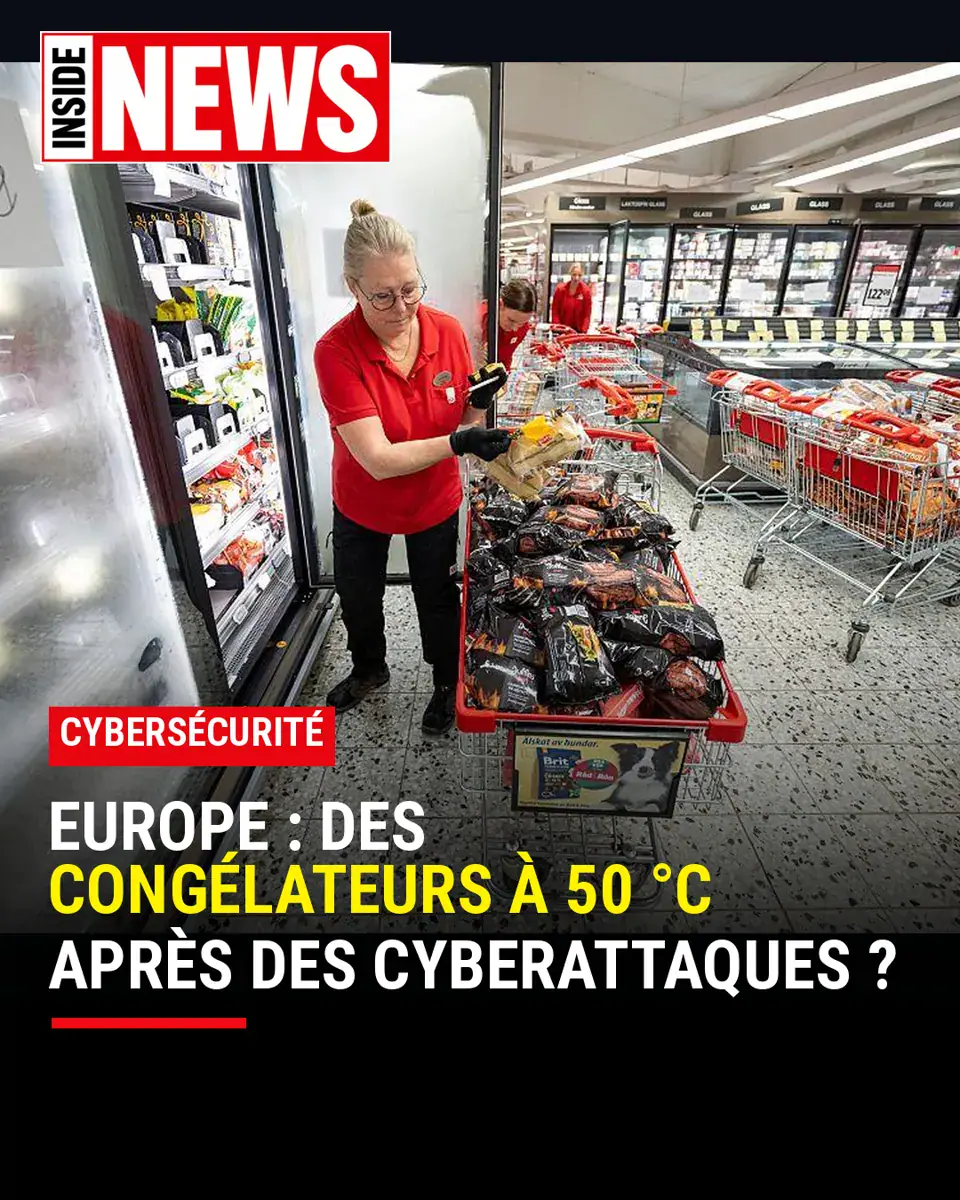
A recent wave of cyberattacks has hit hundreds of supermarkets across Europe, targeting their refrigeration systems and causing food spoilage. The attacks, which occurred in several countries including Sweden, France, and Belgium, involved hackers remotely manipulating refrigeration systems to cause temperatures to rise to as high as 50°C. This resulted in the destruction of frozen food products and forced some stores to clear their shelves and remove potentially contaminated goods.
The first attack occurred on October 12, affecting around 700 French supermarkets, including Intermarché and Coopérative U stores. Three weeks later, on November 2, a second wave of attacks hit at least nine countries, including Belgium, Sweden, Luxembourg, and the Netherlands. In Belgium, around 15 Carrefour stores and several dozen other businesses were affected, while in Ireland, 13 SuperValu supermarkets experienced refrigeration problems.
The hackers are believed to have gained access to the refrigeration systems through connected controllers that allow technicians to monitor and modify temperatures remotely. These controllers, often used in older systems or those with inadequate security, may have used default passwords or had vulnerabilities that were exploited. The French cybersecurity agency ANSSI identified several vulnerable devices, including controllers from Danfoss, Copeland, and Dixell.
The cyberattacks have raised concerns about the security of food supply chains and the potential for sabotage. European Commissioner for Agriculture and Food, Christophe Hansen, believes that the repeated attacks may be a deliberate attempt to disrupt supply chains and erode consumer confidence. The lack of ransom demands or claims of responsibility has fueled speculation about the motives behind the attacks.
Investigations are ongoing, with Belgian authorities leading the probe. The attacks have highlighted the vulnerability of critical infrastructure, including food supply chains, to cyber threats. While the impact of the attacks has been localized, with no widespread food shortages reported, the potential for more extensive disruption is a concern.
The use of connected devices in critical infrastructure has increased the risk of cyberattacks, and the food industry is no exception. The attacks on refrigeration systems demonstrate that even seemingly isolated systems can be vulnerable to hacking. As the investigation continues, it is likely that more will be learned about the hackers' motives and methods.
The European Commission is monitoring the situation and working with member states to assess the risks and develop strategies to prevent similar attacks in the future. The incidents serve as a reminder of the importance of robust cybersecurity measures in protecting critical infrastructure and ensuring the continuity of essential services.
Key points
- Hundreds of supermarkets across Europe were affected by cyberattacks targeting refrigeration systems.
- The attacks caused food spoilage and forced some stores to clear shelves and remove potentially contaminated goods.
- Investigations are ongoing, with concerns raised about the security of food supply chains and the potential for sabotage.