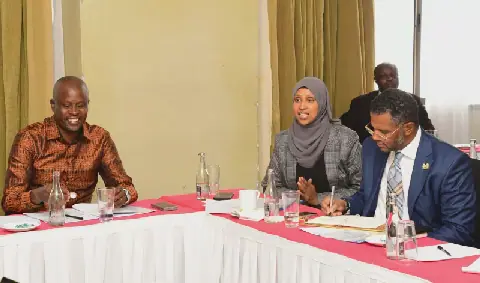
The recent Euronews Enlargement Summit in Brussels has brought attention to the European Union's potential for expansion, with leaders from various candidate nations gathering to discuss their aspirations to join the EU. The summit's timing appears favourable for expansion, with many nations eager to overcome their unique political hurdles and diplomatic difficulties. European Council President António Costa emphasized that the desire to join the EU should help countries resolve historical grievances and foster cooperation.
Nations such as Ukraine, Georgia, Montenegro, and Armenia each face distinct challenges in their bid to join the EU. Georgian Prime Minister Irakli Kobakhidze expressed his commitment to joining the EU but refrained from outlining a clear plan to overcome the deadlock created by contentious laws on foreign influence. He accused the EU of applying double standards and likened the demand to repeal these laws to Soviet tactics. In contrast, Armenian Prime Minister Nikol Pashinyan expressed optimism about formally applying for EU membership in 2027 or 2028.
Montenegro, aiming to join the EU by 2028, is currently leading the accession process. However, Minister for European Affairs Maida Gorčević insisted that the country would not settle for second-class membership, following the EU's proposal of a 15-year probation period for new members. This stance reflects the country's determination to meet the EU's stringent requirements. Meanwhile, Croatian Prime Minister Andrej Plenković warned that the impending French elections might hinder enlargement, as Eurosceptic candidates gain traction.
The situation in the Western Balkans shows varying progress. Albania is determined to complete negotiations by the end of 2027, while Prime Minister Edi Rama acknowledged ongoing challenges, signalling the need for a stronger EU resolution. North Macedonia, however, continues to face delays due to a dispute with Bulgaria regarding the rights of the Bulgarian minority. These challenges highlight the complexities of the accession process.
In Ukraine, Prime Minister Sergii Koretskyi rejected plans to exclude certain agricultural exports from the EU market post-membership, asserting that any transitional measures should not become permanent restrictions. He emphasized that Ukraine aims to progress on EU negotiations by the first half of 2027. This commitment reflects Ukraine's determination to integrate into the EU. Moldova has emerged as a strong candidate, pursuing reforms swiftly, and may even be ready to close negotiation chapters sooner than expected.
Moldovan Prime Minister Vasile Tofan, unable to attend the summit due to a major cyberattack on the country, expressed solidarity with Ukraine, asserting that both nations' EU integration efforts complement each other. He acknowledged the government's support for NATO membership, despite lacking the parliamentary majority needed to modify the constitution. This development highlights the complexities of Moldova's accession process.
The Euronews Enlargement Summit has underscored the EU's potential for expansion, with various candidate nations making progress in their accession processes. However, challenges persist, and the road to EU membership remains long and complex. The summit's discussions have highlighted the need for continued cooperation and reform efforts to facilitate the accession process.
Key points
- The EU's expansion is hindered by challenges in candidate nations, including Georgia's stalled bid and North Macedonia's dispute with Bulgaria.
- Montenegro and Albania are making progress in their accession processes, with Montenegro aiming to join the EU by 2028.
- Ukraine and Moldova are strong candidates, with Ukraine aiming to progress on EU negotiations by the first half of 2027.