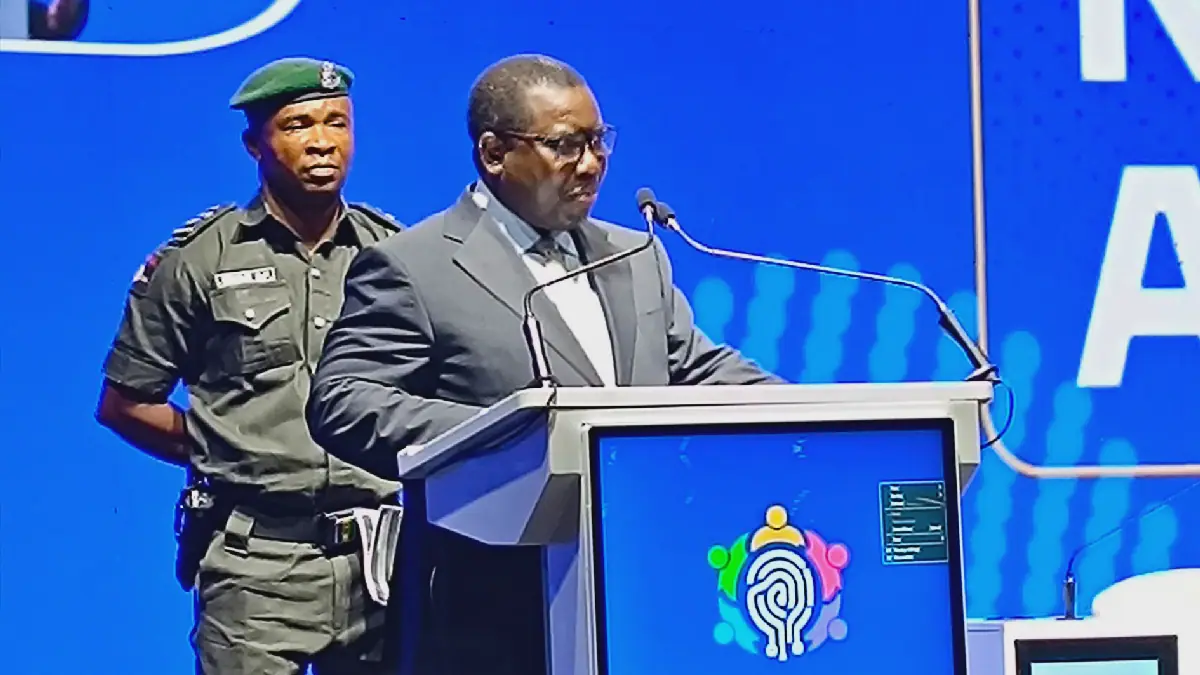
The European Union has warned against exploiting concerns over artificial intelligence-generated misinformation to suppress political dissent, silence journalists, or restrict freedom of expression ahead of Nigeria's 2027 general elections. EU Ambassador to Nigeria and ECOWAS, Gautier Mignot, gave the warning at the National Summit on Electoral Information Integrity in Abuja. The summit was themed "Beyond the Ballot: AI, FIMI, and the Integrity of Nigeria's 2027 Elections."
Mignot stressed that while AI could support translation, accessibility, and communication, it could also make deception easier to produce and more difficult to recognize. He identified three priorities for Nigeria ahead of the elections: preparing before electoral pressure intensifies, making stakeholder partnerships operational, and protecting democratic rights while safeguarding electoral information.
Former INEC chairman, Prof Attahiru Jega, urged the commission to consider deploying AI-powered chatbots to provide voters with accurate electoral information and counter misinformation ahead of the 2027 elections. Jega said the technology could enable citizens seeking electoral information to obtain official responses quickly and verify the authenticity of information circulating in the public space.
INEC Chairman, Prof Joash Amupitan, warned that AI could be exploited to circulate fake election results, forged operational directives, and fabricated information capable of triggering confusion and violence during the 2027 general elections. He said synthetic audio and manipulated documents could falsely announce election results or claim that polls had been cancelled in key constituencies, potentially undermining public confidence and disrupting the collation process.
Amupitan disclosed that INEC had established an AI unit to anticipate risks associated with emerging technologies and develop measures to protect its electoral processes. He acknowledged that AI could assist election management bodies with voter register analysis, logistics planning, data processing, and administrative efficiency, stressing that the danger depended on how the technology was deployed.
The INEC chairman further disclosed that the commission had signed a memorandum of understanding with TikTok and was seeking improved cooperation with Facebook, Instagram, WhatsApp, YouTube, Telegram, and X. According to him, INEC had also introduced ChatGPT to support its efforts and was working with development partners, including the EU, to establish a strategic communication crisis network.
Amupitan cautioned against relying solely on fact-checking after false information had gone viral, noting that manipulated content could spread widely within 30 minutes. He called for coordinated responses involving the commission, security agencies, media organisations, technology companies, and fact-checking organisations to address the emerging threats to electoral information integrity.
Key points
- The European Union warns against using AI-generated misinformation to suppress dissent in Nigeria's 2027 elections.
- INEC Chairman warns of AI-generated fake election results and violence.
- Stakeholders call for coordinated responses to address emerging threats to electoral information integrity.