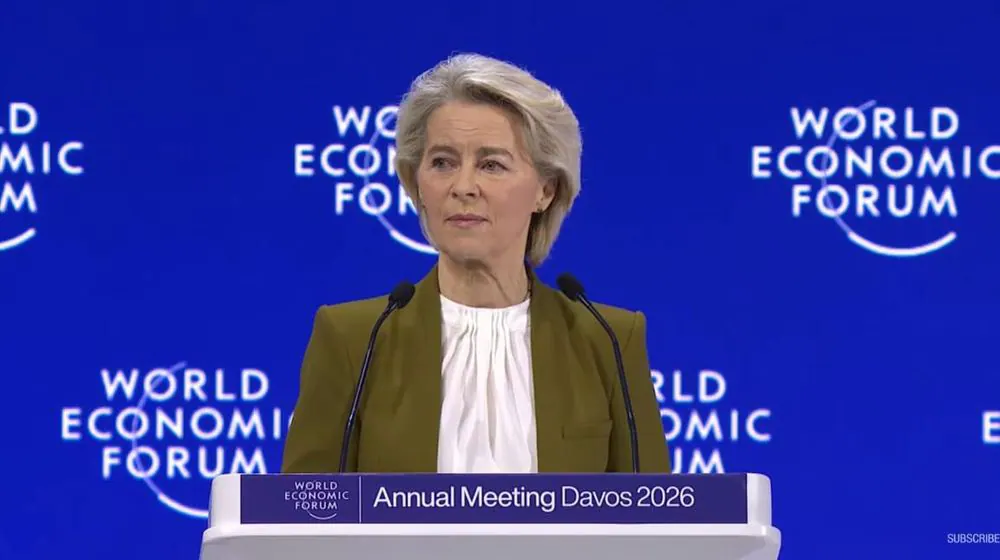
European Commission President Ursula von der Leyen has put forward a proposal to make Canada an "associate member" of the European Union, a move that could significantly strengthen economic ties between the two. This offer comes as part of a broader effort to enhance cooperation and trade relations. The specifics of what this associate membership would entail are yet to be detailed by Brussels. The proposal has the potential to pull Ottawa deeper into Europe's markets, given the existing strong trade relationship governed by the Comprehensive Economic and Trade Agreement (CETA) since 2017.
The current trade relationship between the EU and Canada is substantial, with trade in goods such as machinery, chemicals, pharmaceuticals, minerals, and transport equipment being prominent. Canada is the EU's 12th-largest trading partner, and the EU is Canada's second-largest trading partner, accounting for 8.7% of its total trade. The combined economies of the EU and Canada represent 490 million people, nearly a fifth of global GDP, and approximately 19% of global trade. This significant economic partnership forms a solid foundation for the proposed associate membership.
However, the EU faces a challenge in implementing this proposal as it lacks a legal mechanism for associate membership. Any move forward would require political agreement across all 27 EU member states. This process can be complex and time-consuming, given the need for consensus among all member states. Despite these challenges, the concept of associate membership is not unprecedented. For instance, Switzerland has partial access to the Single Market through a series of trade deals.
Other countries have similar arrangements with the EU. Iceland, Norway, and Liechtenstein are members of the European Economic Area, granting them full access to the Single Market, although they do not have a vote on the rules they must follow. Ukraine has been offered a similar associate status by Germany as an interim step toward full membership. In contrast, the UK chose to leave the EU in 2020. Canada's situation is distinct as it was never a part of the EU to begin with.
The proposed associate membership could offer Canada deeper integration into European markets, potentially leading to increased trade and economic cooperation. This could have positive implications for both parties, given their existing strong trade ties under CETA. However, the lack of clarity on what associate membership entails and the complex process of obtaining agreement among all EU member states are significant factors that will influence the outcome.
The EU's offer to Canada comes at a time when strengthening economic partnerships is crucial for many countries. The global economic landscape continues to evolve, and such proposals can play a significant role in shaping future trade relations. As discussions progress, more details are expected to emerge about the potential benefits and challenges of this proposal.
In conclusion, the EU's proposal to make Canada an associate member presents an opportunity for deeper economic integration between the two. While there are challenges to overcome, particularly regarding the legal framework and political agreement among EU member states, the existing strong trade relationship provides a solid foundation for further cooperation. Key aspects to watch include the specifics of the associate membership and how it will be implemented.
Key points
- The EU lacks a legal mechanism for associate membership, requiring political agreement across all 27 member states.
- Canada and the EU have a substantial trade relationship, with the EU being Canada's second-largest trading partner.
- The proposed associate membership is not unprecedented, with countries like Switzerland, Iceland, Norway, and Liechtenstein having similar arrangements.