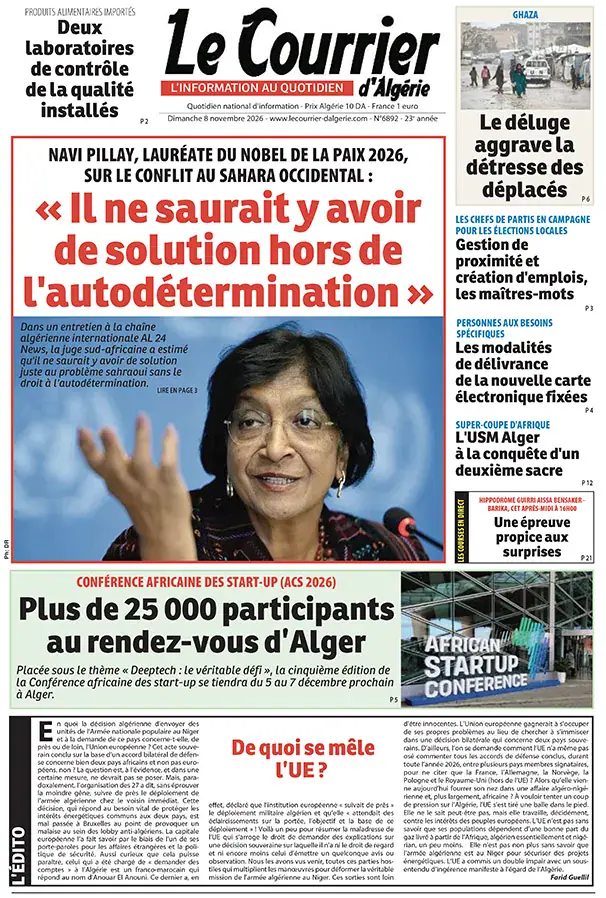
The European Union has sparked controversy by expressing interest in Algeria's decision to deploy military units to Niger at the latter's request. This move, based on a bilateral defence agreement, has raised eyebrows in Brussels, with some viewing it as an attempt to exert pressure on Algeria. The EU's involvement has been deemed unwarranted, as it concerns a sovereign decision between two African countries.
An EU spokesperson for foreign affairs and security policy, Anouar El Anouni, a Franco-Moroccan national, stated that the institution is closely monitoring the Algerian military deployment and expects clarification on its scope, objective, and basis. This reaction has been seen as maladroit, with many questioning the EU's right to comment on a decision that does not concern it.
Critics argue that the EU's actions are not innocent and are part of a broader effort to undermine Algeria's mission in Niger. The EU's attempts to seek explanations for the deployment have been viewed as an overstep, especially given its silence on various defence agreements concluded between its member states and other countries in 2026.
The EU's meddling has been seen as counterproductive, potentially harming European interests. The bloc is heavily reliant on gas imports from Africa, primarily Algeria and Nigeria. By trying to exert pressure on Algeria, the EU may inadvertently compromise its own energy security.
Algeria's military deployment to Niger aims to secure common energy interests between the two countries. The EU's reaction has been perceived as an attempt to interfere in a bilateral affair between two sovereign nations. This move has sparked concerns about the EU's intentions and its respect for the sovereignty of other nations.
The controversy highlights the complexities of international relations and the challenges of balancing national interests with regional and global cooperation. As the EU continues to navigate its relationships with African countries, it must be mindful of its actions and avoid perceived meddling in the internal affairs of other nations.
Ultimately, the EU's actions may have unintended consequences, damaging its relationships with African countries and undermining its credibility as a global player. By respecting the sovereignty of other nations and focusing on its own priorities, the EU can foster more positive and productive relationships with countries like Algeria and Niger.
Key points
- The EU's comments on Algeria's military deployment to Niger have been seen as unwarranted and counterproductive.
- The EU's actions may harm its own interests, particularly its energy security, which relies heavily on gas imports from Africa.
- The controversy highlights the need for the EU to respect the sovereignty of other nations and avoid perceived meddling in their internal affairs.
Reporting sources
- De quoi se mêle l’UE ? · lecourrier-dalgerie.com