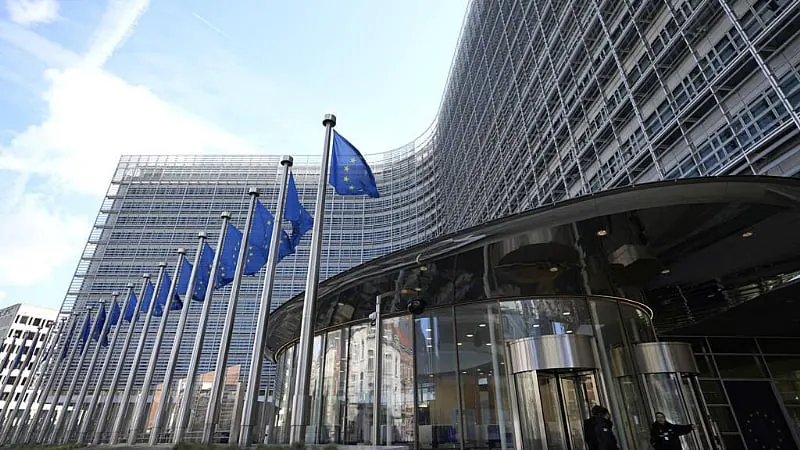
European Union countries failed to reach a final agreement on lifting sanctions on Russian oligarchs Alisher Usmanov and Mikhail Fridman. The negotiations, which took place in Brussels, were aimed at extending sanctions on nearly 3,000 individuals and entities over the Ukraine war. A provisional agreement had been reached to remove Usmanov and Fridman from the EU's blacklist, but it failed to gain final approval due to objections from Latvia.
The 27-nation bloc has been working to reach a deal on extending the sanctions regime ahead of a deadline. France and Slovakia had pushed for Russian-Uzbek billionaire Usmanov to be removed from the blacklist, citing national security concerns. Luxembourg then demanded that if sanctions were lifted on Usmanov, they should also be lifted on Fridman. The move comes as Fridman is suing Luxembourg for 15 billion euros for freezing his assets under EU sanctions.
More hawkish EU countries, including Poland and Baltic states, strongly opposed easing sanctions on Usmanov and Fridman. They argued that pressure on Russia should be increased, not decreased. In return for agreeing to the provisional deal, they secured an agreement to keep the sanctions in place for the next three years, rather than the previous six-month extensions.
Ukraine reacted strongly to the prospect of the EU removing sanctions on Usmanov and Fridman. Foreign Minister Andriy Sybiga stated that it would be unacceptable and send the wrong signal to Moscow at a time when pressure needs to increase. He emphasized that sanctions need to be tightened, not eased.
Despite the standoff over Usmanov, there is widespread agreement that EU sanctions on Russia should not lapse. EU top diplomat Kaja Kallas urged member states to maintain sanctions targeting Russia over the war in Ukraine. She emphasized that sanctions are crucial in depriving Moscow of funding and that officials aim to close talks on the rollover of Russia sanctions soon.
Kallas added that the EU needs to have stability with sanctions remaining in place for a longer time. The EU's sanctions blacklist includes key figures such as Russian President Vladimir Putin and Foreign Minister Sergei Lavrov. Usmanov and Fridman were among dozens of Russian businessmen who sued the EU over the sanctions, which were imposed shortly after Russia's invasion of Ukraine in 2022.
The EU ambassadors are set to meet again to try to hammer out an agreement. The negotiations will continue in Brussels, with the aim of extending the sanctions regime and maintaining pressure on Russia over the Ukraine war. The outcome of the talks remains uncertain, but it is clear that the EU is committed to keeping sanctions in place to support Ukraine.
Key points
- The EU failed to reach a final agreement on lifting sanctions on Russian oligarchs Alisher Usmanov and Mikhail Fridman.
- The sanctions regime is set to continue, with the aim of maintaining pressure on Russia over the Ukraine war.
- Ukraine has reacted strongly to the prospect of easing sanctions on Usmanov and Fridman, emphasizing that pressure on Russia needs to increase.