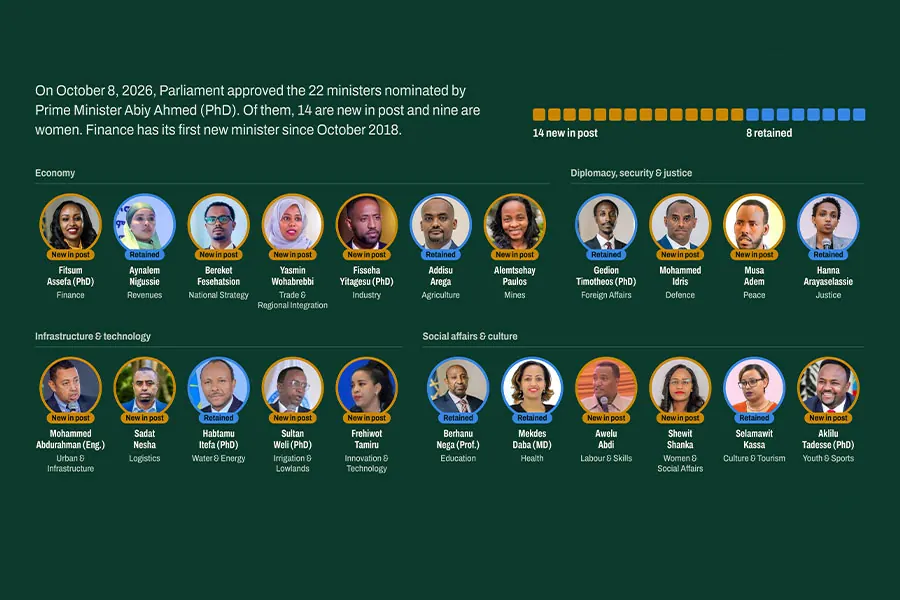
The Ethiopian parliament has approved Prime Minister Abiy Ahmed's new cabinet, with 14 new ministers, including a new finance chief, for the first time since 2018. The approval process took about 60 minutes, with a unanimous vote and no questions, objections, or abstentions from the opposition. An independent member of parliament raised a question, but the 40 opposition members remained silent.
The new cabinet is a significant development in Ethiopia's government, with the prime minister aiming to transform the country's economy and politics. The approval of the new ministers comes ahead of the country's national election in 2026. The election is expected to be a crucial event in the country's history, with the government facing challenges from various opposition groups.
The new finance chief is expected to play a crucial role in shaping the country's economic policy, particularly in addressing the rising costs and inflation that are affecting the insurance industry. The industry has been facing significant challenges, with increasing costs and inflation threatening its growth. The new finance chief will need to work closely with other ministers to develop a comprehensive strategy to address these challenges.
The approval of the new cabinet has been seen as a positive development by some, with the government expected to focus on transforming state-owned enterprises into modern and competitive entities. The government has been working to improve the business environment and attract foreign investment, with a focus on developing the country's infrastructure and promoting economic growth.
However, the opposition's silence during the approval process has raised concerns about the level of scrutiny and oversight in the country's parliament. The opposition's role is crucial in ensuring that the government is held accountable for its actions, and their silence has been seen as a missed opportunity to raise important questions about the new cabinet.
The new cabinet will need to address several key challenges facing the country, including the rising costs and inflation, and the need to transform state-owned enterprises. The government will also need to work on promoting economic growth and improving the business environment, with a focus on attracting foreign investment and developing the country's infrastructure.
The approval of the new cabinet marks a significant development in Ethiopia's government, and the country is expected to continue to face challenges in the coming months. The government will need to work closely with various stakeholders, including the opposition and civil society groups, to address the country's challenges and promote economic growth and stability.
Key points
- The Ethiopian parliament approves 14 new ministers, including a new finance chief, in a unanimous vote.
- The new cabinet faces significant challenges, including rising costs and inflation, and the need to transform state-owned enterprises.
- The opposition's silence during the approval process has raised concerns about the level of scrutiny and oversight in the country's parliament.