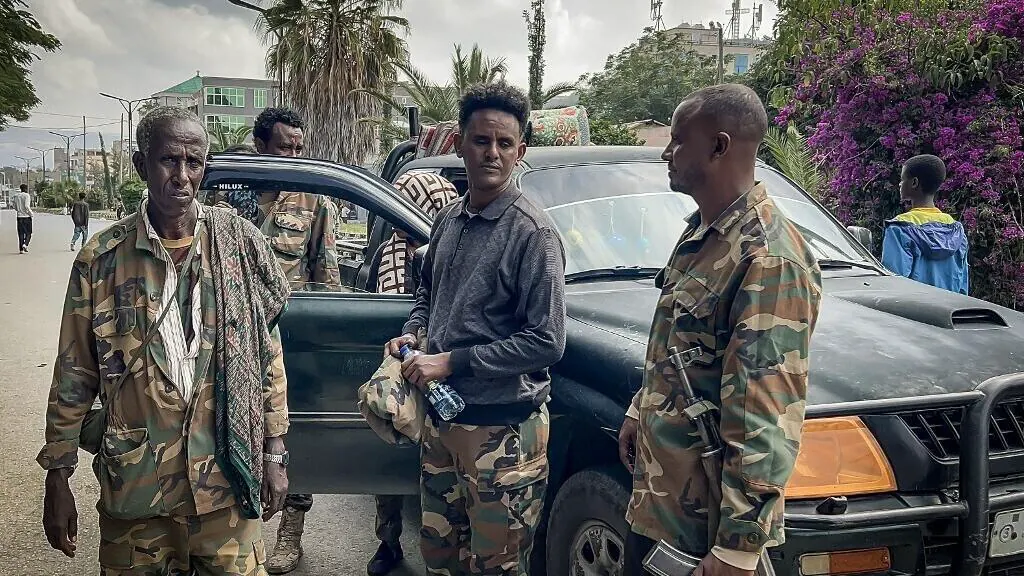
The Ethiopian federal army, backed by the Tigray Peace Force (TPF), a militia affiliated with a dissident faction of the Tigray People's Liberation Front (TPLF), has taken control of Mekele, the capital of the Tigray region. This development has raised concerns about the potential spread of the conflict beyond Ethiopia's borders. The TPLF had been in control of Tigray since April, but the federal army and Fano militiamen from the neighboring Amhara region launched a joint operation against them in late September.
The conflict in Ethiopia has drawn in neighboring countries, with Egypt, Eritrea, and the Sudanese Armed Forces (SAF) accused of supporting the TPLF. Ethiopia, in turn, is accused of providing support to the Rapid Support Forces (RSF) that have been clashing with the SAF in Sudan since 2023. The rivalry in the Horn of Africa is fueled by strategic interests, including access to the Red Sea and control of the Nile River. Egypt considers Ethiopia's Grand Renaissance Dam (Gerd) a threat to its national security.
A meeting of African leaders took place in El-Alamein, Egypt, on the sidelines of an African Union (AU) gathering. Egyptian President Abdel Fattah al-Sissi, Eritrean President Issaias Afeworki, Somali President Hassan Sheikh Mohamud, and Sudanese Armed Forces chief Abdel Fattah al-Burhane discussed recent developments in the Horn of Africa and the Red Sea region. They emphasized their commitment to resolving disputes peacefully and respecting international law and the principles of good neighborliness.
The conflict in Tigray has resulted in significant humanitarian concerns, with many civilians displaced or affected by the fighting. The TPLF has vowed to continue fighting, with its leader, Debretsion Gebremichael, suggesting a shift towards guerrilla warfare. An agreement had been reached in 2022 to end the conflict, but several key provisions were never implemented, contributing to the current tensions.
The international community has expressed concern about the escalation of the conflict, with the United States warning that tensions between Ethiopia and Eritrea could have broader implications for the Horn of Africa. The US has urged both countries to respect each other's territorial integrity. Historically, Ethiopia and Eritrea have had a tumultuous relationship, with a large-scale conflict between 1998 and 2000.
The situation in Mekele remains volatile, with TPF fighters guarding key government buildings and Ethiopian soldiers patrolling the city. Telecommunications have been restored, but many shops remain closed due to fears of looting. The TPLF has temporarily relocated from Mekele, allowing its forces to continue fighting. The conflict has significant implications for regional stability and global security.
The African Union has called for calm and restraint in the region, emphasizing the need for a peaceful resolution to the conflict. The international community must remain engaged to prevent further escalation and promote a negotiated settlement. The humanitarian situation in Tigray and neighboring regions requires urgent attention to mitigate the suffering of civilians caught in the conflict.
Key points
- Ethiopian federal forces control Mekele, capital of the Tigray region.
- Regional leaders meet in Egypt to discuss Horn of Africa tensions.
- Conflict escalation feared, with potential implications for global security.