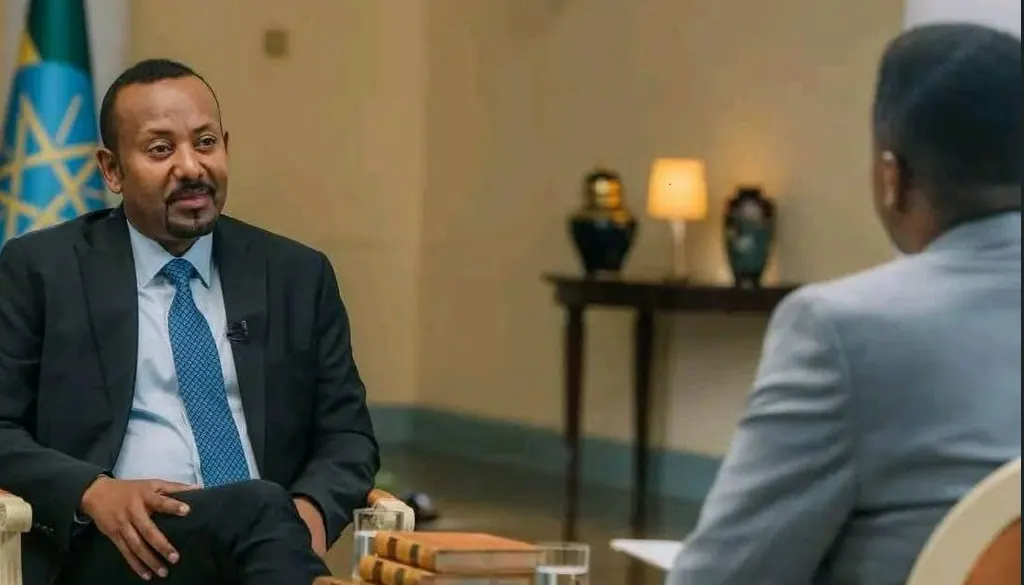
Ethiopia's National Dialogue Commission, established in 2021, aims to bridge the country's deepest political divides, but its legitimacy and inclusion have been questioned. The commission has yet to hold dialogue in 94 woredas in Tigray, and key armed and political actors, including the Oromo Liberation Army and the Tigray People's Liberation Front, remain outside the process. This has led to concerns that the dialogue may not be representative of the country's diverse voices.
The Tigray People's Liberation Front has dismissed participation in the national dialogue as a low priority, reflecting the region's dominant political force's lack of confidence in the process. Tigray was also excluded from Ethiopia's 2026 general election, leaving the region without representation in the federal vote for a second consecutive electoral cycle. This has resulted in Tigray having no meaningful role in the national dialogue, no participation in the national election, and no representation in either chamber of parliament.
The Ethiopian government's handling of Tigray has drawn comparisons with the country's past policies towards Eritrea, which led to Eritrea's independence. In the 1950s, Emperor Haile Selassie's government did not negotiate the Eritrean federation's future with the full spectrum of Eritrean political opinion, instead relying on the compliant Unionist Party and marginalizing nationalist voices. This led to Eritrea's separation from Ethiopia.
Tigray's exclusion from Ethiopia's political processes extends beyond the national dialogue. In February, the House of Federation removed five constituencies from Tigrayan regional administration ahead of the 2026 elections, a decision that was condemned by every major Tigrayan party as unconstitutional. The dispute is about far more than electoral administration, with significant parts of western and northern Tigray remaining under the control of Amhara regional forces and Eritrean troops.
The occupation of contested areas and the displacement of Tigrayan communities have created a humanitarian crisis, with rights organizations and displaced residents documenting killings, sexual violence, arbitrary detention, and forced displacement. Under such conditions, any future referendum on disputed territories would struggle to command legitimacy. Critics argue that a vote held before displaced communities can safely return would merely formalize demographic and military realities created through conflict.
The prolonged occupation of contested areas and Tigray's political exclusion have created the impression that Tigray's land is non-negotiable, while Tigrayans themselves are dispensable to Ethiopia's political future. This has led to a shift in Tigrayan politics, with many parties and scholars advocating for independence over autonomy. The Tigray Independence Party and Salsay Weyane Tigray have signed a memorandum of understanding to build a unified pro-independence front.
The trajectory of Ethiopia's policies towards Tigray has raised concerns that the country may be repeating the mistakes that drove Eritrea away. The federalist center, which has long been the dominant current in Tigrayan politics, is eroding, and the country's handling of Tigray may ultimately lead to further fragmentation and instability.
Key points
- Ethiopia's National Dialogue Commission has been criticized for its lack of legitimacy and inclusion, with key armed and political actors remaining outside the process.
- Tigray's exclusion from Ethiopia's political processes, including the national dialogue and general election, has sparked concerns of marginalization and exclusion.
- The occupation of contested areas and displacement of Tigrayan communities have created a humanitarian crisis, with significant implications for the region's future.